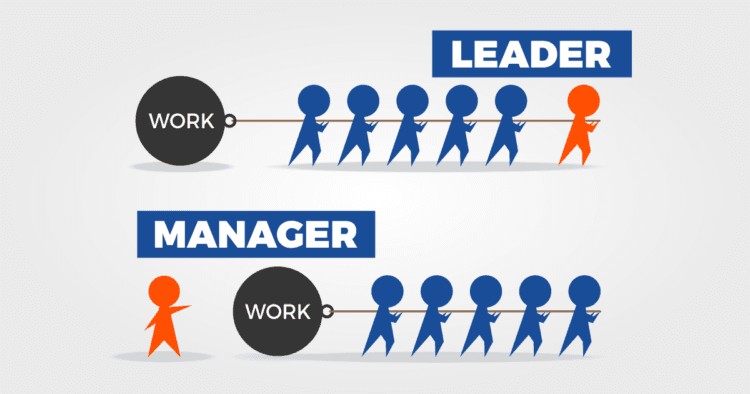
The difference between leader and manager can be summarized this way: “When you are a leader, you work from the heart. As a manager, you work from the head.” Although it is probably more complex than that, the point to remember is the difference between what you do as a leader and what you do as a manager-and the constant need to be able to do both. Furthermore, the head and heart need to be partners, not independent operators. Leaders are trailblazers, they set new routes for others to follow, and are essentially fearless and adventurous, whereas managers seek conformity with corporate ideals and procedures. Through management, the company seeks compliance with the work assigned to the workforce; initiates action for ensuring that the workforce conforms and complies with their duties and responsibilities towards the organization. Thus, manufacturing new products and entering new product markets would need leadership roles while Continue reading
Management Concepts
Risk Matrix Approach to Risk Analysis

A risk matrix is defined as a table that is divided into several categories of probability, likelihood, or frequency for its rows, and multiple categories of severity, impact, or consequences for its columns. The constituents of risk ordinarily attest themselves as a hazard; which refers to the likely origin of a harmful outcome and harms; which are the ensuing damages to the environment. It incorporates generally accepted ratings of risk, urgency and priority, with every row-column pair. This is represented by distinct cells which are separately colored, using red, green and yellow colors. Each distinct cell has a different risk rating, for instance, cells colored in red will indicate risks that require an urgent attention, whereas those that are colored in green will indicate those risks that do not require to be dealt with urgently. The yellow colored cells indicate those risks that fall in between the ratings of very urgent and Continue reading
Business Failure – Concepts and Prevention Methods

Most of the times, businesses fail to achieve the set objectives. Such a scenario comes about perhaps because the business does not implement the right strategies or offers customers a product that is not in demand. In addition, a business may fail because it is not located in a suitable environment. However, no matter what the causes of business failure are, many people tend to embrace different ideas on how failure is good for a business. This has been adopted by many people such that even organizations are adopting strategies that advocate for failure in business with the belief that failure is a step to the achievement of any set goals and objectives. The assertion that failure and fast failure is a good thing has received different opinions. Several people argue that failure in a business is a good thing while others are for the belief that failure is bad Continue reading
What is Feasibility Analysis in Business? Explained

Preliminary forecasting and research are an integral part of any competent business strategy. One of the most multipurpose types of provisional study that covers all layers of the upcoming business project activities is a feasibility analysis. Feasibility analysis is the process of confirming that a strategy, plan or design is possible and makes sense. Novice entrepreneurs and experienced business people begin the practical implementation of their business ideas, primarily with this specific assessment technique. Nature and Objectives of the Feasibility Analysis First of all, the feasibility analysis is a method of evaluative research. Studying various aspects of the future business project from the financial to the legal component, the specialist determines the degree of the feasibility of the practical implementation of an entrepreneurial idea. A feasibility analysis evaluates the project’s potential for success; therefore, perceived objectivity is an essential factor in the credibility of the study for the potential investors Continue reading
How Poker Principles Can Train You for Business

According to recent surveys, more Americans want to enter the world of business and pursue their own endeavors. Per studies from Digital.com, up to two out of five respondents want to start their own business. Similarly, Gallup polls find that 62% want to be their own bosses. However, entering business is easier said than done, with upwards of 45% failing within five years of starting. One of the primary reasons for this is a lack of proper business understanding. Luckily, while there is no one magic map that unlocks all the mysteries of business, there are more accessible ways that people can train themselves for it. One of these is through poker, which has long been found to have overlapping principles with the business world. As explained in a previous post about corporate social responsibility, writer Abey Francis states that “business is said to be like a poker game, whereby Continue reading
Advantages and Disadvantages of Outsourcing Strategy
Outsourcing constitutes one of the fundamental sourcing strategies that organizations can adopt. Outsourcing entails an approach whereby certain business processes are undertaken by an external entity. Thus, outsourcing is based on a contractual relationship. The concept of outsourcing has gained remarkable significance over the past few decades. Traditionally, outsourcing was limited to peripheral organizational tasks. This trend is changing as evidenced by the high rate at which outsourcing is being integrated into diverse organizational activities. Organizations perceive outsourcing as an essential strategy in their commitment to value addition. Some of the industries that have adopted the concept of outsourcing include aviation, manufacturing, and medical services. Firms in the oil and gas industry are also adopting the concept of outsourcing. Organizations’ motivation towards this strategy has been spurred by the need to attain competitiveness concerning high return on assets and better and quality service delivery. Secondly, the pressure to outsource has Continue reading