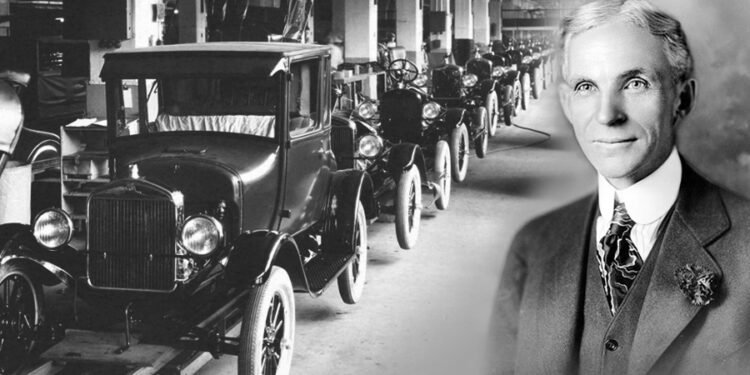
Henry Ford, born in 1863 with his innovative ideas in producing motor vehicles and excellent engineering works went on to become the hero of people in the industry. His primary goal was always to produce petrol propelled motor vehicle and in 1896 he developed his first self propelled vehicle which he called the quadricycle. After a lot of struggles and legal battles, he founded the Ford Motor Company in 1903 with only $28000. He dreamed of making efficient affordable cars and in 1908 produced the popular model T. Henry Ford changed the world with his revolutionary ideas and transformed the motor industry with his leadership.… Read the rest
Business Analysis Case
Case Study: Corporate Merger Between Volkswagen and Porsche
The German Dr. Ing. H. C. F. Porsche (Porsche) automobile manufacturer specializes in sports cars and a new line of all-terrain vehicles. In the mid-2000s, Porsche was recognized as a leading global brand for its consistent quality and cultural icon status with models including the 911, the Boxster, and the Cayenne. The company achieved strong financial performance cementing Porsche’s market dominance. Porsche’s operating profit increased from 1,204 million in 2002 to 1,832 million in 2006, representing a growth rate of 52.1%. The net profit of the company also increased to 1,368 million in 2006, an increase of 74.8% over 2005.
One of the central elements of Porsche’s business model is its low manufacturing depth, which means that it does not have huge centralized production plants.… Read the rest
Case Study: The Collaboration Between Sony and Ericsson

Nowadays, it’s very common for companies from different countries and sector to work together. In 2001, a joint venture company – Sony Ericsson Mobile communication has been established by a Japanese electronics company Sony Corporation and Swedish telecommunications company Ericsson. The aim of this cooperation is to produce the mobile phone with multimedia communication solution to customers all over the world. The initial for this collaboration is to associate the Sony’s multimedia consumer electronics expertise and Ericsson’s technical knowledge in telecommunications. Once Sony Ericsson established, both of the companies stopped their individual mobile business. The Sony Ericsson Mobile Communications is a London-based 50:50 joint venture business.… Read the rest
Case Study of Rolls Royce: Innovating for the Future
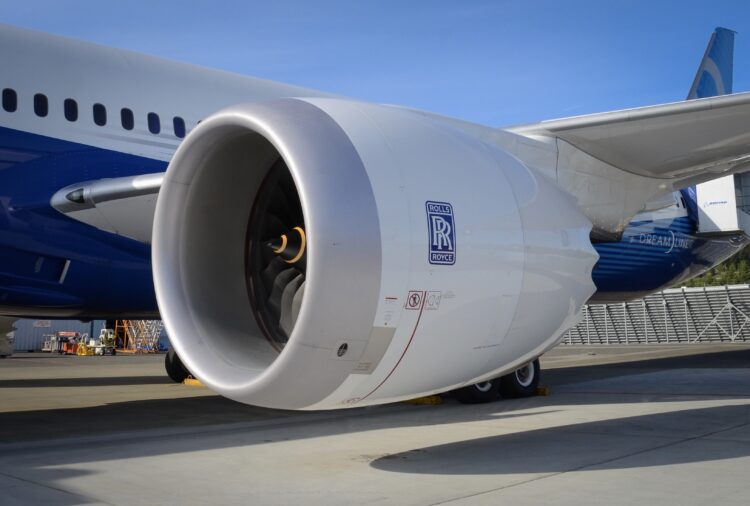
Rolls Royce is a market leader in propulsion and distributed energy systems for both the defense and civil aerospace markets. Their commercial markets cover nuclear, gas turbine, and diesel technologies to power everything from small planes and trains to entire cities. The aerospace applications for innovation are where Rolls Royce has made significant investments and reaped interesting rewards. On the defense side of their business, they have over 16,000 engines in service. In the civil aerospace side of their business, they provide engines to airlines, private business and engines for helicopters.
Major Changes in IndustryThe nature of the aerospace industry has relatively high barriers to entry as the cost for entry is high and requires specific skills and expertise.… Read the rest
Case Study: Causes of the Recent Decline of Tesla

Tesla is a pioneering company that was founded in 2003 by a group of innovative and driven engineers. For years electric cars had a stigma for being worse than traditional gas-powered vehicles. The general public believed that a high-quality electric car could not exist. This is where Tesla stepped in, the firm quickly went to work crafting a high-end electric car and released the revolutionary Roadster sports car. The Roadster was considered a major feat because it could travel very far on a single charge unlike many other electric cars. The Roadster was a very physically attractive car that helped make the idea of riding around in an electric sports car seem like a sleek and cool thing.… Read the rest
Case Study of GUCCI: Transformation of Luxury Branding

Guccio Gucci opened a small shop selling leather goods on the via del Parione in Florence in 1923. He sold luggage imported from Germany and offered customers with repair services. As the luggage business prospered, he opened his own workshop to produce his own design. The business in the 1920’s created huge profit and success however in the 1930’s Gucci began to face some challenges when the sanctions imposed on Mussolini. He faced shortage of imported leather yet this challenge gave him innovated idea of using new materials such as canvas and produced small leather goods, wallets and belts that are still big part of the Gucci company.… Read the rest