
Communication is the key thing that sets human beings apart from all the other animals. The human ability to communicate at a very sophisticated level has enabled us to build civilizations and to develop advanced technologies. Technology has increased incrementally since then and there have been huge leaps in communications technologies, such as the Internet. Whereas, the quality of the communication deteriorated as our ability to communicate rapidly via technology. The world today is a global world; we live in a global village and the world as we know it keeps decreasing due to the rapid growth of technology. The ever increasing speed at the development of new technology creates innovative ways of communicating and in more ways than one has changed the way people communicate.… Read the rest
Communication Concepts
Priestley’s Paradox – Impact of Technology on Communication
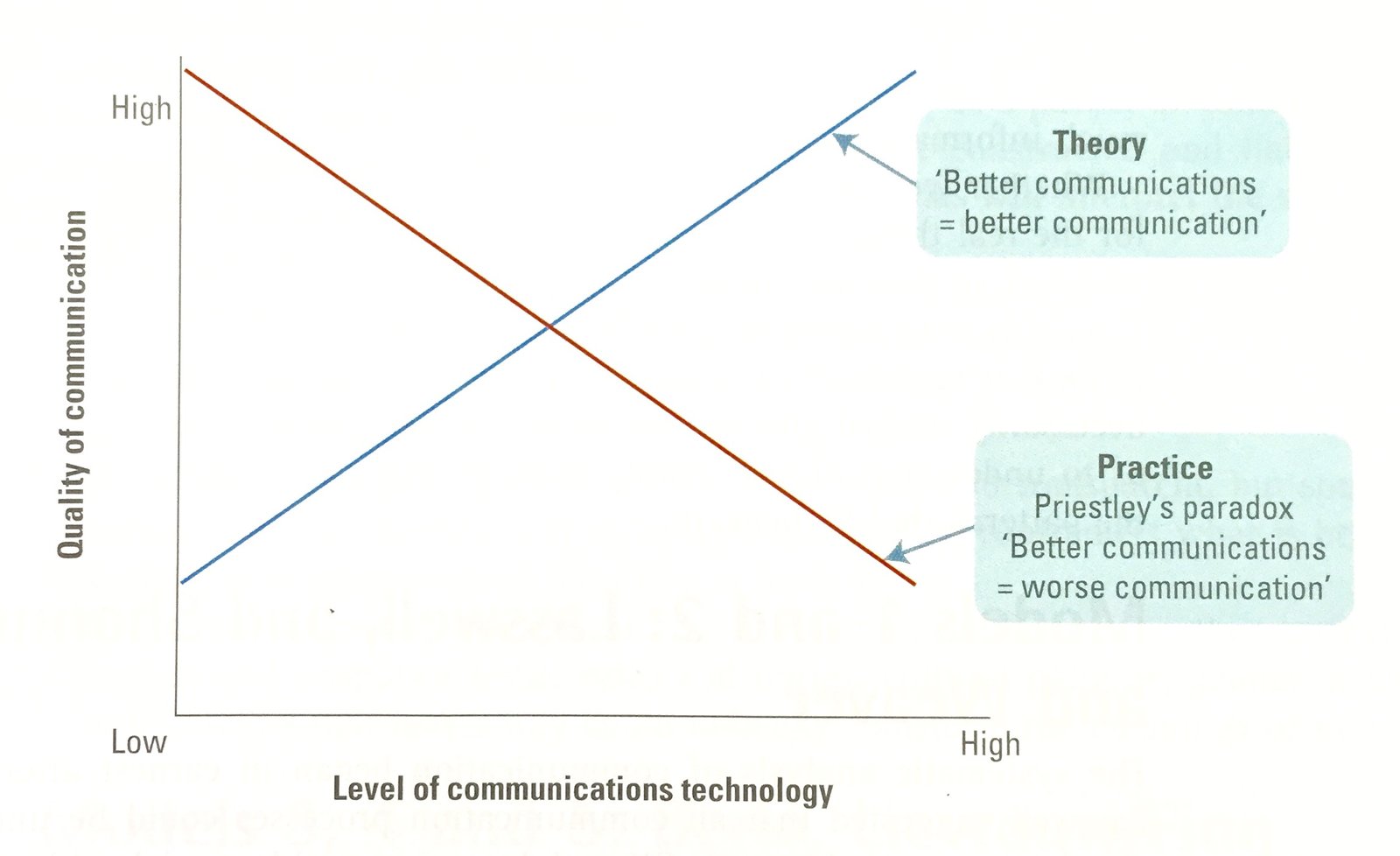
Communication is an essential part of everyday life. There are many things which have effect on communication, technology having a very large effect. Through the increase of communication technology, there has been a decrease in the quality of effective communication. While considering the theory of Priestley’s Paradox, the lack of interpersonal communication in new forms of technology have significantly affected the quality of communication. Modern technologies decrease the quality of communications through the lack of verbal and non-verbal feedback, the distortion of messages and also the unequal access to forms of these technologies. Verbal and non-verbal elements of interpersonal communication have effectively declined due to technology.… Read the rest
Supportive Communication – Meaning and Attributes
Communication is an everyday activity. It is the ordinary interaction that occurs between coworkers, friends, acquaintances, or intimates on daily bases. Communication comes in different forms. Verbal communication which includes sounds, words, language and speaking whiles non-verbal communication involves physical ways of communication like, tone of voice, touch, smell and body language.
The quality of communication and how communications are evolves and is maintained are the basis of whether a relationship amongst individuals are stable, become more intimate when appropriate and if additional information is shared between individual reflecting trust between the both parties in every facet of human life. Ineffective communication may lead individual to dislike each other, be offended by each other, lose confidence, refuse to listen and disagree to each other as well as causing a host of other interpersonal problem.… Read the rest
The Role of Celebrity Endorsements in Public Relations Campaigns
Businesses and entrepreneurs who use celebrities to endorse there products are elevated into another category. The celebrity pitch is a tried and tested advertising strategy that has stood the test of time. The advantages are that celebrity adds personalities and characteristics to a brand that will raise awareness and product adoption.According to American Public Opinion Survey and Market Research, 72 % of customers who bought a product backed by a celebrity said that it was the famous face of the endorser who first grabbed their attention. If successful, the use of celebrity endorsers can contribute to adding significant value to a product. … Read the rest
Spiral of Silence Theory
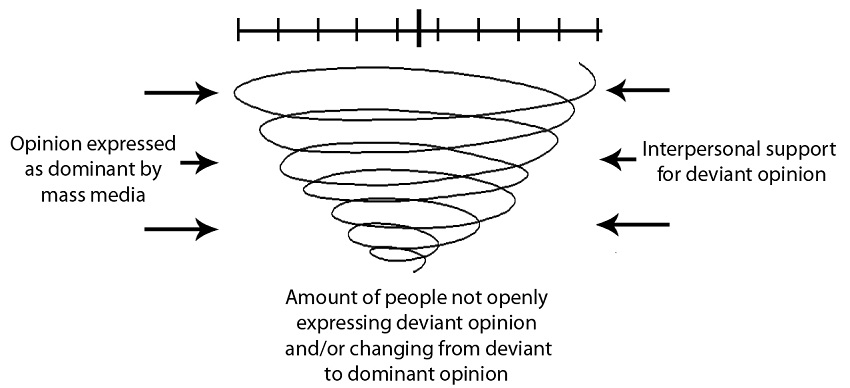
Elizabeth Noelle—Neumann’s Spiral of Silence theory analyses and demonstrates how interpersonal communication and media operate together in the development of public opinion. Elizabeth Noelle-Neumann is a German political scientist. Through this Spiral of Silence theory Neumann indirectly explains the Jews status during World War II under Nazi’s control. Adolf Hitler dominated the whole society and the minority Jews became silent due to the fear of isolation or separation.
This theory states that in elections certain views seem to get more play than others. Sometimes people mute their opinions rather than talk about them. It occurs when individuals express when they perceive that their opinion is popular and those who think otherwise remain quiet.… Read the rest
Design and Placement of the Corporate Communication Function

The need to centralize or decentralize usually comes down to weighing the considerations of company size, product, or service diversity, and geographic spread. For a company as diverse and large as General Electric, for example, the question was moot. Such a huge, diverse organization involved in activities as different as aerospace and network television cannot possibly remain completely centralized in all of its communication activities. Perhaps then, the best structure for large companies is some combination of a strong, centralized, functional area plus a network of decentralized operatives helping to keep communications consistent throughout the organization while adapting the function to the special needs of the independent business unit.… Read the rest