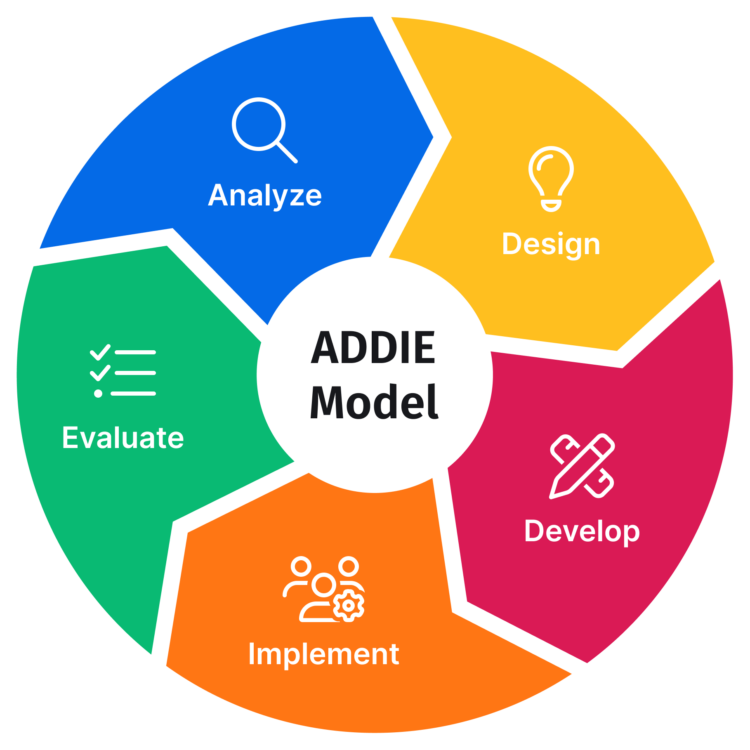
Instructional design denotes the process through which tutors or other relevant education stakeholders improve instruction through the systematic development of teaching materials to respond to the identified learning requirements. It is also referred to as instructional systems design. To guide the process of instructional design, many approaches have been suggested and their effectiveness supported and criticized in equal measure. One of the most popular instructional system design models is the ADDIE model, which represents five phases of the instructional design process. The phases comprise the Analysis, Design, Development, Implementation, and Evaluation stages It is important to know and understand the ADDIE model if a training development program is to be successful. ADDIE model is an extremely effective tool in training development that addresses instruction. Most employees have a significant amount of information to learn in order to become more proficient at their jobs. Therefore, the ADDIE model could be quite Continue reading
Human Resource Management
Human Resource Management (HRM) is branch of management that deals with people at work, it is concerned with the human dimensions of management of the organization. As organization consists of people, therefore acquiring them, developing their skills, providing them motivation in order to attain higher goal and ensuring that the level of commitment is maintained are the important activities.
Employee Reward Management – Meaning, Components, Process, and Issues

Reward management entails the formulation, maintenance, communication and evaluation of reward processes that assist an organization in enhancing its performance as well as achieve its objectives. Successful organizations manage their reward practices in such a way that enables them to come up with accurate predictions with regards to what innovations are best suited for the organization as well as ensuring that whatever activities that they engaged in currently will assist them in delivering the expected results. Such organizations strive to avoid ‘folly of rewarding A while hoping for B’. These organizations opt for the evidence based management approach. Evidence-based reward management refers to the kind of management approach that is justified by improvement in the organization’s performance. In other words, it implies that the effectiveness of the reward management approach can be measured against a certain set of indicators to ascertain whether they have impacted the performance of the organization in Continue reading
Achieving Sustained Competitive Advantage Through Strategic HR Management
Human resource management (HRM) is the art of managing employees in an organization. It involves the use of people to achieve organizational objectives in a productive manner and still satisfy the needs of individual employees. This is the traditional approach to human resource management. Human resource management has always been viewed as a department set apart from the rest of the organization. Lately however, the human resource department has had to justify its existence within an organization due to the increase in use of technology in place of human resources. The move is an attempt by the HR department to remain relevant to an organization in the face of the current technological changes. This has led to the emergence of Strategic Human Resource Management (SHRM). SHRM is a form of management that links HRM with organizational goals and objectives to improve performance and to strengthen organizational culture. SHRM focuses on organizational Continue reading
Significaance of Performance Management in Modern Organizations
Performance management is assessing the process of achieving goals and objectives to unsure that it is successful through communication and taking the right action. There are functions for evaluating how equipments behave so that effective work is done through proper performing systems and altering the systems that do not perform well. In the organization, performance is looked at in terms of actual results for the improvement to be done if actual results are less than the desired results. Objectives should be set through proper planning and intervention of managers in giving feedback about the progress that has been made and ensure there is performance appraisal to individuals based on their overall contribution. Performance management is used by businesses to attain strategic goals through getting the necessary information for achieving the goals and have networking process that link objectives of individuals who make great contribution to the enterprise with the goals Continue reading
Donald Super’s Career Development Theory
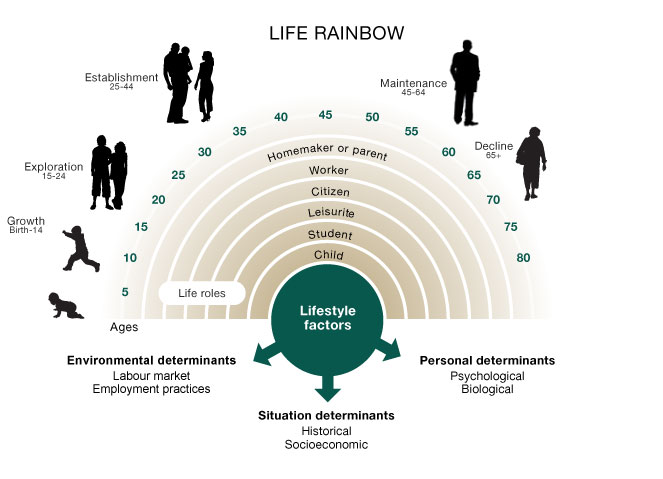
Career theories are usually based on circumstances such as social, economical and environmental. The modern concept of career is a product of the industrial age. Traditionally, organizations would structure people’s career paths and lives. During these times, work was concentrated in employment, learning was concentrated in education and education gave way to employment. Career counseling was a concept introduced to the education systems to help individuals transit from one sector (education) to another. Continuous improvement in career was viewed as a lifelong process. Donald Super in 1953 shed light on this idea and proposed a theory. Holland in 1956 expanded on the psychology of personality in relation to career development and career choice. These two theories in particular and multiple others have included psychological and social aspects to the understanding of the career choices that people make. Career theories look at the complexity of career choice, adjustment and development. Donald Super’s Continue reading
High Performance Working (HPW) Approach to Organization Performance

Business leaders should implement powerful concepts in their organizations to meet employees’ needs and improve performance. The High Performance Working (HPW) approach is one of the concepts that can make a difference in a given organization. This approach has been embraced by managers to create and sustain High Performance Work Systems (HPWS). The Concept and Components of High Performance Working (HPW) According to the United Kingdom Commission on Employment and Skills, High Performance Working (HPW) focuses on the best strategies to manage organizations and empower employees to focus on every business objective. The implementation of the concept has been considered to maximize employee commitment, thereby delivering improved levels of performance. The model is designed in such a way that employees are guided and supported to put adequate efforts into their activities. Consequently, the workers utilize their competencies and ideas in an attempt to support the goals of the targeted organization. Continue reading