
The best known production function in economics, is the Cobb-Douglas production function. It is named after its pioneer Douglas who fitted a function suggested by Cobb on the basis of the statistical data pertaining to the entire business of manufacturing in U.S.A. The Cobb-Douglas Production Function is a linear homogeneous production function implying Constant Returns to Scale. It takes the following form: Q = A.Kα.L1-α Where, Q Stands for the Output. L and K are inputs A is a positive constant α is a positive fraction i.e. α < 1. In the above formula if L and K are increased in equal proportion i.e. if L becomes gL and K becomes gK, then the output Q will become gQ. Thus the Cobb-Douglas Production function indicates constant Returns to scale. The Cobb-Douglas Production function also shows that Elasticity of Substitution equals One. Further it hints that if Continue reading
Managerial Economics
Managerial Economics generally refers to the integration of economic theory with business practice. It deals with the use of economic concepts and principles of business decision making. Managerial Economics is thus constituted of that part of economic knowledge or economic theories which is used as a tool of analyzing business problems for rational business decisions. Managerial economics can be viewed by most modern economists as a practical application of economics theory in using effectively the firms scarce resources.
Cournot’s Duopoly Model – Explanation with Example

In economics, organizations that operate in oligopolies markets compete by trying to steal market shares from one another. Therefore, instead of competing by lowering prices, the kinked demand curve points to an understanding that the strategy does not work since every organization reduces costs. Companies utilizing this strategy often compete using a factor directly affecting profit and hence the quantity being sold. The Cournot’s model finds application when organizations produce standardized or identical products and, thus, do not collude. Duopolies, on the other hand, operate by the understanding that companies compete by the produced quantity. The assumption by the Cournot’s duopoly model is that two organizations move simultaneously, having similar market demand perspectives and having good knowledge of the cost functions of each rival. With this, firms choose how to maximize profit through their output based on the belief that rival organizations make similar choices. For the U.S., the decision Continue reading
Deficit Spending- Meaning, Advantages and Disadvantages
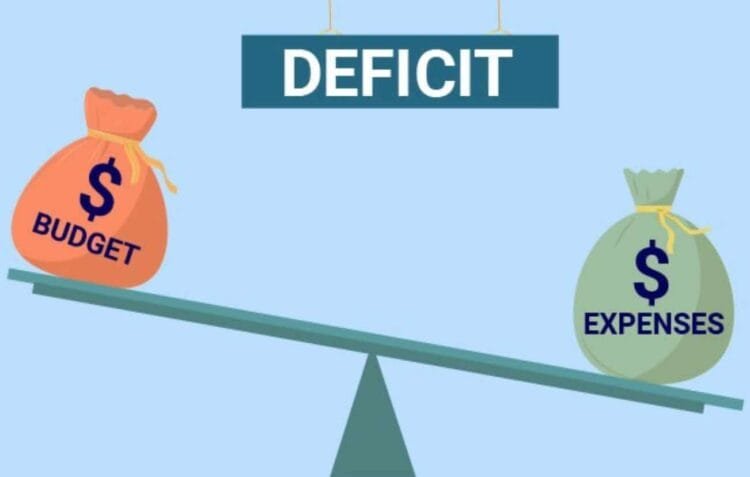
Deficit spending is the amount the government consumes that overtakes revenue over a particular budget year. Globally, it is a system used by most governments for economic stability. Deficit spending can be of either positive or negative impacts depending on the country’s aim in applying it. If well-strategized, it can be of immense aid to rescue the economic growth; it benefits every person in that specific government by opening room for investors. Deficit spending takes place when the government consumes more than the revenues. The government uses deficit spending for economic growth by opening opportunities for private sectors. For example, the private sector can offer loans to people so that they can start their businesses. In deficit spending, the consumption rate is higher than the profit that the government acquires. Therefore, the government spends more than what is available in addition to having more needs. Deficit spending multiplies huge debts Continue reading
What is an Economic System?
A market can be defined as a place where the forces of demand and supply operate or where buyers and sellers can interact – directly or indirectly – to trade goods and services. This therefore means that marketing is the process of identifying, anticipating and satisfying consumer requirements effectively and profitably. The concept of marketing is basically to make profit by satisfying consumers in a particular location. In conclusion, the idea of a market and the concept of marketing can be utilized as the economic system of a country/state. Economic System can be defined as a refereed journal for the analysis of causes and consequences of the significant institutional variety prevailing among all developed, developing, emerging, and transition economies. It can also be defined as an organized way in which a state or nation allocates its resources and apportions goods and services in the national community. The major function of Continue reading
Activity Based Costing (ABC) – Advantages and Disadvantages
In the past, the vast majority of departments used direct labor hours as the only cost driver for applying costs to products. But direct labor hours is not a very good measure of the cause of costs in modern, highly automated departments. Labor-related costs in an automated system may be only 5 percent to 10 percent of the total manufacturing costs and often are not related to the causes of most manufacturing overhead costs. Therefore, many companies are beginning to use machine-hours as their cost-allocation base. However, some managers in modern manufacturing firms and automated service companies believe it is inappropriate to allocate all costs based on measures of volume. Using direct labor hours or cost-or even machine hours-as the only cost driver seldom meets the cause/effect criterion desired in cost allocation. If many costs are caused by non volume-based cost drivers, Activity Based Costing (ABC) should be considered Activity Continue reading
Flexible v/s Fixed Foreign Exchange Rates
An exchange rate is simply the price of one currency in terms of another. The process by which that price is determined depends on the particular exchange rate mechanism adopted. In a floating rate system, the exchange rate is determined directly by market forces, and is liable to fluctuate continually, as dictated by changing market conditions. In a ‘fixed’, or managed rate system, the authorities attempt to regulate the exchange rate at some level that they consider appropriate. Such a system often seems appealing to those who are troubled by the uncertainties of the present, highly volatile, floating rate environment. But the choice of exchange rate regime involves considerations that extend beyond the stability or otherwise of currency prices. Exchange rates stability has always been the objective of monetary policy of almost all countries. Except during the period of great depression and world war II , the exchange rate have been Continue reading