Behavioural Issues in Strategy Implementation

It is vital to bear in mind that organizational change is not an intellectual process concerned with the design of ever-more-complex and elegant organization structures. It is to do with the human side of enterprise and is essentially about changing people’s attitudes, feelings and – above all else – their behavior. The behavioral of the employees affect the success of the organization. Strategic implementation requires support, discipline, motivation and hard work from all manager and employees. Influence Tactics: The organizational leaders have to successfully implement the strategies and achieve the objectives. Therefore the leader has to change the behavior of superiors, peers or subordinates. For this they must develop and communicate the vision of the future and motivate organizational members to move into that direction. Power: it is the potential ability to influence the behavior of others. Leaders often use their power to influence others and implement strategy. Formal authority Continue reading
A comparative study of Value System of Japan, China , America and India

In order to understand the members of a particular society, it is required to have some idea of their daily lives , their tradition , their beliefs , their way of looking at the world , their value system. Values determine what is right and what is wrong for an individual , for a group of people ,for the people living in a particular nation. Individual’s value system decide the dos and the don’ts in their life. It forms the foundations of their characters. Depending on their value system   , in a given situation they behave in a particular manner. The culture of various countries differ. There may be some similarity, but they are not the same. The values, beliefs and   notions of Japan differ that of America, china or India. An organization is a part of the society . therefore, as far as an organization in a Continue reading

Importance of Services in Industrial Marketing

Business services include maintenance and repair support and advisory support.  Like supplies services are considered as expense items. The explosive growth  of the internet has increased the demand for a range of electronic commerce  services such as delivering technical support, customer training and  management development programmes. The rapid growth of business services  in industrial marketing is governed by four important  factors which are explained below. Innovations: The innovations in the field of science and technology have  contributed for increasing demand in the area of business services.  Advancement in computer security systems, computer enabled services,  environmental control systems for office and factory buildings are examples for  the effect of innovations on business services. Out Sourcing: It is a common phenomenon that the present day  organizations are getting the services done from outside services provide. In an  area where the company is not expertised such as management information functions, HR, Payrolls, Warehousing Continue reading

Customer Based Brand Equity – Sources, Benefits and Measurement

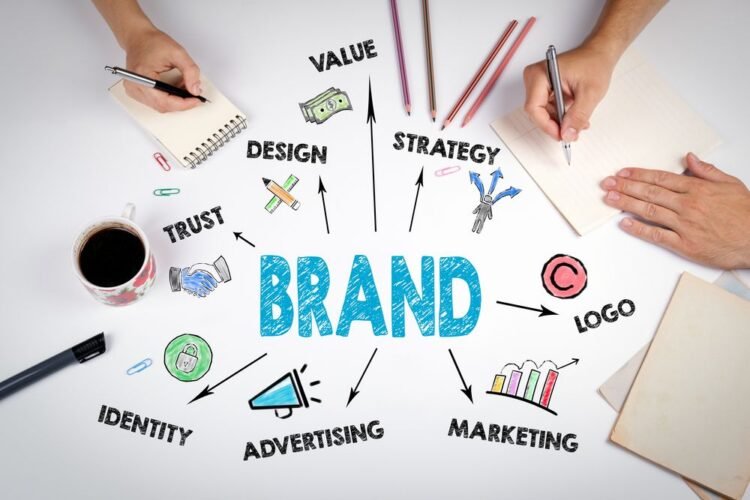
Brand equity is defined and a comprehensive framework is described that incorporates recent theoretical advances and managerial practices in understanding and influencing consumer behavior. This framework identifies sources and outcomes of brand equity and permits tactical guidelines as to how to build, measure, and manage brand equity, as will be developed further in other sections of the article. Customer-Based Brand Equity Understanding the needs and wants of consumers and customers is at the heart of marketing. A brand equity framework should therefore recognize the importance of the customer in the creation and management of brand equity. Accordingly, customer-based brand equity is defined as the differential effect that brand knowledge has on consumer response to the marketing of that brand. A brand is said to have positive customer-based brand equity when customers react more favorably to a product and the way it is marketed when the brand is identified as compared Continue reading

The Standardized Advertising Approach

There are three basic schools of thought regarding advertising standardization. First one is standardization approach which assumes that due to faster communication there is a convergence of markets and that costumer are becoming increasingly similar. Second is an adaptation approach which point to cultural differences and conclude that advertising must be adapted and the last one compromise approach which recognizes local differences but also that some degree of advertising standardization is possible. Standardized Approach   Standardized or global advertising approach is practice of advertising the same brand or same product in the same way everywhere around the world. It looks for similarity across countries and segments to catch up a common thread to capitalize on adverting. That opinion shows that human needs and emotions are the same in everywhere. In addition this communication and transportation, technology, create a global market and desires of costumer around the world become homogenized. Global Continue reading

Strategic Business Decisions on Research and Development (R&D)

Industrial research can have one of two fundamental orientations. First orientation is the scientific research, which is concerned with generating new concepts that may or may not have product applications. The second orientation is the commercial development – which can take several forms, but is essentially product, as opposed to concept, oriented. Thus commercial development is a more pragmatic and market-centered form of R&D effort than scientific research. Research and Development strategy has four primary elements: R&D goals, extent of integration of the R&D function, amount of market coupling desired, and size of the budget. 1. Research and Development  Goals Goals are needed to specify the purpose of R&D is used as part of product or market development or market-penetration business-level strategies, the firm’s desired competitive position can largely determine the amount and type of R&D needed. More specifically R&D can have one of four basic purposes that normally would Continue reading