Total Quality Management (TQM) Implementation

Total Quality Management (TQM) is a method by which management and employees can become involved in the continuous improvement of the production of goods and services. It is a combination of quality and management tools aimed at increasing business and reducing losses due to wasteful practices. Total Quality Management (TQM)    views an organization as a collection of processes. It maintains that organizations must strive to continuously improve these processes by incorporating the knowledge and experiences of workers. The simple objective of TQM is “Do the right things, right the first time, every time.” TQM is infinitely variable and adaptable. Although originally applied to manufacturing operations, and for a number of years only used in that area, TQM is now becoming recognized as a generic management tool, just as applicable in service and public sector organizations. A preliminary step in Total Quality Management (TQM) implementation  is to assess the organization’s Continue reading
Motivation – Definition, Process, Types, Features and Importance

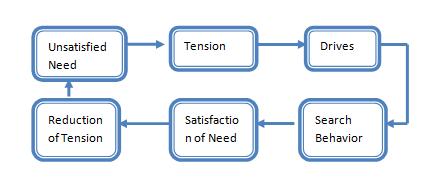
Definitions of  Motivation The word Motivation derives from the   Latin word “Movere”. The Latin word “Movere” means “To move”, “To drive” or “To drive forward” etc.  Motivation can be defined as stimulating, inspiring and inducing the employees to perform to their best capacity. Motivation is a psychological term which means it cannot be forced on employees. It comes automatically from inside the employees as it is the willingness to do the work. Joe Kelly  defined Motivation as “Motivation is a process where by needs instigate behavior directed towards the goals that can satisfy those needs.” According to W. G. Scot, “Motivation means a process of stimulating people to action to accomplish the desired goals.” According to Michael J. Jucius, “Motivation is the act of stimulating someone or oneself to get a desired course of action, to push the right button to get a desired results.” Process of Motivation Unsatisfied Continue reading

Ethical Reasoning

Ethics is a term which refers to moral philosophy that focuses on the aspects of good life and the difference between better and worse. Ethics is concerned about the rules of human behavior and considers whether or not there is any objective right or wrong. Furthermore, ethics is concerned about the foundations of moral principles and how it evolved. Considering the definition of ethics, it can be deemed that its main objective is to guide the society on deciding what is good from bad and what is better from worse which is also referred to as normative ethics. This may be done in a general way or may address certain ethical issues only. Another form or ethics is termed as meta-ethics wherein the meaning of ethical language is analyzed to identify their true meaning. Simply speaking, the true meaning of referring to something as a moral act or a right Continue reading

The Rational and Dynamic Approaches to Strategic Management

Strategic management is a not a new concept. It has been defined as a management system which links strategic planning and decision making with the day-to-day business of operational management. Strategic management is not a simple, step by step process, but a complex and iterative process which needs hard work and dedication from many people in an organization to implement it toward the objective. It is the process for the leading members of an organization to forecast its future and develop the necessary procedures and operations to achieve its future. Strategic management is usually found in high levels of management to help organization gather, analyze and organize useful information to keep up with industry and competitive trends. The rational and dynamic approaches to strategic management are two different schools of thought. The rational approach is well-planed and more prescriptive on strategy selection. However, the dynamic approach is opposite. Rational Approach Continue reading

Labor Cost – Definition, Types and Importance

Like materials, labor is also one of the prime inputs of production system. All manufacturing concerns require the labor for carrying out their production activities. The labor consists of workers who are essential to convert materials into finished products. The workers operate machine and perform other tasks to help convert materials into final outputs. The labor can be either direct or indirect. The labor who is directly engaged in the conversion process is called direct labor and who is not is called indirect labor. The labor, however, should be properly utilized and satisfactorily paid in order to minimize labor turnover and labor cost. Unlike materials, labor is complex to deal with. Dissatisfied and discontented labor always results in high labor costs and low quality outputs. Therefore there should be proper planning, accounting and controlling of labor. Concept and Meaning of Labor Cost The payment made to the labor in exchange Continue reading

Exit Strategy in a Business Plan

A business plan is a written documentation of which describes the business, the objectives of the business, its strategies, the market of which the business is in and the financial forecasts. The business plan has many functions, from securing external funding to measuring the success with the business itself. It essential when starting up a business for a business to have a realistic working business plan. The last portion of any business plan is the exit strategy. It may seem strange to develop a strategy this soon to leave the business, but potential investors will want to know the long-term plans. The exit plans need to be clear in your own mind because they will dictate how you operate the company. For example, if it is your ultimate aim to get listed on the stock market, then you have to follow certain accounting regulations from day one. The sequence of Continue reading