Impact of Personality Types at Workplace – The Big Five Personality Traits
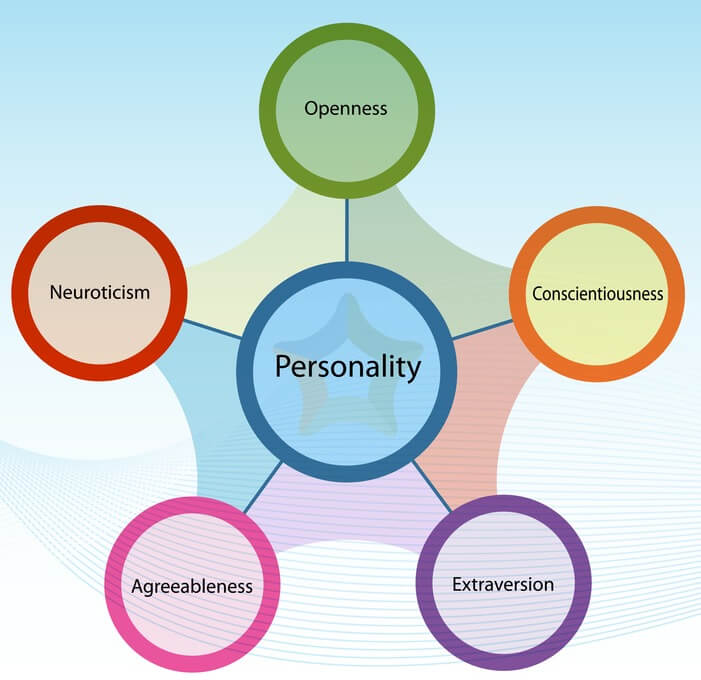
The unique thought patterns, behaviors and feelings that make an individual different from the other can be termed as Personality. The personality of every individual originates out of genetic heritage as well as his immediate surroundings, and remains constant all through their lives. This results in individual differences. Due to complexity in human nature arising out of the wide variety of experiences in life, the different personality types affect individual relation ships in an organization, and affect the organizational climate. However, though it is assumed that the personality of an individual is more or less constant, it does not happen so. It has been observed that though individual differences occur as a result of various styles of parenting and the amount of attention that one received in childhood grooming, individual successes and failures experienced in life, changes in individual personality do occur in the long run. Individuals are likely to Continue reading

Contingent Contracts

A contract may be unconditional or absolute on the one hand and conditional or contingent on the other. The absolute or unconditional contract is one without any reservations or conditions and is to be performed under any event. On the other hand, conditional or contingent contract is one in which a promise is conditional and the contract shall be performed only on the happening or not happening of some future uncertain event. The event must be collateral to the contract. The condition may be precedent or subsequent. For example, goods are sent on approval, the contract is a contingent contract depending on  the act of the buyer to accept or reject the goods. According to the section 31 of the contract Act 1872, “A Contingent contract is a contract to do or not to do something, if some event, collateral to such contract, does or does not happen.” A Contingent Continue reading

Manager’s Role in Employee Motivation

Motivation is the driving force in which human being achieve their goals. Motivation is the power that strengthens behavior, gives the route to the behavior and it triggers the tendency to continue. Motivation is a course that is concerned with a kind of strength that boosts the performance and directs one towards accomplishing some definite target. Motivation is a force that helps individual to achieve their desires. It is a strength that helps individual to stay focus and determined.  Motivation usually formulates an organization more successfully because the provoked employees are constantly looking for the improved practices to do the work. It is therefore important for organization to persuade employee’s motivation. One key factor in employee motivation is the opportunity that the employees want to continue to develop and grow the job and career enhancing skills. Managers are individuals that are responsible for heading organizations. Managers are also accountable for Continue reading

Importance of Advertising

Advertisement is a mass communicating of information intended to persuade buyers to by products with a view to maximizing a company’s profits. Generally, advertising is a relatively low-cost method of conveying selling messages to numerous prospective customers. It can secure leads for salesmen and middlemen by convincing readers to request more information and by identifying outlets handling the product. It can force middlemen to stock the product by building consumer interest. It can help train dealers salesmen in product uses and applications. It can build dealer and consumer confidence in the company and its products by building familiarity. Advertising is to stimulate market demand. While sometimes advertising alone may succeed in achieving buyer acceptance, preference, or even demand for the product, it is seldom solely relied upon. Advertising is efficiently used with at least one other sales method, such as personal selling or point-of-purchase display, to directly move customers to Continue reading

Different Tools of Integrated Marketing Communications (IMC)

Integrated Marketing Communication is defined as the coordination and integration of all marketing communication tool, avenues and sources within a company into seamless program that maximize the impact on customer and other end users at a minimal cost. This integration affects all firm business-to-business, marketing channel, customer-focused, and internally directed communications.  Integrated Marketing Communications  is a management concept that is designed to make all aspects of marketing communication such as advertising, sales promotion, public relations, personal selling and direct marketing work together as a unified force, rather than permitting each to work in isolation.  Besides, it acts as an aggressive marketing plan because it sets and tracks marketing strategy that captures and uses extensive amount of customer information. It also ensures that all forms of communications and messages are carefully linked together to achieve specific objective. The important tools of Integrated Marketing Communications are: 1. Advertising Advertising has four characteristics: Continue reading

The Demographic and Technological Environment in Marketing

The Demographic Environment in Marketing Demography is the study of populations in terms of their size and characteristics. Among the topics of interest to demographers are the age structure of a country, the geographic distribution of its population, the balance between males and females, and the likely future size of the population and its characteristics. Changes in the size and age structure of the population are critical to many firms’ marketing. Although the total population of most western countries is stable, their composition is changing. Most countries are experiencing an increase in the proportion of elderly people, and companies who have monitored this trend have responded with the development of residential homes, cruise holidays, and financial portfolio management services aimed at meeting this group’s needs. At the other end of the age spectrum, the birth rate of most countries is cyclical, resulting in a cyclical pattern of demand for age-related Continue reading