Industrial Distribution Channel Management
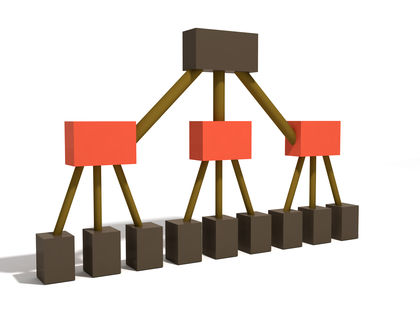
Channel designing is resorted to by the industrial marketer when he has to  develop either a new channel system or modify an existing one. As channel  design and management is a difficult and an incessant task, an industrial  marketer has to go through certain stages that are involved in designing a  superlative channel system. The various steps that are involved in channel  design process are analyzing needs of the customer, establishing channel  objectives, considering channel constraints, listing channel tasks, identifying  channel alternatives, evaluating alternate channels and selecting the  intermediaries. The industrial marketer also has to take appropriate decisions on industrial distribution channel  management by selecting the right intermediaries based on the various steps.  The intermediaries need to be continuously motivated by means of offering  them various benefits and facilities. Any conflicts arising between the  intermediaries due to various reasons need to be solved by the industrial  marketer. Finally, the entire Continue reading

Morale and Productivity

The satisfaction and comfort an employee experiences at the workplace is termed morale. Morale is a widely used term in organizations. But in general, it refers to esprit de corps, a feeling of enthusiasm, zeal, confidence in individuals or groups that they will be able to cope with the tasks assigned to them. The result of high morale generally results in the high efficiency of the organization. Morale directly impacts the working of an individual in a team towards the realization of common objectives. Morale therefore is individual specific as well as general. Unfortunately building of morale is not a mechanical problem that could be solved by either rewards or punishments. The best way to manage it is to proactively do a lot of employee related interventions that will together impact morale positively. Morale can also be understood as the spirit and confidence with which the employee performs his job. Continue reading

Articles of Association of a Company

The rules and regulations which are framed for the internal management of a company are set out  in a document known as the Articles of Association. The articles are framed to enable the company to  carry out the aims and objects of the company set out in the Memorandum of Association. Contents of Articles of Association The regulations and bylaws laid down in the Articles relate to the following: Share capital and its subdivision into different classes of shares, rights of shareholders and their  variation; The procedure for making allotment, calls on shares and transfer, transmission, forfeiture and  surrender of shares, including lien on shares;   Alteration and reduction of capital; Borrowing powers; Appointment of Manager, Managing Director, Secretary; Declaration of dividend; Procedure for convening, holding and conducting different kinds of meetings, voting rights and  methods; Maintenance of books of account and their audit; Share Certificates and Share Warrants, conversion Continue reading

History and Background of United Parcel Service (UPS)

How UPS Started In 1907 there was a great need in America for personal messenger and delivery services. To assist meet this need, an enterprising 19-year-old, James E. Casey, borrowed $100 from somebody and established the American messenger Company in Seattle, Washington. According to accounts given by Jim there have been quite a few messenger services already within the Seattle area, a number of that he had worked for within the past. That initial name was well-suited to the business pursuits of the new company. In response to telephone calls received at their basement headquarters, messengers ran errands, delivered packages, and carried notes, baggage, and trays of food from restaurants. They created most deliveries on foot and used bicycles for extended visits. only some cars were living at that point and shops of the day still used horses and wagons for merchandise delivery. it might be six years before the u. Continue reading

Case Study: How Walmart Enhances Supply Chain Management with ERP Initiatives?

Wal-Mart was founded in 1962 by Sam Walton and is been in the business of selling anything and everything people need for their everyday life with an everyday low price strategy. The success of Wal-Mart is mainly due to its focus on continuously improving operations through its efficient supply chain management practices. Sam Walton was not mainly concerned about opening more stores in small towns, but also came up with several innovative practices to improve the way business was conducted in the store. From the inception, Sam Walton provided products at a reduced cost than its competitors. Wal-Mart follows the “Everyday low prices” business model. As the years passed Wal-Mart grew to a size which gave it power to bargain the cost of products with its suppliers. To provide customers with “Everyday low prices”, Wal-Mart has highly invested in IT system to effectively manage their supply chain activities. Wal-Marts company Continue reading

Time Horizon in Forecasting

Business forecasts are classified according to period, time and use. There are long term forecasts as well as short term forecasts. Operation managers need long range forecasts to make strategic-decisions about products, processes and facilities. They also need short term forecasts to assist them in making decisions about production issues that span, only few weeks. Forecasting forms an integral part of planning and decision making, production managers must be clear about the horizon of forecasts. The three divisions of forecast are short range forecast, medium range forecast and long range forecast. Short range forecast: It is typically less than 3 months but has a time span of up-to 1 year. It is used in planning, purchasing for job schedules, job assignments, work force levels, product levels. Medium range forecast: It is typically 3 months to 1 year but has a time span from one to three years. It is used Continue reading