
Before we move on to the core of the issue, we must define what disability or being disabled means “Someone who is disabled has an illness, injury or condition that tends to restrict the way they live their life, especially by making it difficult for them to move about.” Thus, the employee, who is working for the organization, will be termed disabled if he/she is suffering from an injury or illness which affects or restricts them from performing their job effectively. There can be two types of disabled employees 1. Disabled – while employed: i.e. the person was fit and sound during the start of employment relationship, however, during the tenure of his/her service he turned disable, which can be either: On-the-job: This is during the work hours while working at premises. Off-the-job: This is not at work premises, but surely after the start of employment relationship. 2. Disabled – Continue reading
Human Resource Management
Human Resource Management (HRM) is branch of management that deals with people at work, it is concerned with the human dimensions of management of the organization. As organization consists of people, therefore acquiring them, developing their skills, providing them motivation in order to attain higher goal and ensuring that the level of commitment is maintained are the important activities.
Morale – Definition, Characteristics and Significance
Morale is the term usually applied to armed forces during wartime and to sports and athletic teams. It refers to team spirit and co-operation of people for a common purpose. Its importance has been realized by the management only in recent years. It is felt by the management that if the morale of the employees is high, production would be higher and vice-versa. Meaning and Definitions of Morale Morale represents the attitudes of individuals and groups in an organization towards their work environment. Morale is an indicator of the attitude of employees towards their jobs, superiors and their organizational environment. It is a collection of the employees attitude, feelings and sentiments. Various definitions of morale are; Flippo has described morale “as a mental condition or attitude of individuals and groups which determines their willingness to co-operate. Good morale is evidenced by employee enthusiasm, voluntary confirmation with regulations and orders, and Continue reading
Models of Organizational Behaviour
The effect of an effective organizational behavior system is to produce motivation. Such motivation builds two way relationships. It means that management and employees are jointly benefited without manipulation of one party by the other. Each type of employee is in need of a particular climate. In order to build up a sound climate, executives must understand their people in the organization. The significant factor is that what motivates job performance in general and in building an overall climate conducive to motivation. The individual differences suggest that there can’t be any all purpose organizational climate. The following are the five models of organizational behaviour based on which the organizational climate ought to be fixed. Important Models of Organizational Behaviour 1. Autocratic Model Deep rooted in history, this model claims ‘power’ as its managerial orientation. The people who are in command must have the power to demand. Authority is the only Continue reading
Expatriate Compensation – Meaning, Factors, Components, and Approaches
The compensation has long been established as a primary means of fostering loyalty and productivity of international expatriates. Nevertheless, the HR managers continue to face several challenges when implementing it which ends up in loss towards the organizations. The issues that gave birth to international human resource management remain more important than other functional areas is expatriation and adaptation of practices to different cultures. Factors Affecting Expatriate Compensation The most often mentioned factor that influences the expatriates’ satisfaction by the compensation strategies is the differences in cost of living between the host and parent country. If the cost is higher, the employer is required to adjust the compensation package in order to merge the gap. In the opposite situation, the difference is not subtracted. Such approach is known as a no loss policy and occurs with slight variations in the majority of the HR practices. The most difficult part of addressing Continue reading
Strategic Human Resource Management Process
Human resource management (HRM) is that part of management process which makes, enhances, manages and develops the human element of the enterprise measuring their resourcefulness in terms of talents, abilities, total skills, creative, knowledge, and potentialities for effectively contributing to the organizational objectives. Human resources are precious and a source of competitive advantage. Human resources may be tapped most effective by mutually standard policies which promote promise and foster an inclination in employees to act flexibly in the interests of the adaptive organization’s pursuit of excellence. Human resource policies can be joined with planned business and used to reinforce appropriate culture. Human resources play a critical role in enabling the organization to effectively deal with the external environment challenges. The human resource management has been accepted as a strategic partner in the formulation of organization’s strategies and in the implementation of such strategies through human resource planning, employment, training, appraisal Continue reading
Work-Life Balance: Why it Matters and How to Achieve it
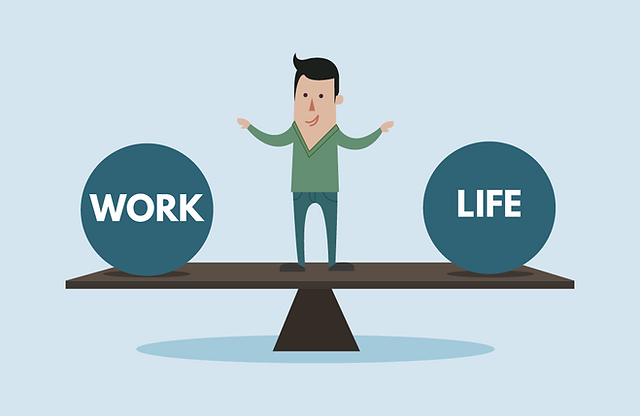
Work-life balance is a concept that has gained a lot of attention in recent years. It refers to the ability to balance one’s professional and personal life without either one interfering with the other. The goal is to maintain a healthy balance between work and personal life so that you can enjoy both without sacrificing either one. In today’s fast-paced and demanding world, work-life balance is more important than ever. With the rise of technology, the boundary between work and personal life has become increasingly blurred. Many people find themselves working longer hours, answering emails after hours, and feeling overwhelmed by their workload. This can lead to increased stress and burnout, which can have serious consequences for both personal and professional life. There are many benefits to achieving work-life balance. Some of the most notable include: Improved mental health: When you have a balanced work and personal life, you are Continue reading