Performance Management is a process that enables an organisation to evaluate and continuously improve individual, subsidiary unit and corporate performance, against clearly defined, pre-set goals and targets. There is a very important link between performance management strategies applied to individuals or units which contribute to the organisation be it for global profitability. This linkage is also important as an individual’s performance is evaluated according to expectations of appropriate outcomes and behavior that contribute to organizational goal attainment. Any concern would need to devise an effective system for managing the performance of its global operations that assists strategic cohesion and competitiveness but it is also important to keep in mind not to impose onerous methods for the same invading the local receptiveness. Examining performance and ensuring adherence to agreed standards are key elements of an organisation’s managerial control system. Success of a company depends very much on all the stages and Continue reading
Human Resource Management
Human Resource Management (HRM) is branch of management that deals with people at work, it is concerned with the human dimensions of management of the organization. As organization consists of people, therefore acquiring them, developing their skills, providing them motivation in order to attain higher goal and ensuring that the level of commitment is maintained are the important activities.
The Concept of Occupational Safety and Health

Definition of Occupational Health Since 1950, the International Labor Organization (ILO) and the World Health Organization (WHO) have shared a common definition of occupational health. It was adopted by the joint ILO/WHO committee on occupational health at its first session in 1950 and revised at its twelfth session in 1995. The definition reads: “occupational health should aim at: the promotion and maintenance of the highest degree of physical, mental and social well-being of workers in all occupations; the prevention amongst workers of departures from health caused by their working conditions; the protection of workers in their employment from risks resulting from factors adverse to health; the placing and maintenance of the worker in an occupational environment adapted to his physiological and psychological capabilities; and, to summarize, the adaptation of work to man and of each man to his job.” The Changing Approach to Occupational Health and Safety The traditional approach Continue reading
Career Management – Definition and Meaning

Career is a general course of action, an individual chooses to pursue, all through his or her employment life. It may be represented as occupational positions a person has hold over so many years. Many people feel satisfied by achieving their career goals. At the same time, others have a strong feeling that, their careers, their lives and their potential has undergone unfulfilled. Employers too have a profound effect on employees’ careers. Some organisations have very formal career management processes, while others are very little concern about it. Career management is defined as the ongoing process of preparing, implementing and monitoring career plans. It can be undertaken either by the individual alone or can be a concerted activity along with the organisation’s career systems. Career management is a process that enables the employees to better understand their career skills, develop and give direction to it and to use those skills Continue reading
Subjective Matter and Importance of Collective Bargaining

Collective Bargaining is a process in which representatives of two groups (employers and employees) meet and try to negotiate an agreement which specifies the nature of future relationship (pertaining to employment) between the two. According to Beach, “Collective Bargaining is concerned with the relations between unions representing employees and employers (or their representatives). It involves the process of union organization of employees; negotiation, administration and interpretation of collective agreements covering wages, hours of work and other conditions of employment; engaging in concerted economic action; and dispute settlement procedures.” Subjective matter of Collective Bargaining The subject matter of collective bargaining covers a variety of issues affecting employment relationships between the workers and the management. According to Ghosh and Nath the issues covered in the collective bargaining are recognition of union or unions, wages and allowances, hours of work, leave and festival holidays, bonus and profit sharing schemes, seniority, rationalization and the Continue reading
The Importance of Human Resources Management in Organizations
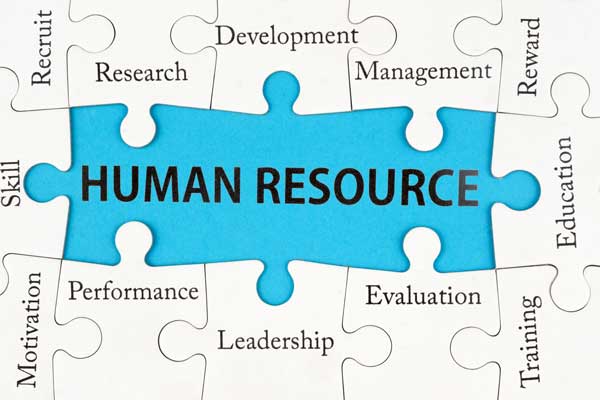
The functioning of modern organizations is highly dependent on the effectiveness of human resource management, which affects consistently organizational development. In actuality, human resources comprise important assets of any organization. In such a situation, many organizations are concerned with the improvement of the performance of human resources through motivating employees and developing effective approaches to human resource management. Traditionally, human resource management played an important role in the effective functioning of an organization. At the same time, the present epoch is characterized by the development of numerous human resource challenges which were practically unknown in the past. In such a situation it is extremely important to clearly identify the problem or problems and their major causes in order to be able to cope with the HR challenges and maintain the normal functioning of organizations. In this respect, it should be said that the wide implementation of new technologies is one Continue reading
Competency Based Compensation System
In the 1990s, a new idea gained acceptance in a number of organizations that more closely aligned human resource practices with organizational strategies, missions and cultures. A number of organizations switched from a traditional job-based structure to a competency-based structure that emphasized the development and attainment of behaviors, knowledge and skills compatible with and aligned to the organization’s mission and business strategies. The focus of competencies is centered on characteristics of the employee, including behaviors, skills and knowledge that can be demonstrated and positively affect the organization. Competencies emphasize the attributes and activities that are required for an organization to be successful. Therefore, human resource practices using Competency Models tap into the employee capabilities that are aligned to the organization mission and business need. Competency Models when implemented in totality can impact all of the agency’s human resource practices including recruitment, selection, compensation decisions, performance planning, performance evaluation and career Continue reading