Case Study of Jack Welch: Leadership that Creates Innovation

When Jack Welch became CEO of General Electric in 1981, he was only the 11th CEO the company had seen in its 120 years of existence. Although GE was a $13 billion a year company, it began showing signs of necessary change as it had reached the stage between maturity and decline. After 20 years at the helm, Jack Welch had turned General Electric (GE) into one of the world’s most successful companies. Welch increased GE’s market value from $13 billion to over $300 billion in 2001. He guided the once struggling company to what was then the biggest corporation in the entire world as well as the most profitable. Through the use of goal setting, empowerment, and communication Welch transformed the gigantic and complacent company into an energized multi-national organization ready to face world competition. Through an analysis of the techniques employed by Welch, one can gain a better Continue reading

Debt Recovery Agent

The phrase “Debt Recovery Agent” comprises three terms- Debt, Recovery and Agent.   Let us understand the meaning of these terms separately, before we explain the meaning of Debt Recovery Agent. Debt: It refers to a sum of money owed by one person or entity (debtor) to another person or entity (creditor).   Thus there are two parties to a debt- debtor who receives money by way of a debt; and creditor who lends money to the debtor.   To illustrate, if Ram takes a loan of Rs. 3 lacs from a bank for purchasing a car, Ram becomes the debtor (or borrower), the bank is the creditor (or lender) and the loan of Rs. 3 laces is the debt (principal).   Ram would be required to repay the loan in equated monthly installment (EMI),comprising the principal and interest, spread over the repayment period of, say, 3 years ( debt Continue reading

Lean Supply Chain Management

Even though Toyota – the Japanese company – was the one who made the lean concept widely well-known with the Toyota production system (TPS), there is a fact shows that lean did not just emerging but it was partially used in the United States. For example in 1908, “Scientific management” made by Frederick W. Taylor was the concept of using scientific method such as standardization to apply with the working process. This scientific idea was criticized to be the initial stage of developing the lean concept, since it helped workers to work in system and ignored the unnecessary jobs. However, Henry Ford is considered to be the first person, who used the lean principles. In 1910, Ford has developed the concept of continuous flow – called Ford’s model T production system (MTPS) – for manufacturing assembly line. This MTPS was to have workers focusing on their individual jobs and moving Continue reading

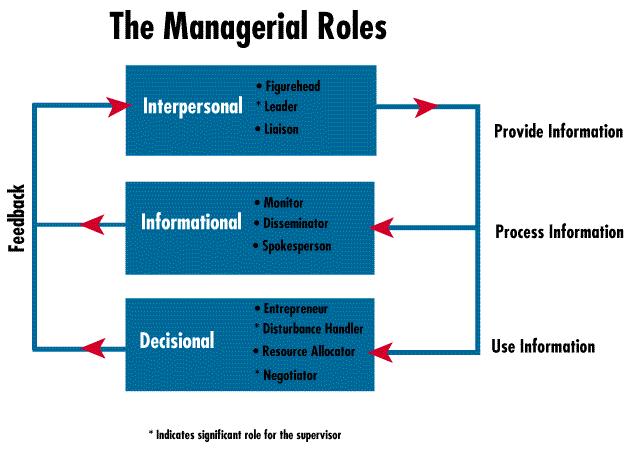
Managerial Skills and Roles

Managerial Skills Managers at every level in the management hierarchy must exercise three basic types of skills: technical, human, and conceptual. All managers must acquire these skills in varying proportions, although the importance of each category of skill changes at different management levels. Technical skills: Technical skills refer to the ability and knowledge in using the equipment, techniques and procedure involved in performing specific tasks. These skills require specialized knowledge and proficiency in the mechanics of a particular. Technical skills lose relative importance at higher levels of the management hierarchy, but most top executives started out as technical experts. Human skills: Human skills refer to the ability of a manager to work effectively with other people both as individual and as members of a group. Human skills are concerned with understanding of people. These are required to win cooperation of others and to build effective work teams. Conceptual skills: Conceptual Continue reading

Product Types in Marketing Management

A product is something that must be capable of satisfying a need or want, it includes physical objects, personalities, places, organizations and ideas.  Product may be classified broadly into two major categories namely consumer goods and industrial goods. 1. Consumer Goods Consumer goods are those goods meant for use by the ultimate household consumer and in such form that they can be used by him without further commercial processing. Consumer goods are generally divided into three sub-categories according to the method in which they are purchased namely convenience goods, shopping goods are specialty goods. Convenience Goods: There are goods which the consumer usually purchases frequently and with the minimum efforts. Usually they have easy substitutes and the unit value will be low. The consumer may not have much of a preference for a particular brand. E Shopping Goods: These are goods which the consumer purchase less frequently and the unit Continue reading

The Skills and Knowledge of Succesfull Negotiators

Negotiator is the key person for the profitable survival of the organization in a competitive world. Negotiation as an art requires certain inherent qualities of an individual that makes the negotiator more dynamic and natural. Skillful managers must assess many factors when managing international business negotiations. The successful management of intercultural negotiations requires that manager go beyond a generalized understanding of the issues and variables involve. The negotiator must have the knowledge about the following things. Value: Business negotiators must make sure that they have an intelligent understanding of the facts that are the basis for any negotiation. Failure to gather & understand the relevant facts that support optimal deal making will result in a failed negotiation or negotiations where value or resources are left on the table. Process: Any negotiation that does possess a vigorously defined negotiation process and lacks a management infrastructure runs the risk of a sub-standard Continue reading