Business Ethics in Human Resource Management

Business ethics are the moral doctrines that direct the way to business behave. Business ethics determines the actions of every individual that distinguish the right or wrong. Every business organization must develop the codes of conduct and ethics that should be followed by all the members. Ethics can be taken as the crucial way to self-presentation and public perception of the organization. Business ethics in human resource management is related to the employee’s issues. Human resource management plays an important role in setting up and implementing ethics in the workplace. Implementation of ethics in the workplace has been one of the challenging tasks for the organization. Various human resources issues can be handled properly by the application of ethics and code of practices by the managers in the workplace. Ethics generally determine what is right and what is wrong. With the help of business ethics, proper allocation and maintenance of Continue reading
Standard Error in Hypothesis Testing

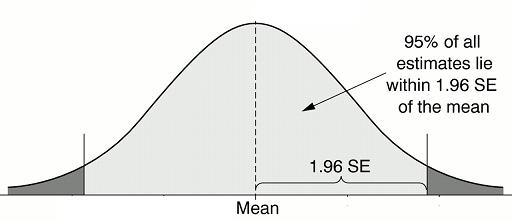
The standard error is an indispensable tool in the kit of a researcher, because it is used in testing the validity of statistical hypothesis. The standard deviation of the sampling distribution of a statistic is called the standard error. The standard error is important in dealing with statistics (measures of samples) which are normally distributed. Here the use of the word “error” is justified in this connection by the fact that we usually regard the expected value to be true value and the divergence from it as error of estimation due to sampling fluctuations. The term standard error has a wider meaning than merely the standard deviation of simple sampling because of the following reasons; The standard error is mainly employed for testing the validity of a given hypothesis. Mostly two levels of significance (0.05 and 0.01) are used for testing the validity of hypotheses. At 0.05 level of significance, Continue reading

Porter’s Five Forces Analysis of McDonalds

McDonald’s is an American fast food restaurant chain with its global headquarters in Oak Brook, Illinois. It has over 36,000 restaurants found in 120 countries all over the world, serving 68 million customers each day. It was founded as a barbeque restaurant in 1940 by Richard and Maurice McDonald. In the year 1955, a businessman Ray Kroc joined the company as a franchise agent and bought the company from the McDonald brothers. McDonald’s Corporation, incorporated in the year 1964, operates and franchises McDonald’s restaurants.  A McDonalds restaurant is operated by a franchisee, an affiliate, or the McDonalds corporation itself. McDonalds primary products include burgers, french-fries, soft drinks, milkshakes, wrap and desserts. The company has also introduced different menus like salads, fish, smoothies and fruits in response to changing customer tastes in order to lock-in customers. McDonald’s is operating under a new organizational structure starting from July 2015, categorized into four Continue reading

3 Common Types of Organizational Structure

Organizational structure is the internal, formal framework of a business that shows the way in which management is linked together and how the authority is transmitted.  It is basically a framework used to describe the hierarchy in an organisation. Every business needs to have their own organizational structure as it helps in identifying the job at each level of an individual followed by its functions and it also assists in obtaining their own goals for development. There is a need for every type of organisation to have their own structure specially when it comes to large enterprises as it becomes difficult activities of the various departments and functions. A business will opt for an organisation structure which is best suited to them and the way they would like to be working, and the chart they create will reflect this. A flat organisation is one that has eliminated most or all Continue reading

What is Management Control?

Management control is the process of evaluating, monitoring and controlling the various sub-units of the organization so that there is effective and efficient allocation and utilization of resources in achieving the predetermine goals. Thus, the focus of management control is on the managers of organizational sub-units and hence its focus is on line managers responsible for the performance of their departments. In 1916, Henri Fayol formulated one of the first definitions of control as it pertains to management: “Control consists of verifying whether everything occurs in conformity with the  plan  adopted, the instructions issued, and principles established. It[‘s] object [is] to point out weaknesses and errors in order to rectify [them] and prevent recurrence. “ Control can also be defined as “that function of the system that adjusts operations as needed to achieve the plan, or to maintain variations from system objectives within allowable limits. “ Management control therefore, is Continue reading

Concept of Material Handling – Definition and Functions

Material Handling involves the movement of material, manually or mechanically in batches or one item at a time within the plant. The movement may be horizontal, vertical or combination of horizontal or vertical. Material Handling is the movement, storage, control and protection of materials, goods and products throughout the process of manufacturing, distribution, consumption and disposal. The focus is on the methods, mechanical equipment, systems and related controls used to achieve these functions. Briefly, Material Handling is the moving of materials from the raw stage through production to ultimate Customer with the least expenditure of time and effort so as to produce maximum Productive Efficiency at the lowest Material Handling cost. Material Handling is concerned with motion, time, quantity and space. Material Handling Institute describes this as follows: Material Handling is MOTION. Parts, material and finished products must be moved from store to location. Material Handling is concerned with moving Continue reading