Importance of Performance Appraisal Systems

Performance appraisal is the assessment of an individual’s performance in an organization in a systematic way, the performance being measured against such factors as job knowledge, quality and quantity of output, initiative, leadership abilities, supervision, dependability, co-operation, judgment, versatility etc. assessment should not be confined to the past performance alone. Potentials of the employee for the future performance must also be assessed. Performance appraisal can be defined as “the systematic evaluation of the individual with respect to his or her performance on the job and his or her potential for development”.  A more comprehensive definition is, “Performance appraisal is a formal structured system of measuring and evaluating an employee’s job and how the employee can perform effectively in future so that the employee, organization all be benefited.” Performance appraisal, to common understanding, is the formal and informal assessment of the performance of the employee at work. In an informal system Continue reading

Data Analytics in Retail Industry

Data acquisition using the Internet of Things (IoT) in the retail industry is one of the most important innovations in increasing the amount of relevant data that can be collected during a customer’s visit. Analyzing the behavior of a customer during an in-store purchase using sensing devices can reveal a customer’s interests and choices. Using a number of sensing devices, the in-store customer behavior is captured, pre-processed, and then transmitted over a wireless network to the cloud. A data analytics model built with fuzzy logic is developed to generate the data of a customer’s purchasing intentions. This approach will help retail stores to recommend products to customers and guide supply chain planning. Such an approach allows retailers to gain more sales thereby increasing their market value. The increase in the amount of data available due to the advent of automation, new technologies, and standards have made the decision-making process in Continue reading

Types of Innovation and Mapping the Innovation Space

There are different types of innovation. There are four broad categories of innovation. Following these categories are referred as the 4Ps of innovation: ‘product innovation’ — changes in the things (products/services) which an organization offers. ‘process innovation’ — changes in the ways in which they are created and delivered. ‘position innovation’ — changes in the context in which the products/services are introduced. ‘paradigm innovation’ — changes in the underlying mental models which frame what the organization does. For example, the new version of a car, a new bank account offer and a new home personnel computer are all examples of a product innovation. In comparison to a product innovation a change in the production process and machines used to manufacture the car or the home computer these examples are process innovations. Similar the example of the new bank account offer if this came up by changing procedures and sequencing in Continue reading

Income from Other Sources

Income from other source is a residuary head of income. Any item of income which does not fall under any other four specific heads of income is to be charged under this head. According to sec 56(2) following incomes are chargeable under this head. Dividend declared by a foreign company Family pension Winnings from lottery, crossword puzzles, horse race etc Income from plant, machinery or furniture let out on hire where it is not the actual business of the assessee. Interest from securities, bank deposits Income from sub letting Any other receipts which doesn’t fall under any other heads of income. Income from agricultural land situated outside India Examiner ship fees received by college teachers Income from undisclosed source Ground rent etc Receipts without consideration in certain cases Dividend It means any amount paid by a company, out of divisible profits, whether taxable or not taxable, to its share holders Continue reading

Achieving Competitive Advantage through Human Resource Development

Human resource development is defined as the framework for helping employees develops their personal and organizational skills, knowledge and abilities. Human resource development involves using a range of learning and training techniques and strategies to change the work related behavior and attitudes of an employee and it also engages in performance management in other to ensure that people can do things well or do new and better things. Human resource development is concerned with enhancing organizational performance through effective development and deployment of organizational members. To enhance performance, a human resource developer has to ensure that the individuals in the organization has the knowledge, expertise and the right attitudes to execute their work, also human resource development aims at ensuring that the organization has the skilled, committed and well-motivated employee it needs to sustain competitive advantage by focusing on processes that develop skills, knowledge and the attitude of the employee, Continue reading

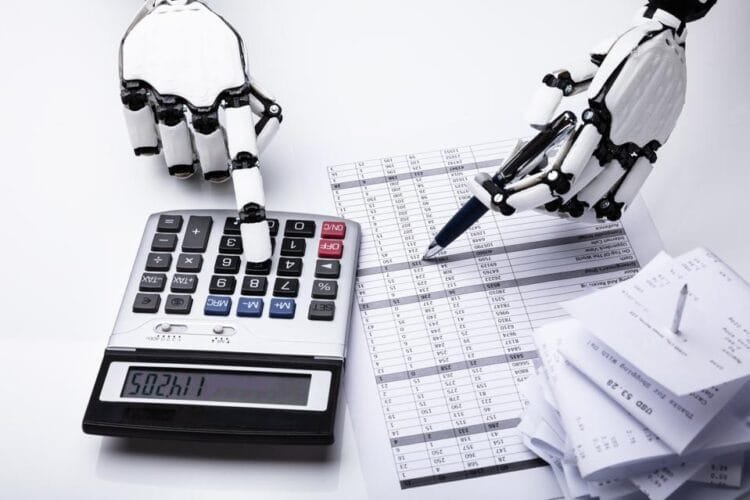
Artificial Intelligence (AI) and Accounting

The term artificial intelligence was first coined by John McCarthy, in 1956, during an interdisciplinary workshop of researchers at Dartmouth. This team of researchers developed the concept of “thinking machines”, which included automata theory, complex information processing and cybernetics. In the mid-to late 50s, General Electric became the first company to purchase a computer to process its payroll system, the UNIVersal Automatic Computer(UNIVAC). UNIVAC ran payroll in all of GE’s factories and stored data on magnetic tape instead of punch cards. The UNIVAC took 40 hours to complete the entire payroll process. During the 60s the U.S. transportation industry developed an electronic data interchanges to standardize transactions between vendors and customers. This was followed by the introduction of the first computer-based software, LANguage for Programming Arrays at Random (LANPAR), began to offer electronic spreadsheets. After LANPAR, VisiCalac and SuperCalc were released in 1970 and 1978 respectively. With each iteration, more functionality Continue reading