SWOT Analysis of DELL Computers

As one of the largest computer manufacturers in the world, Dell Computer Company has grown tremendously since its incorporation in 1984 by Michael Dell. Dell’s Direct Model, which is largely responsible for the success of the company, provides a fast, cost-efficient, and customer friendly means of production and distribution. Now, in a market that is ever changing, competitors are challenging Dell with new and unique products in an effort to overcome the superiority of the Direct Model. The growth and development of laptop computers is a primary area in which Dell can work for continued success, despite the threats posed by its competitors. SWOT (Strength, Weaknesses, opportunities and threats) analysis provides a basis for crafting a strategy that capitalizes on the company’s resources, while taking advantage of the best opportunities, and defending against the threats to its well being. In developing a new laptop computer, Dell would like to target Continue reading

Keynesian Theory and Underdeveloped Countries

Lord John Maynard Keynes wrote the General Theory of Employment, Interest and Money as a solution to the problem of periodic unemployment faced by developed industrial nations of the West during the great depression of the thirties. Keynesian theory singles out deficiency of effective demand as the major cause of unemployment and low level of income in industrial economy operations under a laissez faire system. Deficiency of effective demand is a prominent feature of economies undergoing depression and in order to improve the level of effective demand in an economy. Keynes suggested policy measures like cheap money policy, government’s compensatory investment spending, deficit financing and other fiscal methods. In essence, therefore, Keynesian economics turn out to be economics of depression applicable to developed countries. Its applicability in underdeveloped countries is very limited. To quote Joan Robinson: “ Keynes’s theory has   little to say directly, to the underdeveloped countries, for Continue reading

Differences between Traditional Marketing and Guerrilla Marketing

Simply looking at the definition of Guerrilla Marketing, we can be sure that it has a lot to do with creativeness and a lot of innovations should be made to traditional way of thinking that has been applied to marketing. Differences from traditional marketing and Guerrilla Marketing are several-fold. Within the context of this article, however, only some remarkable differences are chosen for analysis and illustrated with simple examples for better comparison. Let’s start analyzing the differences of traditional marketing from Guerrilla Marketing by a funny bookstores story, which is as following: A small bookstore was located on a beautiful street with quite a lot of pedestrians, commuters, and other people crossing the street every day. Unfortunately, that small big store, “Books For Every One” — that’s how it was named, was positioned right in the middle of the two other huge stores which were also selling books. Bad enough, Continue reading

Organizational Innovation – Definition, Characteristics and Types

Organizational Innovation is a process of receiving and using new ideas to satisfy the stakeholders of an organization. It is the conversion of new knowledge into new products and services. Organizational  Innovation is about creating value and increasing efficiency, and therefore growing business. It is a spark that keeps organizations and people moving ever onward and upward. “Without innovation, new products, new services, and new ways of doing business would never emerge, and most organizations would be forever stuck doing the same old things the same old way. “Innovation here is defined broadly, to include both improvements in technology and better methods  or ways of doing things. It can be manifested in product changes, process changes, new approaches  to marketing, new forms of distribution, and new conceptions of scope.” (Porter, 1990, p. 45) The term organizational innovations covers a wide spectrum of innovations; for example, it can  mean innovations in Continue reading

Learning Curve in an Organizational Context

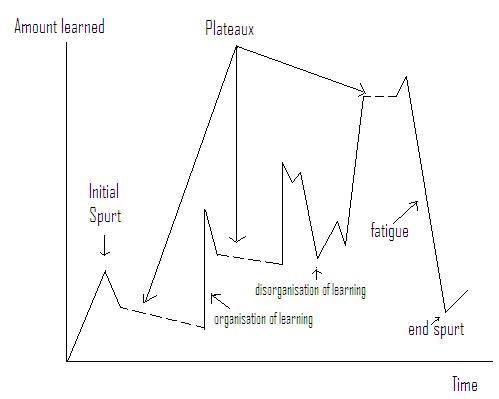
A highly useful learning concept which is valid for a wide range of situation is the  organizational learning curve, a diagrammatic presentation of the amount learned in relation to time. A typical learning curve will show on the Y-axis the amount learnt and the X-axis the passage of time. Characteristics  of the Organizational Learning Curve Certain characteristics are common to all learning curves. One such feature is the initial spurt. At the beginning, it is natural that the rate of learning exhibits spurt. Usually, the graph levels off at some stage, indicating that maximum performance has been achieved. Apparently at the beginning of the learning process, the subject is highly motivated and seems to exhibit a significant surge of effort. Many experienced trainers exploit this initial spurt by selecting the most important items to be communicated and presenting them as a package to the students at the beginning of the Continue reading

Types of Advertising Agencies

An  advertising agency  or  ad agency  is a service  business  dedicated to creating, planning and handling  advertising  (and sometimes other forms of  promotion) for its clients. Advertising Agencies can be classified by the range of services that they offer. Also, advertising agencies range in size from one man shows to large firms that employ thousands of people. Accordingly, different types of advertising agencies are: Full Service Agencies: As the name implies, a full service agency is one that handles all phases of advertising process for its clients: it plan, creates, produces and places advertisements for its clients. In addition, it might provide other marketing services such as sales promotion, trade shows, exhibits, newsletters and annual reports. One major point that differentiates a full service agency from other is that the personal work full time and the services provide are extensive. The services usually provided by a full service agency include Continue reading