
Managing projects, setting goals, clarifying roles, and solving problems in teams are skills that must be developed. New organizational skills must be developed if teams are to operate effectively and efficiently. Teamwork as a form of organizing work will vary in its manifestation between societies. Nevertheless teamwork is a recognizable approach to the organization of work. Thus, teamwork forms one of the underlying dimensions of work organization and employee involvement that we use to characterize high performance work organizations (HPWOs). At a broader range we may include employee satisfaction, employee stress, labor turnover rates, customer satisfaction, client retention and so on in HPWOs. Practices like developing higher levels of commitment to the organization, higher levels of motivation and using employees knowledge to introduce continuous improvements, etc. will increase the productivity and other organizational outcomes. We have heard much about the benefits with implementing team approaches to improve organizational effectiveness and Continue reading
Human Resource Concepts
Recruitment – Definition, Process, Need and Purpose

People are integral part of any organization today. No organization can run without its human resources. In today’s highly complex and competitive situation, choice of right person at the right place has far reaching implications for an organization’s functioning. Employee well selected and well placed would not only contribute to the efficient running of the organization but offer significant potential for future replacement. Recruitment comes at this point of time in the picture. Recruitment is a strategic function for HR department. Recruitment means to estimate the available vacancies and to make suitable arrangements for their selection and appointment. Recruitment is understood as the process of searching for and obtaining applicants for the jobs, from among whom the right people can be selected. A formal definition states, “It is the process of finding and attracting capable applicants for the employment. The process begins when new recruits are sought and ends when Continue reading
The Importance of Reward Management
Reward management in a business organisation is basically the way in which that particular business forms and implements strategies and policies to reward the employees to a fair standard and in accordance with how the organisation values them. Reward management in a business organisation usually consists of the business analyzing and controlling the employee’s remuneration and all of the other benefits for the employees. The main aim of reward management in a business organisation is to reward the employees fairly for the work that they have completed. The main reason reward management exists in business organisations is to motivate the employees in that particular organisation to work hard and try their best to achieve the goals which are set out by the business. Reward management in business organisations not only consist of financial rewards such as pay but they also consist of non-financial rewards such as employee recognition, employee training/development Continue reading
The Process of Employee Counselling
The process of employee counselling has three phases: rapport building, exploration and action planning, these are discussed below: Rapport Building: Initially the counselor-manager should level himself with his employee and tune himself to his orientations. General opening rituals like offering a chair, closing the door to indicate privacy, asking the secretary not to disturb are all important in demonstrating the manager’s genuine interest in employee’s problems. The counselor must listen to the feelings and concerns of the employee carefully and attentively. Leaning forward and eye contact are important signs of active listening. The employee must feel that he is wanted and the counselors is interested in him genuinely. Exploration: Besides active listening, the counselor should help the employee find his own weaknesses and problems through open and exploring questions. He should be encouraged to open up fully and talk more on the problem. This would enable both parties to uncover Continue reading
De Bono’s Six Thinking Hats: A Creative and Critical Thinking Model
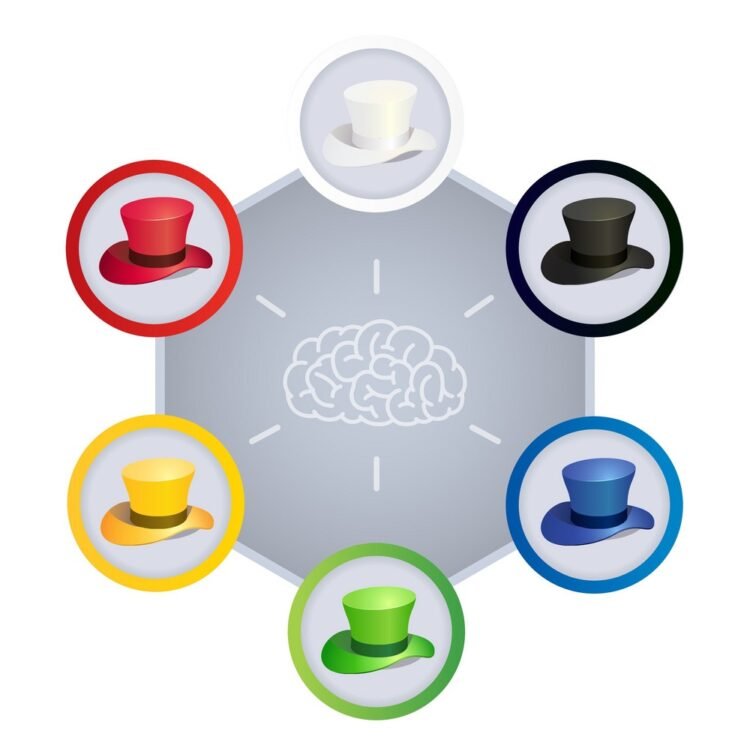
Creative thinking has always been one of the main aspects in the successful implementation of any business strategy. In the prospect of business growth and development, it is necessary to establish an effective decision-making approach, which will help to outline the company’s strengths and decrease the negative impact of weaknesses. The Six Thinking Hats technique is a framework for thinking and decision making introduced by a famous expert in the sphere of creative thinking, invented in the early 1980s – Dr. Edward de Bono, and is licensed by Advanced Practical Thinking (APTT), of Des Moines, Iowa. Organizations such as Prudential Insurance, IBM, Federal Express, British Airways, Polaroid, Pepsico, DuPont, and Nippon Telephone and Telegraph use the Six Thinking Hats method. The six different hats represent six different modes of thinking. This technique was introduced in order to help in the process of solving problems. The method promotes fuller input from Continue reading
Appraising Employee Performance

Need for Appraising Employee Performance in Organizations There are several reasons to appraise subordinates performance. First, appraisals play, or should play, an integral role in the employer’s performance management process; it does little good to translate the employer’s strategic goals into specific employees’ goals, and then train the employees. Second, the appraisal lets the boss and subordinate develop a plan for correcting any deficiencies the appraisal might have unearthed, and to reinforce the things the subordinate does correctly. Third, appraisals should serve a useful career planning purpose by providing the opportunity to review the employee’s career plans in light of his or her exhibited strengths and weakness. And, last but not least, the appraisal almost always affect the employer’s salary raise and promotional decisions. In reviewing the appraisal tools we discuss below don’t miss the forest for the trees. It doesn’t matter which tool you use if you’re less than Continue reading