Problems with Management Control Systems

Despite of the benefits, there are some issues with the implementation of management control system in an organization.They are: Magnitude of Change. Management control system is designed to cope with changes of a limited magnitude. While designing the control system certain as assumptions are made concerning the variables expected to change and the degree of change. Corrective actions are decided on the basis of-these-assumptions. For example, overtime may be decided on the assumption that five per cent of the employees will on an average be absent. When the magnitude of change is too high, the corrective action cannot work. For example, if 90 per cent of the employees remain absent, on a particular day due to a strike, management can do little to correct the change. Thus, the control system fails when the variables go outside the range, which the system was designed to handle. Time Rate of Change. Control Continue reading

Hypercompetition

Hypercompetition is a relatively new term in strategic management,  coined by Richard D’Aveni, professor of business strategy at the Amos Tuck School at Dartmouth College,  in his book “Hypercompetition: Managing the Dynamics of Strategic Maneuvering.” In this book he defines hypercompetition as; “an environment characterized by intense and rapid competitive moves, in which competitors must move quickly to build advantage and erode the advantage of their rivals.” Richard D’Aveni  (1994: 217-218) Hypercompetition results from the dynamics of strategic maneuvering among global and innovative combatants. It is a condition of rapidly escalating competition based on price-quality positioning, competition to create new know-how and establish first-mover advantage, competition to protect or invade established product or geographic markets, and competition based on deep pockets and the creating of even deeper pockets dalliances. In hypercompetitions the frequency, boldness, and aggressiveness of dynamic movement by the players accelerates to create a condition of constant disequilibrium Continue reading

Management Control in Services Organizations

The type of control which would be suitable for a particular firm depends upon the nature and complexities of its operations. A suitable control system has to be designed to suit the specific requirements of a particular firm. Service organizations are those organizations that provide intangible services. Service organizations include hotels, restaurants, and other lodging and eating establishments; barbershops, beauty parlors and other personal service; repair services; motion picture, television and other amusement and recreation services; legal services; and accounting, engineering, research/development, architecture and other professional service organizations. Characteristics of Service Organizations 1. Absence of Inventory: Services cannot be stored. If the services available today are not sold today, the revenue from these services is lost forever. In addition the resources available for sale in many service organizations are essentially fixed in the short run. A key variable in most service organizations therefore is the extent to which current capacity Continue reading

Significance and Problems of Social Research

Significance of Social Research Within the last 20 to 25 years, courses in methods of social research have come to occupy an increasingly important role in sociological curricula. It likely that at present every major university offers such courses. This is because growing significance of social research and also growing job opportunities in this field. The market analysis, the public opinion expert, the investigator of communication and propaganda all are growing facts for governmental and business needs. Knowledge of social research is useful for interpreting and weighing such reports. In the present age, social science are accruing a scientific method of study for this method, research is an important factor. In the last two or three decades, social research has become an important subject of the curriculum of Sociology. In fact almost all the universities, where sociology is taught, social research is a part of the curriculum of the sociology. Continue reading

HR Scorecard: A Balanced Scorecard for HR

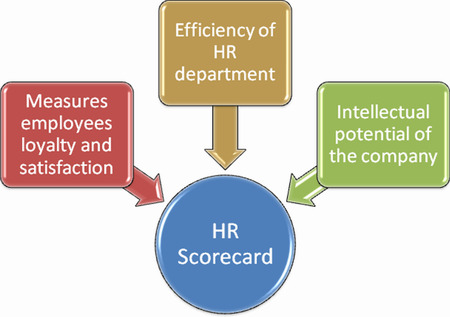
The new economic paradigm is characterized by speed, innovation, quality and customer satisfaction. The essence of the competitive advantage has shifted from tangible assets to intangible ones. The focus is now on human capital and its effective alignment with the overall strategy of organizations. This is a new age for Human Resources. The entire system of measuring HR‘s contribution to the organization‘s success as well as the architecture of the HR system needs to change to reflect the demands of succeeding in the new economy. The HR scorecard is a measurement as well as an evaluation system for redefining the role of HR as a strategic partner. Managers often use an HR Scorecard  to measure the HR function’s effectiveness and efficiency in producing  employee behaviors and thus in achieving the company’s strategic goals. The  HR Scorecard is a concise measurement system. It shows the quantitative  standards or “metrics” the firm Continue reading

Introduction to Insurance Sector in India

Insurance in its basic   form   is defined as “A contract between two parties whereby one party called insurer undertakes in exchange for a fixed sum called premiums, to pay the other party called insured a fixed amount of money on the happening of a certain event.” Insurance sector in India The insurance sector in India has come a full circle from being an open competitive market to nationalisation and back to a liberalised market again. Tracing the developments in the Indian insurance sector reveals the 360-degree turn witnessed over a period of almost two centuries. Today Insurance Companies in India have grown manifold. The insurance sector in India has shown immense growth potential. Even today a giant share of Indian population nearly 80% is not under life insurance coverage, let alone health and non-life insurance policies. This clearly indicates the potential for insurance companies to grow their market Continue reading