What is Business Process Management?
Business Process Management (BPM) helps an organization in adapting to changing conditions in the market place so as to remain competitive. A well designed BPM system can help an enterprise run efficiently and effectively, move according to the company’s regulations, and spot inefficiencies in the business activities and bottlenecks to the smooth flow of work.  Business Process Management systems help in recognizing certain situations that may pose trouble in the future. They enhance the overall quality and quantity of the various services and products being provided by the organization. Business Process Management can be extremely useful to employees and top managers of an enterprise. It assists the top executives in monitoring business activities and employee productivity. It is helpful to the employees as it reduces their working hours. It also helps an organization in abiding by the governmental rules and regulations set for the business world. A good BPM helps Continue reading
Types of Consumer Buying Behavior

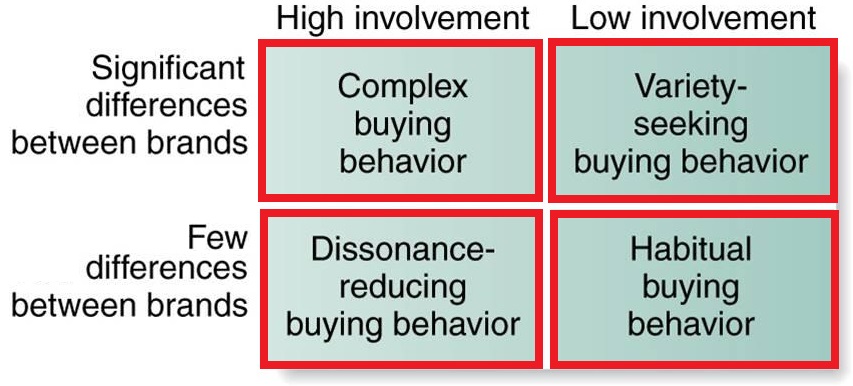
Consumers are becoming smarter day by day; it is not to fool them with any gimmick. Nowadays, consumer does his/her homework very well before making any purchase in the market. Even before buying a face wash a consumer go through a rigorous process of choosing the best among the many present in the market. Buying a face wash and buying a luxurious car is very different, therefore the perception involved and the information gathered by the consumer in purchasing a car is much more than buying a face wash. Henry Assael distinguished four types of consumer buying behavior based on the degree of buyer involvement and the degree of differences among brands. Routinized Response Behavior (RRB)/ Habitual Buying Behavior:  This is the simplest type of consumer behavior.  This occurs when the consumer already has some  experience of buying and using the product. Usually, this  kind of behavior is adopted for Continue reading

Steps Involved in the Process of Securitization

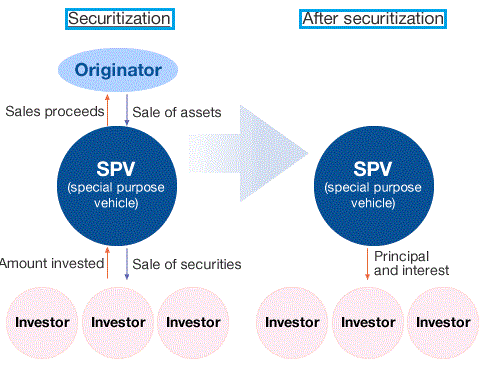
Securitization, a process by which illiquid financial assets are transformed into tradable commodities, is one of the most significant innovations of the financial world. Having originated in 1970 in mortgage markets in the USA, securitization has already converted over $90 trillion worth of non-tradable assets into marketable securities. As a powerful tool of liquidity and risk management, securitization has had a tremendous impact on the welfare of the world economy. In mortgage markets in many countries it provides a cheaper source of financing, and thus promotes the demand for housing. In the banking sector, securitization is widely used for allocating capital more efficiently, transforming risk into a tradable security, and reducing the overall cost of capital. It has enabled developing countries to  emerging market institutions to raise their sovereign ratings ceilings and thereby tap international capital markets for lower-rate financing. Read More: The Concept of Securitization The process of securitization Continue reading

Role of Advertising in Industrial Marketing

Advertising is the most preferred promotional tool in the consumer market  rather than in the industrial market. It is preferred less by the industrial  marketers compared to personal selling as they get to meet the customers  personally and understand their needs better in personal selling. But still  advertising is used to a good extent by the industrial marketers to assist their  sales force and intermediaries to generate more leads. Advertising plays an  important role in industrial marketing strategy by supporting and supplementing  personal selling efforts. The advertising budget for industrial goods is far less  compared to that of consumer goods. But, to have an increased efficiency and  effectiveness of the overall marketing strategy, industrial marketer should have  an integrated and well planned advertisement strategy that blends properly with  personal selling efforts. Before understanding the role of advertising in industrial marketing, we must be  aware that there are certain forces that Continue reading

Multinational Corporations and Accounts Receivable Management

Multinational Corporations (MNC’s)  grant trade credit to customers, both domestically and internationally, because they  expect the investment in receivables to be profitable, either by expanding sales volume or by retaining sales that otherwise would be lost to competitors. Some companies also earn a profit  on the financing charges they levy on credit sales. The need to scrutinize credit terms is particularly important in countries experiencing rapid  rates of inflation. The incentive for customers to defer payment, liquidating their debts with  less valuable money in the future, is great. Furthermore, credit standards abroad are often more  relaxed than in the home market, especially in countries lacking alternative sources of credit  for small customers. To remain competitive, MNCs may feel compelled to loosen their own  credit standards. Finally, the compensation system in many companies tends to reward higher  sales more than it penalizes an increased investment in accounts receivable. Local managers frequently Continue reading

Electronic Cheque Payment System

Electronic cheques address the electronic needs of millions of businesses, which today exchange traditional paper cheques with the other vendors, consumers and government. The e-cheque method was deliberately created to work in much the same way as conventional paper cheque. An account holder will issue   an   electronic   document   that   contains   the   name   of   the   financial   institution,   the payer’s   account   number,   the   name   of   payee   and   amount   of   cheque.   Most of the information is in uncoded form. Like   a   paper   cheques   e-cheques   also   bear   the digital equivalent   of   signature:       a   computed   number   that   authenticates   the   cheque   from   the owner of the account. Digital chequing payment system seeks to Continue reading