3 Levels of Grid Computing Deployment
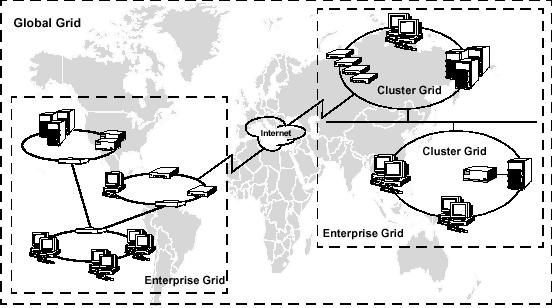
Grid computing is the application of several computers to a single problem at the same time – usually to a scientific or technical problem that requires a great number of computer processing cycles or access to large amounts of data. Computational grids that couple geographically distributed resources are becoming the effective computing platform for solving large-scale problems in science, engineering, and commerce. According to John Patrick, IBM’s vice president for Internet strategies, “the next big thing will be grid computing.” Although Grid computing is firmly ensconced in the realm of academic and research activities, more and more companies are starting to turn to it for solving hard-nosed, real-world problems. Grid computing is emerging as a viable technology that businesses can use to wring more profits and productivity out of IT resources –and it’s going to be up to you developers and administrators to understand Grid computing and put it to Continue reading
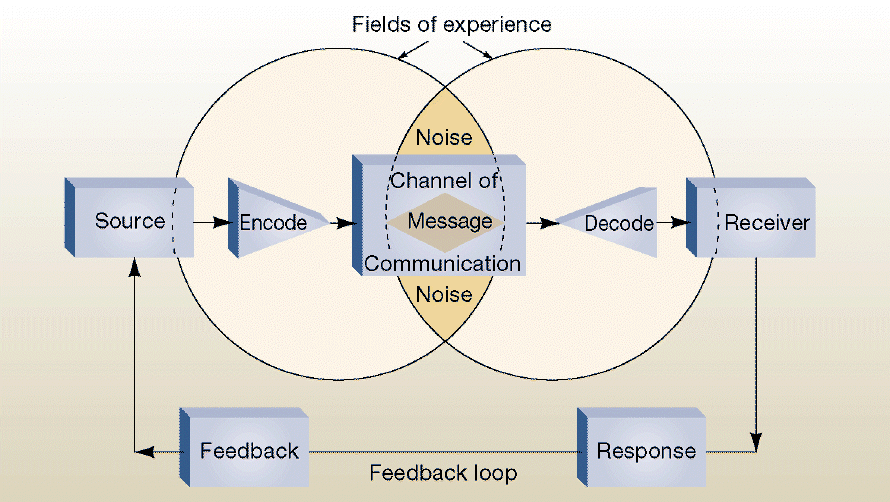
Elements of the Communication Process

Communication is a dynamic process involving a series of actions and reactions with a view to achieving a goal. How does it work? Think that you are in conversation with your friend. You are a sender or communicator, formulate (encode) an idea or message as best as you can, and pass on the message to your friend, who to the best of his ability receives or acts on the message (decode). He responds by formulating his own message and communicates to you (feedback) . If you think your message is understood or well received by your friend, then you go ahead with the next idea that you have in mind and the conversation goes on and on. Communication is, therefore, a two way process, that is, the ability to receive is as important as the ability to send. For successful communication, feedback is crucial because it tells how your message Continue reading

SWOT Analysis of Volvo

One of the strongest brands of the automotive industry, the Volvo Car Corporation was founded in Gothenburg, Sweden by Assar Gabrielsson and Gustaf Larson in 1927. From the very beginning, the aim of the two owners was to construct vehicles that will be safe, compatible to the Sweden’s climate and awful roads at that time. So the company’s development in last 80 years was focused on safety-the main principle of Volvo’s design, quality and durability of the vehicles. The first truck was introduced and immediately sold in January 1928 and not only in Sweden. In 1930s there was an export of Volvo trucks to Europe. In 1929 the first marine engine was introduced, followed by the first bus that was launched in 1934 as well as the aircraft engines in 1940s making the company to develop and grow and become global group worldwide. In 1999 Volvo Group sold Volvo Cars Continue reading

Trading, Clearing and Settlement Transactions at NCDEX

Trading The trading system on the NCDEX provides a fully automated screen based trading for futures on commodities on a nationwide basis as well as online monitoring and surveillance mechanism. It supports an order driven market and provides complete transparency of trading operations. Order matching is essential on the basis of commodity, its price, time and quantity. All quantity fields are in units and price in rupees. The exchange specifies the unit of trading and the delivery unit for futures contracts on various commodities. The exchange notifies the regular lot size and tick size for each of the contracts traded from time to time. When any order enters the trading system, it is an active order. It tries to finds a match on the other side of the book. If it finds a match, a trade is generated. If it does not find a match, the order becomes passive and Continue reading

Characteristics of Brand Positioning

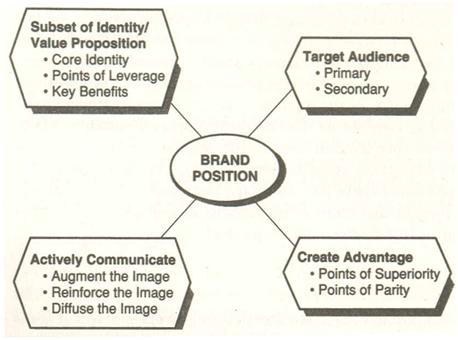
The core thought behind brand positioning is the idea that each brand (if at all noticed) occupies a particular point or space in the individual consumer’s mind, a point that is determined by that consumer’s perception of the brand in question and in its relation to other brands. The spatial distance between the points in that consumer’s mind reflects the subject’s perception of similarity or dissimilarity between products and brands. Four  Important  Characteristics of Brand Positioning The four salient characteristics of brand positioning are:. 1. Look to the Core Identity The core identity by definition represents the central, timeless essence of the brand. Thus the most unique and valuable aspects of the brand are often represented in the core identity. Further, there should be a cluster of brand elements surrounding each core identity component that (in addition to giving it richness and texture) opens up multiple execution alternatives. Finally, the Continue reading

Causes and Effects of Inflation

By inflation one generally means rise in prices. To be more correct inflation is persistent rise in the general price level rather than a once-for-all rise in it, while deflation is persistent falling price. A situation is described as inflationary when either the prices or the supply of money are rising, but in practice both will rise together. These days economies of all countries whether underdeveloped, developing as well developed suffers from inflation. Inflation or persistent rising prices are major problem today in world. Because of many reasons, first, the rate of inflation these years are much high than experienced earlier periods. Second, Inflation in these years coexists with high rate of unemployment, which is a new phenomenon and made it difficult to control inflation. An inflationary situation is where there is ‘too much money chasing too few goods’. As products/services are scarce in relation to the money available in Continue reading