Remote working is a form of arrangement where the employee does not have to commute to the workplace. The rise and success of remote working have been facilitated by technological development. Technological advancements offer the ability to get work done despite the worker’s location and enable communication with coworkers and clients. These forms of technology include local area networks, collaborative software, conference calling, internet access, private visual networks cloud computing, video telephony and Voice over Internet Protocol (IP) technologies. Teleworking has been assisted by the technology involved in telecommunication, such as smartphones, tablet computers, laptops, landline telephones and desktop computers. There have also been developments of software that have come in handy to facilitate remote working, such as Zoom, Microsoft Teams, Cisco WebEx, Stack, WhatsApp and Google Meet. The history of remote working is traced back to the 1970s when Jack Nilles developed the name telework or telecommuting. Technology was Continue reading
General Management Articles
Three Perspectives of Organizational Theory
Organizational theory is based on its three perspectives, which are the modern, symbolic-interpretive and the post-modern. The perspectives each have different approaches when it comes to the management of an organization. 1. Modern Perspective Modernists are objectivists who focus on reality of knowledge which is build based upon the conceptualization and the theorization. An Example would be that a company earns profits based on the CEO’s ability to make right decisions while investing the money of an organization. The results of the actions can be measured in profit and loss and can be directly measured. The data which modernists recognize are from the five senses, through what they see, heard, touch, smell and tasted. Modern Perspective builds a set of rules that can be used in organization so that all employees will be able to follow, perform and function, ensuring the entire process in the organization runs smoothly. Modernists do Continue reading
The Validity of Corporate Welfare Concept in Contemporary Times
Corporate welfare should not be accepted at the expense of the social welfare in a country. Many western countries accept corporate welfare but reject social welfare based on economic development. They argue that the corporate enhances economic progress while the social promotes too much dependence that drags the economy. For instance, a poor mother and her daughter are said not to contribute anything to the productivity of the economy. Being capitalists and advocates of individualism, the countries fail to take seriously the support of the helpless and marginalized. However, corporate welfare is not a guarantee of a country’s success due to the following reasons. Firstly, welfare is inhuman and causes imbalance and instability in different institutions. The poor and minority groups in the society are robbed of the little wealth they possess to be transferred to the richer. The wealthy in society continue to accumulate more wealth while the lower-income Continue reading
5 Essential Skills Needed to Be an Entrepreneur
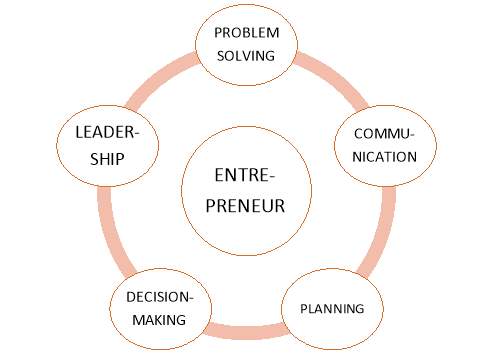
Entrepreneurs need to have a wide variety of skills to run a successful business. Unlike personal characteristics and attitudes, which can often be hard or impossible to change, entrepreneurs can acquire skills if they are willing to learn them. Additionally, they can hire people to work for them who have the needed skills. The following skills are very important if the entrepreneur want to succeed in his business: Problem solving: Every customer have to deal with problems and every entrepreneur has find solutions to them. The successful entrepreneur sees opportunities in these problems where many of the rest of us only see difficulties. A lot of time, the best new ideas come from the need to solve a problem. The entrepreneur has to be good in identifying the problem, and then has to be able to identify solutions that can be good from the customer perspective. Communication: Entrepreneurs have to Continue reading
Knowledge Management Systems: Conditions for Success
Certain factors or concerns also need to be considered in order to make this firm’s investment in Knowledge Management Systems (KMS) worthwhile. There is need for a major transformation in organisational culture to create desire to share, (give and receive). When there is organisational culture barrier, people tend to hoard their knowledge. One of the reasons why employees don’t share knowledge is the belief that knowledge is power and that hoarding it guarantees job security. Employees also tend to believe that there is no credit for knowledge sharing or won’t be able to own it anymore if they share. There might also not be time for knowledge sharing or afraid of making mistakes or being reprimanded. Some employees also do not know how to share knowledge or do not realize that their knowledge is valuable to the organisation. In order to solve these problems, employees need to be educated on Continue reading
Impact of Transformational Leadership on Employee Motivation
Transformational leadership in its leadership style has effectively built trust between employees and management and this usually lead to a smooth and pleasant working relationship that does not give room to suspicion in case of any change in policy or organisational change. Employees trust the leadership and they in turn are committed and loyal to the organisation. The employee is in a perfect emotional state of mind, since there is no fear of unknown or any need to panic. However, the trust sometimes could lead to exploitation since leadership knows that employees so rely on every of their judgement this but its been argued that the integrity of the transformational is to ensure the individual development of the employees. This leadership cares and is concerned about the employees and also inputs the company’s value in the mind’s of employee and constantly reminds them of the vision and goal to the Continue reading