
Many approaches have been utilized to integrate individual and group goals with overall goals of the organization of an enterprise. Management by Objectives (MBO) is basically a process whereby the superior and subordinate managers of an enterprise jointly (i) identify its common goals, (ii) define each individuals major areas of responsibility in terms of results expected of him, and (iii) use these measures as guides for operating the unit (or enterprise) and assessing the contribution of each of its members. The goals are jointly established by the manager and his subordinates and agreed upon in advance. These goals emphasize either output variables or intervening variables, or some combination of both. At the end of the pre-decided time period, the subordinate’s performance is reviewed in relation to preset goals. Both superior and the subordinate participate in this review/evaluation. If, after evaluation it is found that there is some discrepancy between the Continue reading
Management Concepts
Mechanistic Organizational Structure – Definition and Features
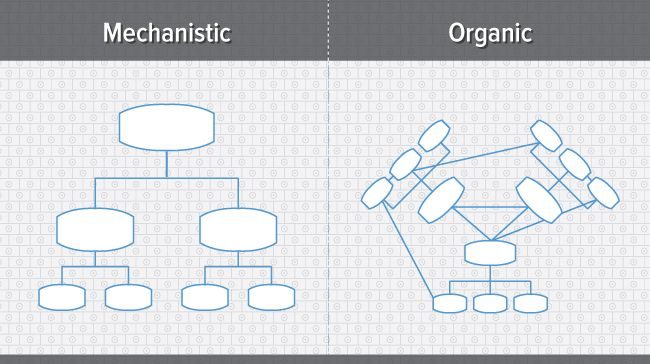
The structure of any organization has a clear impact on both employee behavior and its performance. On the other hand, an organizational structure provides an overview about the hierarchy of levels, roles and responsibilities, authorities, communication channels, etc. It is of utmost importance to understand the definition of the organizational structure since it affects both employee behavior and organizational performance. Organizational structure is understood as a method consisting of responsibilities and power allocated amongst members and how work procedures are carried out among them. It also includes the layers of hierarchy, centralization of authority, and horizontal integration. However, an organizational structure is a multi-dimensional construct which illustrates the division of work (roles or responsibilities including specification), departmentalization, centralization, complexity, communication or coordination mechanisms including standardization, formalization and flexibility. An important type of organizational structure can be identified as mechanistic organizational structure. Mechanistic organizational structure is hierarchical and bureaucratic by nature. Continue reading
Organization – Meaning, Definition, Importance and Principles
Meaning of Organization Organization is the foundation upon which the whole structure of management is erected. Organization is associated with developing an outline where the overall work is divided into manageable components in order to facilitate the achievement of objectives or goals. Thus, organization is the structure or mechanism that enables living things to work together. In a static sense, an organization is a structure or machinery manned by group of individuals who are working together towards a common goal. Examples of organization are Corporations, governments, non-government organizations, armed forces, non-profit organizations etc. The term organization has been used in four different senses; Organization as Framework of Relationships: Organization refers to the structure and interactions among various job positions which are created to realize certain objectives. Organization as a process: Organization is viewed as a dynamic process and a managerial activity which is vital for planning the utilization of company’s Continue reading
Transfer Pricing – Definition, Objectives and Principles
Meaning and Definition of Transfer Pricing Large organizations are divided into a number of divisions to facilitate managerial control. The problem of transfer pricing arises when one division of the organization transfers its output to another division as an input. A transfer price is the price one segment (sub unit, department, division etc.) of an organization charges for a product or service supplied to another segment of the same organization. The transfer from one segment to another is only an internal transfer and not a sale. Transfer pricing is needed to monitor the flow of goods and services among the divisions of a company and to facilitate divisional performance measurement. The main use of transfer pricing is to measure the notional sales of one division to another division. Thus the transfer prices used in the organization will have a significant effect on the performance evaluation of the various divisions. This Continue reading
Stages of Group Development
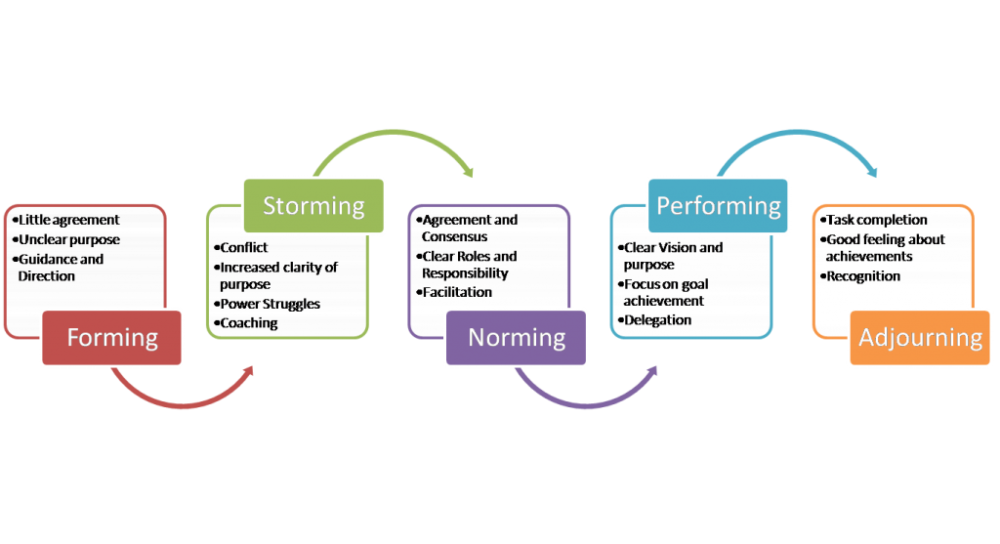
A group can be defined as two or more interacting and interdependent individuals who come together to achieve specific goals. Although a groups often have goals, but there’s not state that group members must share a goal or motivation. Many people used the word team and group interchangeably, but there are actually many differences between the word team and group. It is much easier to form a group than a team. In group, they could be grouped according to gender, experience, age or other common factors. Although the effectiveness of the group may be variable, but forming a group just based on a certain commonality is not particularly difficult. A group’s strength may come from sheer volume or willingness to carry out a single leader’s commands. On the other hand, a team can be more difficult to form. The members will selected for their complementary skills, not a single commonality. Continue reading
Functions of Organizational Culture
Organizational culture is the sum of reflects that gradually formed in the production and management practices, agreed and complied with all staff, with the characteristics of the Organization’s mission, vision, purpose, spirit, values and business philosophy, and the ideas in the production and management practices, management system, the behavior of employees with the external image. In essence, organizational culture is a cultural phenomenon among the enterprises, its appearance is inseparable from the development of the theory and practice of modern enterprise, from the management perspective, organizational culture are the application management tools to achieve management objectives, therefore, organizational culture are not only a cultural phenomenon, but also has a connotation as a management tool. First, the organizational culture is led by a sense of enterprise management, the cultural patterns of pursuit and realization in a certain corporate purposes, from a certain sense, the organizational culture is a culture of enterprise Continue reading