Risk management system at NSE

A sound risk management system is integral to an efficient clearing and settlement system. NSE introduced for the first time in India, risk containment measures that were common internationally but were absent from the Indian securities markets. NSCCL (National Securities Clearing Corporation Ltd.) has put in place a comprehensive risk management system, which is constantly upgraded to pre-empt market failures. It ensures that trading member obligations are commensurate with their networth. Risk containment measures include capital adequacy requirements of members, monitoring of member performance and track record, stringent margin requirements, position limits based on capital, on-line monitoring of member positions and automatic disablement from trading when limits are breached, etc. Daily margins payable by members consists of (1) Value at Risk Margin, (2) Extreme Loss Margin, and (3) Mark to Market Margin. Mark-to-Market Margin : Mark to market loss is calculated by marking each transaction in security to the closing Continue reading

Case Study: Lifecycle of Video Game Consoles

The rise of personal computers in the mid 1980’s spurred interest in  computer games. This caused a crash in home Video game market.  Interest in Video games was rekindled when a number of different  companies developed hardware consoles that provided graphics  superior to the capabilities of computer games. By 1990, the  Nintendo Entertainment System dominated the product category.  Sega surpassed Nintendo when it introduced its Genesis System.  By 1993, Sega commanded almost 60 per cent of Video game  market and was one of the most  recognized  brand names among  the children. Sega’s success was short lived. In 1995, Saturn (a division of General  Motors) launched a new 32-bit system. The product was a miserable failure  for a number of reasons. Sega was the primary software developer for  Saturn and it did not support efforts by outside game developers to design  compatible games. In addition, Sega’s games were often delivered quite Continue reading

Functions of Debt Recovery Agents

The core function of a debt recovery agent is to collect dues/receivables from specified debtors of the bank as per agency agreement entered with the principal.   Remitting the collected funds to principal, keeping account of the receivables collected and yet to be collected and reporting the position and developments to the principal are essential but ancillary to the core function.   All these functions will be specified in most agency agreement and would require to be accordingly discharged by the debt recovery agent. Apart from the easily collectible receivables, most banks have on their books over due receivables from debtors who are not traceable, or who show unwillingness pay or who resist surrendering the security charged.   In such cases, the recovery process is difficult and requires handling by specialized collection agencies to process the required expertise.   The functions of re-processing the security, initial legal action and tracing Continue reading

Case Study: Qantas Crisis

The Qantas group aviation industry was established in 1920 in Queensland outback of Australia. It also known in another name is Queensland and Northern Territory Aerial Services Limited. Red Kangaroo is the logo of the firm, Qantas group are well known its own two brand airlines such as Qantas brand and Jetstar Brand. The headquarters of the company are located in Mascot, Sydney, Australia with a vision of “World Best Premium and Low Fare Airlines.” By the end of June 2011, Qantas was flying to 208 destinations in 46 countries, operating more than 5,700 flights a week across all its brands domestically and more than 970 international flights. It moved 44.5 million passengers. The crisis which faced Qantas during 2011, is said have commenced in 1990 when the airline industry started going through a deregulation by the Australian government. During 1993 Qantas and Australian Airlines were merged and Qantas partly Continue reading

Investment – Meaning, Definition and Types

What is Investment? Investment is the activity, which is made with the objective of earning some sort of positive returns in the future. It is the commitment of the funds to earn future returns and it involves sacrificing the present investment for the future return. Every person makes the investment so that the funds he has increases as keeping cash with himself is not going to help as it will not generate any returns and also with the passage of time the time value of the money will come down. As the inflation will rise the purchasing power of the money will come down and this will result that the investor who does not invest will become more poor as he will not have any funds whose value have been increased. Thus every person whether he is a businessman or a common man will make the investment with the objective Continue reading

Product Life Cycle Stages and Marketing Strategies

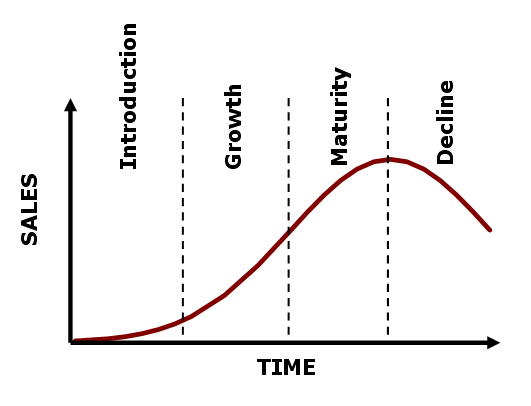
Under the current competitive marketing environment, how to manage a good marketing strategy for a certain product is quite crucial for an enterprise’s survival and development. Product is the most essential part in the marketing mix. Life cycle for a product is another most important factor which should be identified by an enterprise correctly. To understand product life cycle is very important for marketers when they are planning the marketing strategies for its product. Therefore, as far as the product life cycle is concerned, this article will first illustrate a comprehensive concept about the product life cycle. Following this, the article will analyze the specific marketing strategies which shall be referred by marketers in the marketing process. The Concept of Product Life Cycle Just like everything else, product has its own life cycle too. The theory of product life cycle (PLC) was firstly brought forward and shaped by Professor Raymond Continue reading