Cost Control Techniques in Business

During the 1990’s cost control initiatives received paramount attention from corporate America. Often taking the form of  corporate restructuring, divestment  of peripheral activities, mass  layoffs,  or  outsourcing,  cost control techniques were seen as necessary to preserve – or boost – corporate profits and to maintain – or gain – a competitive advantage. The objective was often to be the low-cost producer in a given industry, which would typically allow the company to take a greater profit per unit of sales than its competitors at a given price level. Cost control and reduction refers to the efforts business managers make to monitor, evaluate, and trim expenditures. These efforts might be part of a formal, company-wide program or might be informal in nature and limited to a single individual or department. In either case, however, cost control is a particularly important area of focus for small businesses, which often have limited amounts Continue reading
Innovations in Customer Services in Banking Sector

Satisfied customers are the best guarantee for the stability and growth. Customers will be satisfied only when the banks provide the customized and innovative products and services at responsible cost. This article focuses on the kind of services provided by developed countries and level of innovative services provided by Indian banks. Many innovative services are currently available from Indian banks like E-Banking, ATMs, Anywhere Banking etc., but there is a vast scope of improvement. Globalization, the buzzword, which engulfed all the nations of the world since the beginning of the last decade of the past millennium, did not leave the banking industry untouched. The opening of the world trade has brought out several changes in the global banking map. The continuing evolution of the banking and financial market has created opportunities both for providers and for users of financial products and this evolution have proven beneficial to the economy. However, Continue reading

Case Study: Leadership Lessons From Disney’s Bob Iger

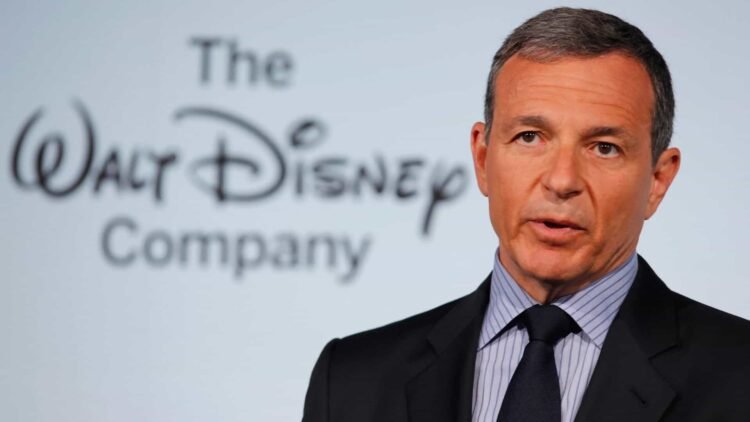
Bob Iger has a Jewish origin by birth, but he was born in the city of New York, in the year 1951. He is an established businessman in America, he was the former CEO of The Walt Disney Company, from 2005 to 2020, he was the CEO at a stretch, and has achieved a lot, in his career one of the biggest achievements is acquiring Pixar. Before this, he was the president of ABC Television between 1994 and 1995 and was working as a COO for ABC from 1995 until it was acquired by Disney in the year 1996. In the year 2000, Bob Iger was declared the president and COO at Disney, and also succeeded the former CEO, Michael Eisner from the year 2005. During these 15 years of being the CEO of Disney, he expanded the intellectual properties of the organization, in the international markets, and also increased Continue reading

The Difference Between Efficiency and Effectiveness

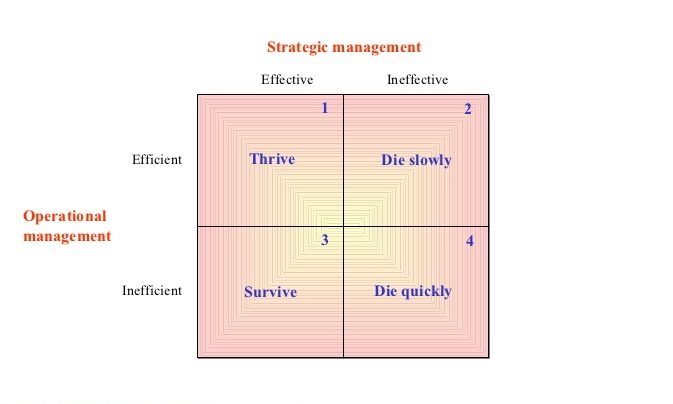
Efficiency and Effectiveness as stated by Peter Drucker “Efficiency is doing things right; Effectiveness is doing the right thing.” An organization survives based on the efficiency and effectiveness of a manager/management. Efficiency is the use of financial, human, physical and information resources such that output is maximized for any given set of resource inputs, or input is minimized for any given quantity and quality of output. An efficient manager might be doing the right job but not the job right. Doing the right job does not require much time or resource. A job can be done very quickly and efficiently within time. In this case, the manager’s main aim is to get the job done within the allocated time using the given resources. But doing a job effectively involves time and planning the right strategy. In this case the manager concentrates more on the outcome rather than just the input. Continue reading

Role and Importance of Operations Management in an Organization

Operations Management is very important for managing large firms and running them successfully. Operation management is mainly related to production of goods and services in an organisation. The main purpose of the operations management is to run the business operations successfully, smoothly and effectively by using the minimum resources and meeting customer expectations. Thus we can say that operations management is the process of converting minimum input like raw materials, labour to produce maximum output like products, goods and services. Operations Management is very crucial factor in order to increase company’s profit. Operations management is not only responsible for producing goods but also take control of distribution of services. Operations management plays a very crucial role in organisations as they produce professional managers which are capable of achieving organisation’s strategic goals in a defined period of time. Operations management is the heart of any organization as it controls the whole Continue reading

Global Branding – Issues, Challenges and Strategies

A global brand is the product or services that bring along their identity (brand) which is available in many nations and, though it may differ from one country to another, the localized versions have a common goal and a similar identity. In other words, global brands carry one brand name or logo together with it. A global brand can carry one name or logo and thus be recognized worldwide, however, the product may not be of the same standard at all. Global branding can be influenced by some the issues like social and culture, the economics of the country, and political condition in a country. Besides, a lot of the marketers in the world are facing the problem of customizing or standardize their products and services. Marketers tend to influence by major challenges before they went for global branding, at the same time, the marketers should also make decisions to Continue reading