Social Criticism of Advertising

Advertising is often criticized as a wasteful activity and an unnecessary evil. Its critics offer the following arguments to prove their contention. Multiplies the needs. Advertising multiplies the needs of the people by inducing them to buy even those things which are not required by them. Since an advertisement is continuously repeated, it creates a desire in the mind of the public to buy the advertised product. Makes the product more costly. The amount of money spent by an advertiser on his product’s advertisement is added to the distribution cost of the product. Thus, the customers have to pay more for the product advertised. Increase in demand at the cost of another manufacturer. Advertising does not always increase the demand of the product. When the demand is inelastic, advertising shifts demand from one producer to another. That means a large amount of money spent on advertising by the manufacturers goes Continue reading
Downsizing – A Corporate Restructuring Strategy

Downsizing or layoff is a widespread strategic decision and change practice since 1970’s and during the economic downturn in the year 2016 it became a more common phenomenon. Changing patterns in reasons cited for job loss support this impression of the rising importance of restructurings. Differences in factors such as the state of the economy and the signal sent by job loss could make the process of downsizing and the effects of job loss differ between restructurings of healthy organizations and downsizing due to financial distress. Downsizing Approaches There are many kind of approaches in downsizing. The reasons for the firm to undertake such approaches also varies. They include restructuring, closing or selling of a business unit, cost reduction, cost savings, increased productivity through greater efficiency and effectiveness and coping with external pressure including recessions and economic downturn, economical change, increased competitive pressures through greater globalization of business and technological Continue reading

Risk-Return Trade off

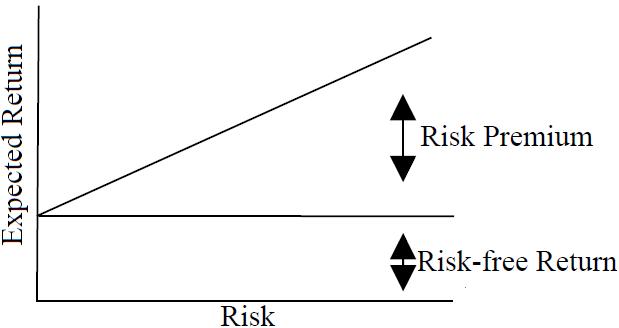
Risk may be defined as the likelihood that the actual return from an investment will be less than the forecast return. Stated differently, it is the variability of return form an investment. Financial decisions incur different degree of risk. Your decision to invest your money in government bonds has less risk as interest rate is known and the risk of default is very less. On the other hand, you would incur more risk if you decide to invest your money in shares, as return is not certain. However, you can expect a lower return from government bond and higher from shares. Risk and expected return move in one behind another. The greater the risk, the greater the expected return. Financial decisions of a firm are guided by the risk-return trade off. These decisions are interrelated and jointly affect the market value of its shares by influencing return and risk of Continue reading

Characteristics of Successful Teams

A team can be said to be a group of people working together to achieve a goal. It can also be seen “as a limited number of people who have shared objectives at work and who co-operate, on a permanent or temporary basis, to achieve those objectives in a way that allows each individual to make a distinctive contribution”. In order team to be effective, it should have certain characteristics, listed below Sponsor: In order to have effective liaison with the quality council, there should be a sponsor. Preferably the sponsor is a member of the quality council, thereby providing organizational support. Team Charter: A team charter is a document that defines the team’s mission, boundaries, the back ground of the problem, the team’s authority and duties and resources. It also identifies the members and their assign the roles-leader, recorder, timekeeper and facilitator. The sponsor and the team negotiate the Continue reading

Case Study of Air-Asia : Strategic Role of Information System in Business

Air Asia is established on 12 December 2001 by Mr. Tony Fernandes, the CEO of Air Asia and expanding rapidly since that. Air Asia is the leading low fare airline in Asia and Air Asia succeed to become the award winning, ‘Asia Pacific Airlines of the year 2003’ by Centre for Air Pacific Aviation (CAPA) in 2003. Air Asia has successfully positioned itself in customers’ mind by using the “ Now Everyone Can Fly” slogan. Air Asia had flown over 55 million guests across the region and continually create more extensive route network through its associate companies. Air Asia flies over 61 domestics and international destinations with 108 routes and operates over 400 flights daily from hubs located in Malaysia, Indonesia, and Thailand with a fleet of 72 aircrafts. Air Asia’s net profit for the second quarter ending 31 December 2004 was reported RM44.4 million, a 323% increase over the Continue reading

Differences between Activity Based Costing and Activity Based Management

Activity Based Costing (ABC) Activity Based Costing was introduced as the answer for an improved full-cost product-cost calculation as the model grew into a more full-fledged costing system for hierarchies of activities and cost objects. Activity Based Costing is a two-stage procedure where cost of resources in the first stage are allocated to activities to construct Activity Cost Pools, which in second stage are allocated to cost objects based on these objects’ use of the different activities. It is also a tool for cost and performance measurement towards activities, resources and cost objects (for example products and services). Activity Based Costing is knows as a “horizontal” or cross-functional cost view and it can provide fact-based insight into the spending and profitability of products, services and customers. There are three guidelines to support cost allocation in Activity Based Costing. The first would be ‘Direct-cost tracing to product’. Trace the cost of Continue reading