Relationship of Organizational Structure with Strategy and Culture

Relationship between Business Strategy and Structure Business Strategy primarily refers to the road-map laid out by an organization. The principal objective of strategy is to ensure that an organization achieves the set targets in order to sustain and grow in an increasingly competitive world. On the other hand, a structure is the manner in which the internal resources of a company get connected with each other. More specifically, structure is concerned with different groups that can be formed within an organization. For example, an organization having a functional structure will operate through the different functions such as Marketing, Finance, and Manufacturing. Business Strategy is the main driver that decides the structure an organization. Also, in case the structure of a company is not synchronized with its strategy, then the company may not be able to achieve the set targets. For example, a company with a diversified product portfolio and has Continue reading
Six Elements of Organizational Design

Organizational design is a process of developing and changing the organization’s structure by its managers. It is a chart containing the reporting structure i.e. who reports to whom. Organizational structure is thus a framework on which an organization is patterned for coordinating and carrying out organizational tasks. Organizational design involves decisions about the following six elements: 1. Work Specialization: Work specialization describes to which the overall task of the organization is broken down and divided into smaller component parts. For example, one person would paint a wall and another person fixes a door. So by breaking jobs up into small tasks, it could be performed over and over every 10 seconds while using employees who had relatively limited skills. The main thought of this process is that the entire job is not done by an individual and it is broken down into steps, and a different person completes each step. Continue reading

Risk-Return Relationship in Investments

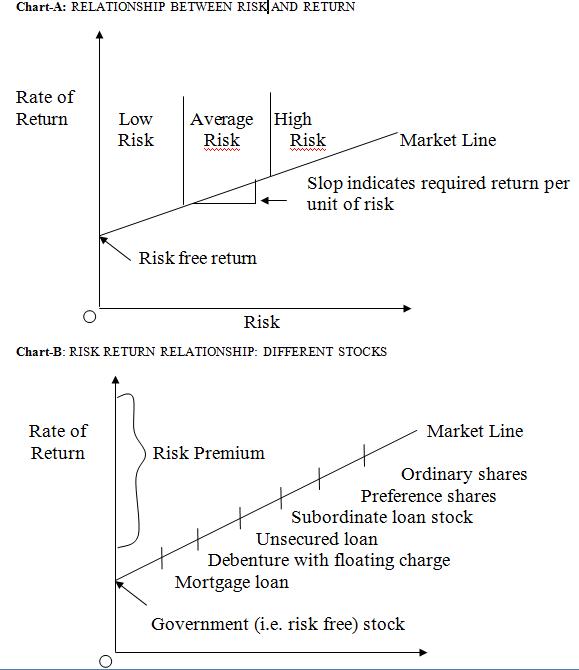
The entire scenario of security analysis is built on two concepts of security: Return and risk. The risk and return constitute the framework for taking investment decision. Return from equity comprises dividend and capital appreciation. To earn return on investment, that is, to earn dividend and to get capital appreciation, investment has to be made for some period which in turn implies passage of time. Dealing with the return to be achieved requires estimated of the return on investment over the time period. Risk denotes deviation of actual return from the estimated return. This deviation of actual return from expected return may be on either side — both above and below the expected return. However, investors are more concerned with the downside risk. The risk in holding security deviation of return deviation of dividend and capital appreciation from the expected return may arise due to internal and external forces. That Continue reading

Significance of Human Resources in International Business Arena

As the success of domestic business depends on its human resources, the success of a multinational company depends on international human resource management. Human resources managers are kind of people managers of any business organization, and are responsible for managing a wide range of employees. The human resource manager in a multi-national company with divisions or subsidiaries in foreign countries has all the normal HR responsibilities plus a brace of additional tasks that are specific to offshore operations of his department. He is literally responsible for international human resource management. International human resource management functions cover many different activities related to a business organization’s employees and contractors. The first and most important is the staffing needs of the company whether staff members are company employees or outside contractors. Other functions include recruiting and training employees, ensuring that they are performing at expected levels or better, handling performance issues and making Continue reading

Revenue Structure of a Firm under Perfect Competition

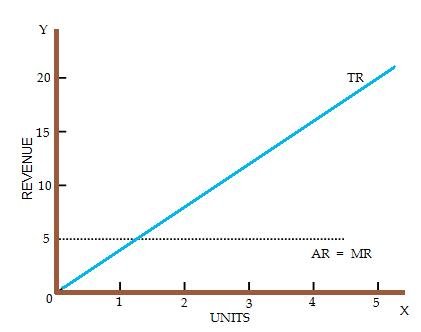
One of the distinguishing characteristics of perfect competition is the presence of an infinite number of firms producing homogeneous product.   The number of firms is so large that a single firm’s contribution to the total output of the product in the market is insignificant or microscopic.   The firm under perfect competition can neither influence the price nor the output in the market.   In fact, it has to take the going-market price, i.e. the price prevailing in the market as is determined by the forces of demand and supply.   It is in this context that the firm under perfect competition is referred to as price-taker and not a price maker.   The revenue structure of the firm under perfect competition is influenced by this characteristic of perfect competition. Let us assume that the price of the product X as determined in the market by the forces of Continue reading

Case Study: Corporate Restructuring at Arvind Mills

The case provides an overview of the Arvind Mills’ expansion strategy, which resulted in the company’s poor financial health in the late 1990s. In the mid 1990s, Arvind Mills’ undertook a massive expansion of its denim capacity in spite of the fact that other cotton fabrics were slowly replacing the demand for denim. The expansion plan was funded by loans from both Indian and overseas financial institutions. With the demand for denim slowing down, Arvind Mills found it difficult to repay the loans, and thus the interest burden on the loans shot up. In the late 1990s, Arvind Mills ran into deep financial problems because of its debt burden. As a result, it incurred huge losses in the late 1990s. The case also discusses in detail the Arvind Mills debt-restructuring plan for the long-term debts being taken up in February 2001. Issues: » Debt driven expansion plan, financial restructuring of Continue reading