Just-in-Time (JIT) Production Technology

In today’s competitive global business environment, the goal of all manufacturing systems is long-term survival. A manufacturing company’s survival in an increasingly competitive market closely depends upon its ability to produce highest quality product at lowest possible cost and in a timely manner with shortest possible lead-time. In addition, these goals should be achieved by paying utmost respect to the humanity of the employees who make the system work. Sometime, the difficulty of achieving the goals lies in the complexity of manufacturing operations. It is not difficult to build the high quality product, but is extremely difficult to do so while maintaining excellent quality, and at some time respecting the humanity of people who do the actual work of building that product. A Just-in-Time (JIT) based approach, which is suggested here, is capable of achieving all above stated goals. Just-in-Time (JIT) Based Quality Management is both philosophy and guiding set Continue reading
How Creativity Helps in Problem Solving Process?

The first step of problem solving is to define the problem. Although this may sound trivial, in many cases it is not. Many people and organisations rush in to tackle a problem by finding a solution, without previously knowing that the problem really is. So, to achieve a solution, one first has to fully understand the problem. Once the problems have been clearly defined, the most important factor in solving it is creativity. Creativity is required in order to create a ask the right questions about the problem and find the correct and appropriate answers to them, creativity is necessary in order to provide “out of the box” ideas and suggestions and creativity is what defines the process of finding a new way in doing things. Brainstorming is a very popular way to solve a problem and it is a characteristically creative method. It involves the rapid exchange of ideas, Continue reading

Linkage Between Business Models and Innovation

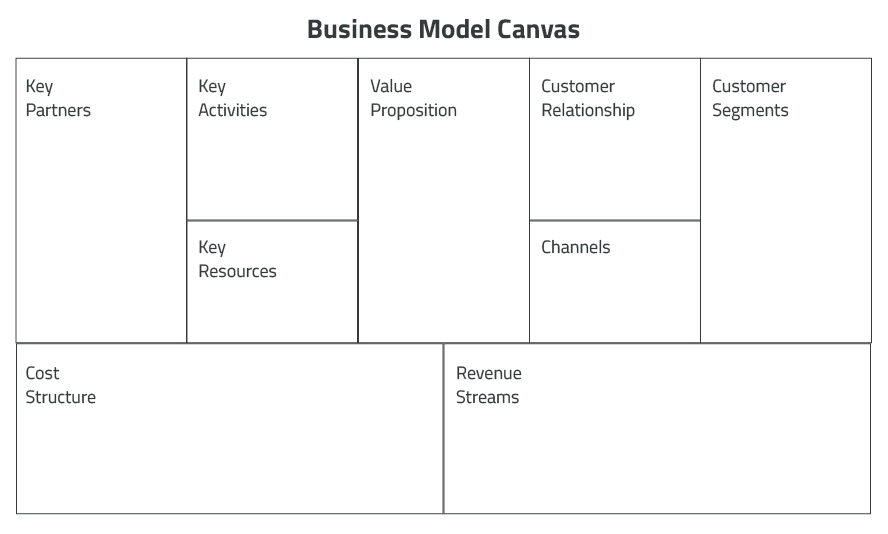
The question of what a business model is often remains relatively vague. The main reason for this is because business people have an intuitive understanding of business models. This is normal, since the business model is about how an organization makes money, which is a manager’s job after all. However, there is often a lack of a more precise and shared understanding of what a business model is. Yet, such a common understanding is required if we want to have high quality discussions of one’s business model and make important business model decisions. Alexander Osterwalder has come up with the 9 building blocks approach to describe business models. This approach has the characteristics of any other type of model (e.g. in architecture or engineering). It is a  simplified description and representation of a complex real world object. It describes the original in a way that we understand its essence without Continue reading

The Impact of E-Marketing on Businesses

The development of e-marketing has been one of the most important and influential trends in the field of business, marketing and Information Technology offer the past decade. It has revolutionized the manner in which certain businesses market their products and the advent of social media offers the potential to revolutionize the manner in which businesses and consumers interact in the future. E-marketing is a general term used to denote a wide array of different Internet-related activities. These include website building and promotion, consumer communications, e-mail marketing and newsgroup advertising. However, the term e-marketing has developed enormously over the past decade and today it encompasses a far wider range of activities and one of the most important of these is the use of social media in order to advertise online. So, e-marketing is the strategic process of creating, distributing, promoting and pricing products for targeted customers in the virtual environment of Continue reading

Requirements of a Good Forecast

A good forecast should satisfy the following criteria: Time frame: The first factor that can influence the choice of forecasting is the time frame of the forecasting situation. Forecasts are generally for points in time that may be a number of days, weeks, months, quarters, or years in the future. This length of time is called the time frame or time horizon. The length of the time frame is usually categorized as Immediate, Short term, Medium or Long term. In general, the length of the time frame will influence the choice of the forecasting technique. Typically a longer time frame makes accurate forecasting more difficult with qualitative forecasting techniques becoming more useful as the time frame lengthens. Pattern of the data: The pattern of the data must also be considered when choosing a forecasting model. The components present i.e. trend, cycle, seasonal or some combination of these will help determine Continue reading

Wastage of Human Resources

The term wastage of human resources is the loss of employees other than by redundancy. Redundancy points out the position of the employee as no longer needed for any available job and therefore liable to dismissal. In an organization, the wastage of human resources is mainly caused by the factors Labor turnover, Idle Time and Absenteeism. 1. Labor Turnover The change in workforce is known as labor turnover. It is the rate of change in the composition of the labor force in the organization. Whenever an employee leaves the organization, the management, has to sustain loss and wastage arising from the replacement of the leaving incumbent, by inexperienced new labor force. This replacement cost also includes cost of recruitment, selection and training of new employees. Loss of output due to the gap in obtaining new workers, loss due to inefficiency of new workers, cost of accidents due to lack of Continue reading