Management Development Programme

Management development programme is an attempt to improve managerial effectiveness through a planned and deliberate learning process. Unlike general purpose of training, management development programme aims at developing conceptual and human skills of managers and executives through organized and systematic procedures. In India, many professional institutes like Administrative staff college of India, Management Development Institute, Indian Institute of Management, Quality Management International, National Institute of Personnel Management, Indian Society of Training and Development etc, conduct different management development programmes to sensitize managers and executives to various emerging problems of the corporate world. The major components of Management Development Programme  are: Selection: To identify innate potentiality or managerial abilities of executives. Intellectual conditioning: To educate executives and managers on different managerial tools & techniques. Supervised training: To guide executives and managers on application and use of knowledge in the course of day to day activities. Management Development Programme Objectives For top Continue reading
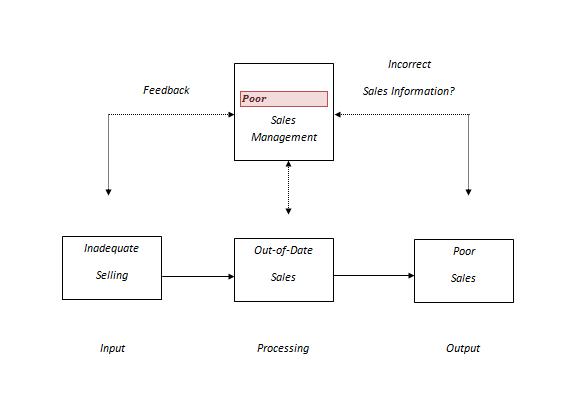
Systems Approach to Problem Solving

The systems approach to problem solving used a systems orientation to define problems and opportunities and develop solutions. Studying a problem and formulating a solution involve the following interrelated activities: Recognize and define a problem or opportunity using systems thinking. Develop and evaluate alternative system solutions. Select the system solution that best meets your requirements. Design the selected system solution. Implement and evaluate the success of the designed system. 1.  Defining Problems and Opportunities Problems and opportunities are identified in the first step of the systems approach. A problem can be defined as a basic condition that is causing undesirable results. An opportunity is a basic condition that presents the potential for desirable results. Symptoms must be separated from problems. Symptoms are merely signals of an underlying cause or problem. Example: Symptom: Sales of a company’s products are declining. Problem: Sales persons are losing orders because they cannot get current Continue reading

Internet of Things (IoT) – Meaning, Opportunities, Security Threats and Solutions

Today technology has gotten to a level where the Internet of Things (IoT) is an unavoidable reality. Now, an average person has at least three devices connected to the internet, including a smartphone and a personal computer. These already collect significant information about individuals which are used by different systems to make their lives better. As such, with more devices, it will be possible to improve the quality of life for different people, especially when these devices are interconnected. However, what is supposed to be beneficial has the challenges that make it a risky venture. Although the Internet of Things is expected to change things for the better, it is marred with many challenges which might eventually make it disadvantageous. About the Internet of Things (IoT) The Internet of Things (IoT) refers to a network of physical objects with the ability to identify each other and interact with other devices Continue reading

Concept of Performance Standards in Management

Standards of Performance A standard is a criterion against which performance and results of the individuals is measured or judged. Standard should be based on scientific analysis and should not be subjective in nature. It should possess the following characteristics: Standard should be capable of achievement with reasonable amount of effort and time. Standards should concentrate at results and not the procedures. Standards should not be rigid hey should be capable of being changed whenever the need arises. As far as possible standard should be expressed in quantitative terms and should be based on the result of were measurement carried with the help of time and motion studies. Standards should be consistent with the overall organization objectives. Types of Standards of Performance Standards may be expressed in physical terms or monetary terms. Physical standards are generally, applied at the operative levels where the quantity and quality of production is to Continue reading

Historical Perspective of Corporate Governance

The seeds of modern corporate governance were probably sown by the Watergate scandal in the United States.   The global movement for better corporate governance progressed in fits and starts from the mid-1980s up to 1997.   There were the odd country-level initiatives such as the Cadbury Committee Report in the United Kingdom (1992) or the recommendations of the National Association of Corporate Directors of the US (1995).   It would be fair to say, however, that such initiatives were few and far between.   And while there were the occasional international conferences on the desirability of good corporate governance, most companies — both global and Indian knew little of what the phrase meant, and cared even less for its implications.   More recently, the first major stimulus for corporate governance reforms came after the South-East and East Asian crisis of 1997-98.   This was no classical Latin American debt Continue reading

Advantages and Disadvantages of Incentive Schemes

Merits of Incentives The following are the advantages derived by providing incentives to  employees: Higher output: By providing incentives to his employees, the employer is able  to induce them to work better. This leads to higher output. Greater profits: Needless to say, higher output results in greater profits for the  business. This happens in two ways. First, the cost per unit becomes less and  second, the enterprise is able to keep the selling price low and this results in  greater sales. No problem of idle time: In an organisation where no proper incentives are  available for the workers, the tendency will be to while away the time. When  suitable incentives are available, the workers become time conscious. They  begin to see every minute in terms of money. Supervision does not pose any problem: When suitable incentives are  available, the workers become duty conscious. The need for close supervision,  thus, does Continue reading