Theories of Foreign Exchange
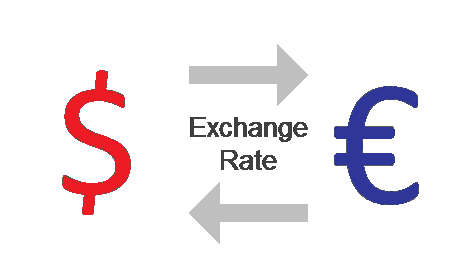
Every country has a currency different from others. There is no common  medium of exchange. It is this feature that distinguishes international trade  from domestic. Suppose the imports and exports of a country are equal, the  demand for foreign currency and its supply conversely, the supply of home  currency and the demand for it will be equal. The exchange will be at par.  If the supply of foreign money is greater than the demand it will fall below  par and the home currency will appreciate. On the other hand, when the  home currency is in great supply, there will be more demand for the foreign  currency. This will appreciate in value and rise above par. Economists have propounded the following theories in connection  with determination of rate of exchange (Theories of Foreign Exchange).   1. Mint Par Theory Mint par indicates the parity of mints or coins. It means that Continue reading
Concept of Attitude in Consumer Behavior

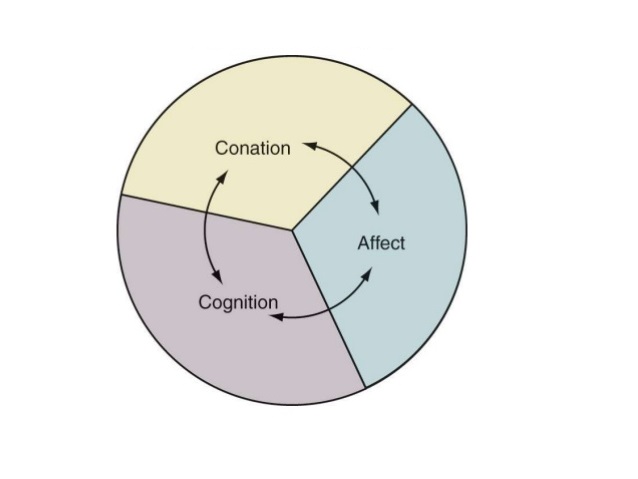
An attitude describes a person’s relatively consistent evaluations,  feelings, and tendencies toward an object or an idea.  Attitudes put people into a frame of mind for liking or  disliking things and moving toward or away from them.  For example, many people who have developed the attitude  that eating healthy food is important perceive vegetables as a  healthy alternative to meat and chicken. As a result, the per  capita consumption of vegetables has increased during recent  years, leading the meat and chicken producers to try to  change consumer attitudes that chicken and meat are unhealthy.  Companies can benefit by researching attitudes toward their  products. Understanding attitudes and beliefs is the first step  toward changing or reinforcing them.  Attitudes are very difficult to change. A person’s attitudes fit  into a pattern, and changing one attitude may require making  many difficult adjustments. It is easier for a company to create  products that are Continue reading

Introduction to Radio Frequency Identification (RFID)

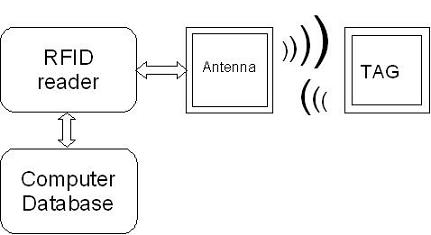
In past few recent years, the automatic identification techniques have become quite more than popular and they have also find their places into the core of service industries, manufacturing companies, aviation, clothing, transport systems and much more. And, it’s pretty clear by this point of time that the automated identification technology especially RFID, is highly helpful in providing information regarding the timings, location and even more intense information about people, animals, goods etc. in transit. RFID is responsible for storage of large amount of data and is reprogrammable also as in contrast with its counterpart barcodes automatic identification technology. In everyday life, the most common form of an electronic data-carrying device if often a smartcard which is probably based upon the contact field. But, this kind of a contact oriented card is normally impractical and less flexible to use. On the contrary, if we think of a contactless card with Continue reading

Future Flow Securitization

Securitization of the future flow-backed receivables is a new phenomenon in developing economies. Future Flow Securitization has grown in emerging markets in response to finding lower cost funding instrument by investment grade firms in the emerging market economies where their abilities were hampered by sovereign rate ceiling. While many of these companies historically relied on bank loans, or straight debts syndicated by major foreign banks in the past, rising volatility of interest rates and foreign exchange rates as well as reduced risk tolerance of major lenders have pushed these institutions (sovereign and private companies) toward an alternative vehicle such as future flow securitization. Future flows, have successfully mitigated a variety of the risks associated with emerging-market investments, and consistently remained the most viable type of rated transactions for funding in emerging-market countries. Future Flow Securitization Model Future Flow Securitization  involves the borrowing entity to sell future receivables that would have Continue reading

Purchasing Management – Meaning and Functions

The purchasing department in any organization acts as an interface between suppliers of materials and the production function.   Since materials comprise one of the largest sources of cash outlay in any manufacturing firm, their acquisition requires careful management. The responsibilities of a purchasing department include learning the material needs of the organization, selecting suppliers and negotiating price, ensuring delivery, and monitoring cost, quality, and delivery performance. Occasionally the term procurement is used to describe the acquisition of goods and services.   This is a broader term and includes purchasing, stores, traffic, receiving, and inspection. The principal goals of purchasing are related to quality, service, price, and vendor relations.   In addition to the obvious necessity of quality purchased parts, the purchasing department must consider vendor reliability, maintenance and return policies, and other aspects of customer service.   Moreover, they must continually seek new vendors and products and be able Continue reading

Financing of Mergers and Acquisitions

Mergers are generally differentiated from acquisitions partly by the way in which they are financed and partly by the relative size of the companies. Various methods of financing an Mergers & Acquisitions deal exist: a) Payment by cash Such transactions are usually termed acquisitions rather than mergers because the shareholders of the target company are removed from the picture and the target comes under the (indirect) control of the bidder’s shareholders alone. A cash deal would make more sense during a downward trend in the interest rates. Another advantage of using cash for an acquisition is that there tends to lesser chances of EPS dilution for the acquiring company. But a caveat in using cash is that it places constraints on the cash flow of the company. b) Equity share Financing or exchange of shares It is one of the most commonly used methods of financing mergers. Under this method Continue reading