Basis Rate Swaps

A fast developing area in the international swap markets is the basis rate swap. The structure of the basis rate swaps is the same as the straight interest rate swaps, with the exception that floating interest calculated on one basis is exchanged for floating interest calculated on a different basis. The forerunner of this type of swap was the US Dollar Prime Rate LIBOR swap. However, an even larger market has developed for the exchange of 1 month US Dollar LIBOR for 6 month US Dollar LIBOR and more recently US Dollar LIBOR for US Dollar commercial paper at much finer rates than those available on the foreign exchange market. The availability of the basis rate swaps market provides an excellent method for entities to arbitrage spreads between different floating rate funding sources. More importantly, it provides a discreet and most efficient method for European entities in particular to stimulate Continue reading
Knowledge Management (KM)

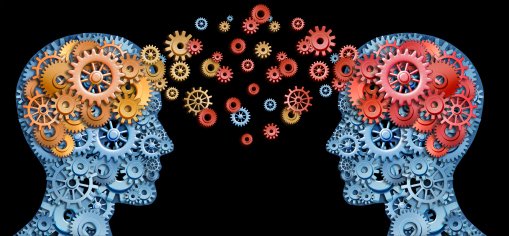
Knowledge Management is the process through which organizations generate value from their intellectual and knowledge-based assets. Most often, generating value from such assets involves sharing them among employees, departments and even with other companies in an effort to devise best practices. The term is used loosely to refer to a broad collection of organizational practices and approaches related to generating, capturing and disseminating know-how and other content relevant to the organization’s business. Knowledge management can be explained as an effort by organizations to manage some or all of the knowledge within them as a resource, much as they manage real estate, inventory, and human resources. It involves the following: Capturing it; that is, explicitly recording the tacit knowledge within an organization. Cataloguing and storing it; that is, placing the information into a central area where all members of an organization who have a need to know have access to it Continue reading

Modern Organizations and Role of Leaders

Organizations are indispensable to human and civilization progress and in meeting societal needs. Organization and civilization are interdependent twins; one could not develop without the other. Today in modern societies, organizations shape values, set structural roles and norms in civilization directions, change and determine human destinies, and perform a wide range of functions from integration and human fulfillment to disintegration and individual alienation. From their birth, organizations were simple in structure and management, but as they grew larger they became sophisticated and complex in structure and function, requiring managerial skills and techniques beyond the comprehension of many people. In modern day organization the workload is designed to promote and maintain health aspects of employees. Additionally, much importance is given to contextual factors such as the technology and the environment of the organization and the professional level of the employees. In today’s era, an organization or a workplace is not confined Continue reading

Company – Definition, Meaning and Characteristics

A company can be defined as a group of persons associated together for the purpose of carrying on a business, with a view to earn profits. The word ‘Company’ is an amalgamation of the Latin word ‘Com’ meaning “with or together” and ‘Pains’ meaning “bread”. Thus, a company is nothing but a group of persons who have come together or who have contributed money for some common person and who have incorporated themselves into a distinct legal entity in the form of a company for that purpose. There is very good definition by Lord Justice Lindey, “A company is an association of many persons who contribute money or money’s worth to a common stock and employ it in some trade or business and who share the profit and loss arising there from. The common stock so contributed is denoted in money and is the capital of the company. The persons Continue reading

Service Process

Service process  refers to how a service is provided or delivered to a customer. Delivery system is a creative process. Service process  begins with a service concept and strategy to provide a service. In order to achieve these objectives various alternatives must be analyzed and identified before a decision is made. Designing a service process involves issues   such as location facility, design and layout for effective design   layout and workflow, procedure and job definitions for service quality, equipment selection and adequate service capacity According to Clovelock there are some operational issues which have to be considered while designing the service process. In order to achieve economics of scale and perform consistently the operation people would prefer to cater to individuals so that the customer feels as being treated specially. The decisions on design and facility layout should satisfy the objectives on both. Operational people are interested to improve Continue reading

Major Types of Computer Systems

A computer is a programmable machine. It accepts information in the form of digitized data and manipulates it for some result based on a program or sequence of instructions on how the data is to be processed. It consists of at least one processing element, typically a central processing unit (CPU) and some form of memory. The processing element carries out arithmetic and logic operations, and a sequencing and control unit that can change the order of operations based on stored information. Computers are also categorized on the basis of physical structures and the purpose of their use. Based on Capacity, speed and reliability they can be divided following categories of computers: 1. Microcomputer Systems Microcomputers are the most important category of computer systems for end users. Though usually called a personal computer, or PC, a microcomputer is much more than a small computer for use by an individual. The Continue reading