Case Study on Business Ethics: The AIG Scandal

American International Group, Inc is a company whose operation began back in 1919. It was established back then by Cornelius Vander Starr as an insurance agency in Shanghai, China. AIG left china in 1949 after Starr had established himself as the westerner the sell insurance to the Chinese people. AIG headquarters then shifted from china to New York City, which is still the headquarters up to date. It is from here that AIG began its expansion tapping into other markets such as the Latin America, Asia, Middle East and Europe through use of its subsidiaries. It was in 1962 when Starr transferred management of AIG United states holdings to Maurice R. Greenberg. Greenberg introduced policies that made the company shift from its original personal insurance background to anew high market corporate targeted cover. The new management under Greenberg went on to focus mainly on selling AIGs’ insurance packages through independent Continue reading

A Brief Introduction to Six Sigma Methodology

The creation of Six Sigma Methodology is understood to be traced back to Carl Friedrich Gauss and introduced as a measurement in variation in organizations.  Six Sigma name comes from the Greek alphabet “Sigma” which mathematician or statisticians uses in statistics to find a standard deviation.  Motorola was the first company to use Six Sigma, to measure the quality of products and services from within.  In the process of Motorola using Six Sigma, it helped them to pinpoint mistakes such as finances and operations.  Six Sigma’s core philosophy was based on business process and customer requirements, extensive training to employees, focus on the organization, and creating an improved system. Six Sigma Methodology describes a business improvement approach that seeks to find and eliminate causes of defects and errors in manufacturing and service processes by focusing on outputs that are critical to customers and a clear financial return for the organization.  Continue reading

Applications of the Price Elasticity of Demand

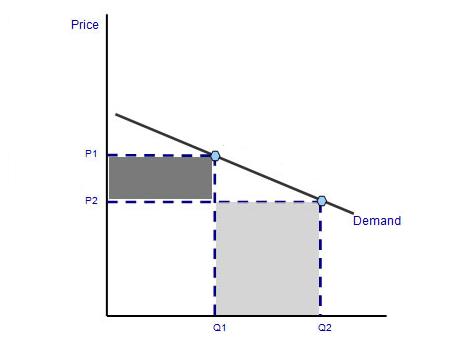
The concept of elasticity of demand plays a crucial role in the pricing  decisions of the business firms and the Government when it regulates prices.  The concept of price elasticity is also important in judging the effect of  devaluation of a currency on its export earnings. If has also a great use in  fiscal policy because the Finance Ministry has to keep in view the elasticity of  demand when it considers to impose taxes on various commodities. We shall  explain below the various uses, applications and importance of the elasticity  of demand. Elasticity of demand is mainly useful in Pricing Decisions by Business Firms.  The business firms take into account the price elasticity of demand when  they take decisions regarding pricing of the goods. This is because change in  the price of a product will bring about a change in the quantity demanded  depending upon the coefficient of price elasticity. Continue reading

Case Study: MasterCard’s Business Model

What is MasterCard? But what does MasterCard exactly do? It provides credit, debit, and prepaid cards from over 25,000 financial institutions. However, MasterCard is primarily a credit card company and specializes in the innovation of these cards throughout the world. It is a also a payment solutions company and through its three tiered business model as franchisor, processor and adviser, the company has developed a new world for its card holders and merchants. The company provides marketing, approval, and transaction services for a variety of payment products in more than 210 countries and territories. Regardless of the type of card, all of them act under the “four-party” payment system. Under this system there are obviously four types of people, the card holder, the issuing bank, the merchant, and the acquiring bank. First, the issuing bank provides their customer with a card that they market and issue throughout their locations. Then Continue reading

Primary Purpose of Taxation

Taxation is a means by which governments finance their expenditure by imposing charges on citizens and corporate entities. The main purpose of taxation is to accumulate funds for the functioning of the government machineries. All governments in the world cannot run its administrative office without funds and it has no such system incorporated in itself to generate profit from its functioning.  In other words, a government can run its administrative set up only through public funding which is collected in the form of tax. Therefore, it can be well understood that the purpose of taxation is very simple and obvious for proper functioning of a state. Taxes are charges levied against a citizen’s personal income or on property or for some specified activity. As such, one purpose of taxation is to increase in effectiveness and productivity of the nation as government is able to implement various socio-economic development projects such Continue reading

Case Study: Zara’s Operational Model

Founded in 1975, ZARA, a Spanish clothing and accessories retailer was originally the brainchild of the Inditex Group owned by Amancio Ortega. Headquartered in A Coruña, Galicia, Spain, Inditex is the world’s largest fashion retailer with ZARA as its international flagship chain store. Beginning with the single store in Spain to the recent launch into Australia, ZARA currently has over 1,700 stores in 78 countries providing exclusive fashion worldwide. ZARA, alone accounted for 64.6% of the Inditex group turnover in 2010. Over time, it has become one of the notable leaders amongst the fashion brands. ZARA was described by Louis Vuitton fashion director, Daniel Piette as “possibly the most innovative and devastating retailer in the world” and CNN described the brand as a “Spanish’s success story” Zara’s Operational Model Shifting from “mass standardization” to “customization” on a global scale is the most interesting aspect of the Zara’s business model. The Continue reading