
Job analysis is understood as the analysis of job-related activities in the organization. Job analysis collects and analyses the information related to jobs and various aspects of jobs. It is performed upon ongoing jobs only which contain job contents and the skill requirement to perform the specific task. It involves a formal study of jobs which is essential in determining the duties and the nature of the jobs in the organization. Job analysis is a very important function of HR, which is related with many activities of Human Resource Management (HRM). Theoretically speaking, job design, job analysis, job descriptions and job specifications and are all around “work” to be, but from the company’s current situation, the design work than not to change, the only way is indeed feasible that using job analysis to evaluate the value of work position, even reasonable analysis can achieve job enrichment and purposes of diversification. Continue reading
Human Resource Concepts
Role of Different Parties Involved in Industrial Relations
Role of Government in Industrial Relations In recent years the Government has played an important role in regulating industrial relations but the extent of its involvement in the process is determined by the level of social and economic development while the mode of intervention gets patterned in conformity with the political system obtaining in the country and the social and cultural traditions of its people. The degree of Government intervention is also determined by the stage of economic development. For example, in a developing economy like ours, work-stoppages to settle claims have more serious consequences than in a developed economy and similarly, a free market economy may leave the parties free to settle their relations through strikes and lockouts but in other systems varying degrees of Government participation is required for building up sound industrial relations. In India, the role played by the Government is an important feature in the Continue reading
Team: Definition and Important Types
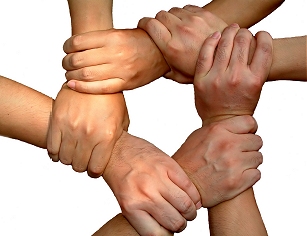
Definition of Team A team is defined as a group of people working together to achieve common objectives or goals. Teamwork is the cumulative actions of the team during which each member of the team subordinates his individual interests and opinions to fulfill the objectives or goals of the group. The objective or goal is a need to accomplish something, such as solve a problem and improve a process. Members of a team will need to focus on how they relate to each other, listen to the suggestions of others, build on previous information and use conflict creatively. They will need to set standards, maintain discipline, build team spirit and motivate each other. Each member of the team has their own history of experience to help achieve the objectives. They should have a need to see the task completed, but also the need of companionship, fulfillment of personal growth and Continue reading
Work Life Balance and Wellness in Organizations

Human resource management refers to the management that combines all the activities of the organization and increase the satisfaction level of most important asset of the organization that are the employees of the company. An organization can never build a good team of good professionals without having an efficient human resource management team with them. The human resource management of organization is completely responsible to satisfy the employees and make them feel connected with the activities of the company as well. Further, the organizational behavior is also one of the aspects that helps the employees to create work-life balance or eliminates it from their lives. The human resource management of the organization create effective workplace environment that maintain good workplace environment for the employees to work effectively and satisfy themselves in the organization. Work-life balance is taken as one of the basic requirement that is required by the employees to Continue reading
Desirable Conditions for the Success of an Incentive Scheme
A good wage incentive plan should have the following characteristics. Administrative simplicity: The incentive system should be simple and must be easily understood by the workers and their representatives. An incentives scheme, which can be understood, only by engineers and mathematicians or a scheme which involves the use of complex formulate or references and cross-references is sure to fail. The incentive scheme should be such that workmen can calculate their own earnings easily and quickly. Minimum clerical work: The system should fit into existing system of production and cost control. It should not involve any significant addition to the clerical work. Maximum coverage: The system should cover as many workmen as possible. A scheme if applied to a few workmen creates a demoralizing effect on the morale of those not covered by the scheme. Direct: Incentive payments should increase at least in direct proportion to the Continue reading
Development of Human Resources in an Organization
Human resource development (HRD) is a sub-system that operated in the main system; the organization. In order for the organization to be successful the objectives and goals of the subsystems must be aligned towards achieving the set goals of the main system. For example, the primary objective of the organization would be to maximize return on shareholder investment. We may find that the objectives of training and development would be a level removed down, that is to maximize the capabilities of the employees, induce innovation, and produce high quality products and service. They may be different but a closer look at each of these objectives reveals that they serve a singular purpose; maximize the return. HRD and Motivation Motivation is certainly the key for the people to keep returning to the job. However it must not be viewed through a single window which shows you that rewards and bonuses makes Continue reading