Organizations change from time to time. Changes with respect to continuous improvements, diversity, and work process engineering require the organization to move forward through a process called organizational development. Definition of Organization Development: Organization development is a process that addresses system wide change in the organization. Change agent: Change agents are individuals responsible for fostering the change effort and assisting employees in adapting to changes They are may be internal employees, or external consultants. What is change? Organization development efforts support changes that are usually made in four areas: The organization’s systems Technology Processes People Two metaphors clarify the change process. The calm waters metaphor: It describes unfreezing the status quo, change to a new state, and refreezing to ensure that the change is permanent. Kurt Lewin describes the status quo can be considered an equilibrium state. Unfreezing, necessary to move from this equilibrium, is achieved in one of three Continue reading
Human Resource Concepts
Cross Cultural Decision Making – Programmed and Non-Programmed Decision Making
It is becoming quite apparent that businesses, big and small, need to understand how decision making affects their entire operations. When making decisions, managers in organizations apply either a programmed or a non programmed decision making process. Both processes are affected by the culture of the society in which the decision is being made. For example, mangers in countries with relatively low tolerance for ambiguity, such as Japan and Germany, avoid non programmed decisions as making. Operating manuals in organizations in these cultures tend to be relatively thick. In contrast, mangers in countries with relatively high tolerance for ambiguity, such as the United States and Norway, seek responsibility for non-programmed decision making. The secrets of effective decision making lie in the balance between rational and intuitive thought. The following strategies provide a useful framework for making effective decision. Determine the problem and identify the goals to be accomplished by your Continue reading
Aligning HR Strategy with Organizational Strategy
Business Strategy emphasizes how it intends to succeed in its chosen market place. It mainly focuses on competitive advantage. Business Strategy helps to establish the direction in which the organization is going in relation to its environment. The Business Strategy of an organization must reflect the intentions of managers about what they expect to achieve over a stated period of time. Business Strategy is therefore, about beating competitors in meeting customers needs, but this does not mean that a Business Strategy is the same thing as a marketing strategy. Business Strategies should take into account the changing needs and critical resources needed to carry out the strategic aims. Thus, organizations must unavoidably make choices about how they would pursue competitive advantage. Business plans are prepared to work on three to five years cycle and annual business plans are formed within this. These plans consist of strategies like innovation, cost reduction, Continue reading
Need of Workers Participation in Management
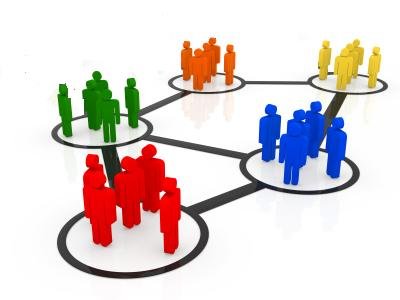
The concept Worker’s Participation in Management (WPM) is a broad and complex one. Depending on the sociopolitical environment and cultural conditions, the scope and contents of participation may change. In any case, a common thread running through all interpretations is the idea of associating employees in managerial decision-making. The view expressed by the International Institute for Labor Studies (Bulletin 5) is worth quoting here. Worker’s Participation in Management has been defined as, “the participation resulting from practices which increase the scope for employee’s share of influence in decision-making at different tiers of organizational hierarchy with concomitant assumption of responsibility”. The concept of worker’s participation in management crystallizes the concept of Industrial Democracy, and indicates an attempt on the part of an employer to build his employees into a team which work towards the realization of a common objective. The participation of each worker in management affairs should strictly confine to Continue reading
Culture – Definition, Characteristics and Elements
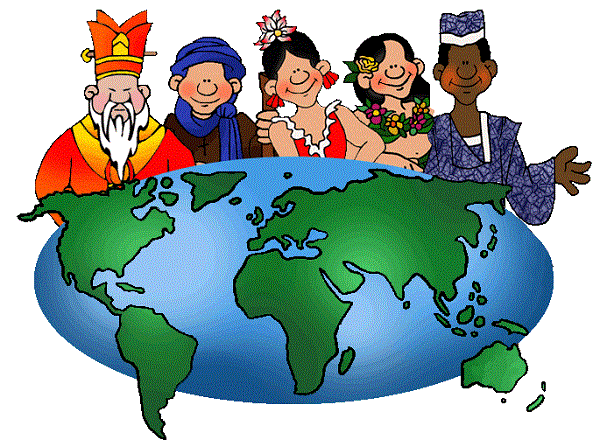
Anthropologists and sociologists define culture as “Ways of Living “, built up by a group of human beings, which are transmitted from one generation to another. A culture acts out its ways of living in the context of social institutions, including family, educational, religious, governmental, and business institutions. Culture includes both conscious and unconscious values, ideas, attitudes, and symbols that shape human behavior and that are transmitted from one generation to the next. In this sense, culture does not include one-time solutions to unique problems, or passing fads and styles. As defined by organizational anthropologist Geert Hofstede, culture is “the collective programming of the mind that distinguishes the members of one category of people from those of another”. In addition to agreeing that culture is learned, not innate, most anthropologists share two additional views. First, all faces of culture are interrelated: Influence or change one aspect of a culture and Continue reading
Information System (IS) Applications in Human Resource Management (HRM)
A unified data model provides a single, accurate view of HR activities ranging from recruitment, employment, training, performance management, compensation management and real time management. Oracle human resource leverage workflow and internet-based processes optimize various HRM activities. The system maintains global HR data in case of Trans-national companies and total organizational human resource data in case of national companies in a single location for accurate and easy availability. The system of applications of Information Technology (IT) in HRM is referred to as Human Resource Module. HRIS merges some of HRM functions with the IT field, wherein the planning and programming of data processing systems have evolved into standardized routines and packages of Enterprise Resource Planning (ERP) software. ERP integrates the human resource module with finance, production, and sales and administration modules. Generally, traditional HRM functions are common to all organizations. They consist of tracking data regarding personal histories, family details, Continue reading