Greek word ethos – stands for Ethics, ethos means custom or moral character. Morality originates from the Latin word moralis – manner or customs. Both these words deal with the manner or customs of the people in which they do things. The modern dictionary defines these words as the way people act – that can be either good or bad. A set of agreed rules and the code of conduct within an environment that openly states what is acceptable and what is not acceptable within a society is referred to as Morality. The concept of morality changes with time and situation, this can explain as killing (murder) is an immoral act but in the state of war or in a battlefield killing, murder is allowed, so it be said that morality is synced with ethics. Morality addresses the queries related to ethics on the moral conclusion that can be derived Continue reading
Management Concepts
Obstacles to Effective Organizational Performance

Over the past decade there is an abundance of evidence, which could be produced to say that successful organizations are managed by efficient managers. Success in the long run can be ensured only through effective management. Successful managers foster sustainable growth through their skills, attributes and personal qualities. There is a distinction between common sense and common knowledge. Knowing things is different from doing things. Being able to analyze a case, identify a problem, and suggest a correct solution makes a manager more effective. Out of all the characteristics that make an effective organization, the most important factor is the quality and alignment of the human resources. The main obstacles to effective organizational performance are discussed below. 1. Working Conditions Ergonomics does matter for job performance. Not only the furniture and fixtures but also the colors of the rooms and the objects with which people work influence people’s attitudes and Continue reading
Organizational Culture – Meaning, Characteristics, Importance and Dimensions

Organizational culture is the set of values that states what an organization stands for, how it operates and what it considers important. Edgar H. Schein defines organizational culture as the pattern of basic assumptions that a given group has invented, discovered and developed while learning to cope with its problems of external adaptation and internal integration. All the above definitions stress acceptable and unacceptable behavior of its members. For instance, one organization might value solidarity and loyalty to organization more than any other value whereas another organization might stress on good relations with customers. Such values are part of organizational culture in spite of not being formally written like rules and regulations of the organization. They do not usually appear in the organizational training program and in fact, many organizations have difficulty in expressing their cultural values. However, an organization’s values automatically enter every employee’s personal values and actions over Continue reading
Non-Profit Organization: Meaning and Characteristics
The term ‘non-profit organization‘ refers to government organizations, educational institutions, religious bodies, foundations, libraries, clubs, Government hospitals, and welfare organizations. These organizations exit to render service rather than to earn profits. Their success is also measured primarily by how well they render the service. For example, the purpose of a library is to provide books and a place for reading and reference. Its performance can, therefore, be measured by how well it renders the service to its readers. Non-profit organizations aim at providing the best possible service with the given resources and the managerial decisions are taken accordingly. The objectives of a non-profit organization are less precise, more diverse, and sometimes contradictory. Distinctive Characteristics of Non-Profit Organisations The main difference between profit and non-profit organizations lies in the purpose for which they exist. In addition following differences are found in the characteristics of these two types of organizations: Profit Measure. Continue reading
Managing Planned Organizational Change Process
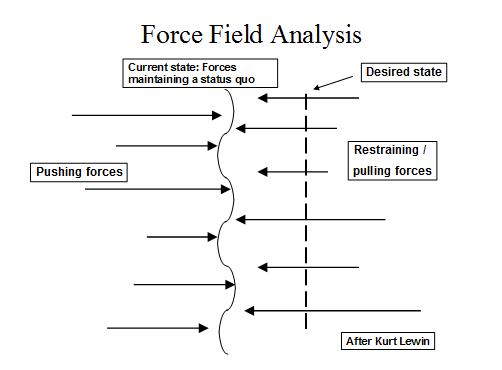
A planned change is a change planned by the organization; it does not happen by itself. It is affected by the organization with the purpose of achieving something that might otherwise by unattainable or attainable with great difficulty. Through planned change, an organization can achieve its goals rapidly. The basic reasons for planned change are: To improve the means for satisfying economic needs of members To increase profitability To promote human work for human beings To contribute to individual satisfaction and social well being The planned organizational change process may comprise, basically the three following steps: Planning for change Assessing change forces Implementing the change 1. Planning for Change The first step in the process of change is to identify the need for change and the area of changes as to whether it is a strategic change, process oriented change or employee oriented change. This need for change can be Continue reading
Differences Between Profit and Non Profit Organizations
A profit organization is a social arrangement which pursues collective goals, controls its own performance, and has a boundary separating it from its environment. Profit organization is a business which has a primary goal of making profit and a proposed goal such as helping the environment. An organization is defined by the elements that are part of it its communication, its autonomy, and its rules of action compared to outside events. A non profit organization is a group organized for purposes other than generating profit and in which no part of the organization’s income is distributed to its members, directors, or officers. Non profit corporations are often termed “non-stock corporations.” They can take the form of a corporation, an individual enterprise (for example, individual charitable contributions), unincorporated association, partnership, foundation (distinguished by its endowment by a founder, it takes the form of a trusteeship), or condominium (joint ownership of common Continue reading