
Modern organizational behavior has become complex. It synthesizes the classical and neoclassical theories of organization, while incorporating technological development. Modern theories of organization are classified into quantitative theory, system theory and contingency theory. 1. Quantitative Theory The quantitative theory includes operation research and quantification of the problem. It analyses the problems from quantifiable angles and provides solutions to complex problems only with the help of statistical and mathematical models such as linear and non-linear programming, game theory, decision tree, simulation and probability. Computers are used to solve management problems whereas mathematical models were previously used for the purpose. A large number of problems are solved with the use of simulation equations and computers. The development of equations requires specialized skills and advance knowledge of mathematics, statistics, economics and behavioral sciences. Models are tested while the context of the real world and use of operation research. Continue reading
Principles of Management
Compare and Contrast Maslow’s Theory of Needs with Vroom’s Expectancy Theory
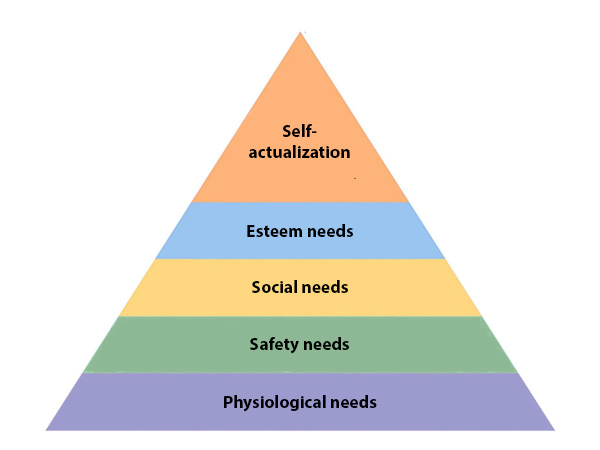
Motivation is an intangible human asset which acts as a driver that pushes humans to be willing to perform certain actions. In just about everything we do there is something that moves us to perform the action which involves some motivation allowing us to perform tasks or actions which produces some type of personal benefit as a result. The general theory would be that, the greater the personal gain in performing the task for the individual, the more motivated they are to try at the task to achieve the best outcome. Motivation is usually stimulated by a want where there is a gain to be had as a result of performing a certain task. A person is a wanting being – he always wants, and he wants more. Therefore if there is nothing that an individual wants, there would be no need for them to perform a certain task as Continue reading
Scientific Management Theory – Directions and Characteristics
Scientific management is a process of improving the labor organization based on scientific achievements and excellence. It is important to mention that an American engineer Frederick Winslow Taylor was the first scientific engineer, who used and formalized scientific management and highlighted its four principles. Scientific management is the labor organization based on modern scientific achievements and best practices, which were systematically introduced into the workplace. Scientific management allows combining technology and people in the labor process. In addition to the above-mentioned information, scientific management can be characterized as an approach within classical management theory that emphasizes the scientific study of work methods in order to improve worker efficiency. Scientific management’s implementation saves time and is an important growth factor productivity of living labor. The importance and value of scientific management is that it allows you to save hard work as a result of better use of the production’s material Continue reading
Matrix Organizational Structure – Definition, Types, Advantages, and Disadvantages
Organizational structure refers to a way in which an organization or a company arranges its employees and duties. It establishes hierarchy and line of authority. An organization should adopt a structure that is in agreement with its objectives and goals. Matrix organizational structure employs a multi-dimensional approach. It combines one or two of the other organizational structures. For example, it may combine bureaucratic organizational structure with functional organizational structure. This creates a dual reporting system in which people work together as a team while retaining a recognizable reporting system. Matrix structure creates teams of workers in an organization based on both the product and department or function. This enables the organization to maximize on the strengths of each employee while making up for their weaknesses. The teams work independently towards achieving a common goal. If a company produces two products for example, the practice is to departmentalize the production process of Continue reading
Difference Between Administration and Management
The use of two terms Management and Administration has been a controversial issue in the management literature. Some writers do not see any difference between the two terms, while others maintain that administration and management are two different functions. According to those who held management and administration distinct, management is a lower-level function and is concerned primarily with the execution of policies laid down by administration. Dalton E. McFarland states: “in government agencies administration is preferred over management, although in recent years the term management has become widely used in government agencies.” But some authors are of the opinion that management is a wider term including administration. This controversy of difference between administration and management is discussed as under in three heads: Administration is concerned with the determination of policies and management with the implementation of policies. Thus, administration is a higher level function. Management is a generic term and Continue reading
Compare and Contrast Maslow’s Hierarchy of Needs with Herzberg’s Two-Factor Theory of Motivation
Motivation is an intangible human asset which acts as a driver that pushes humans to be willing to perform certain actions. In just about everything we do there is something that moves us to perform the action which involves some motivation allowing us to perform tasks or actions which produces some type of personal benefit as a result. The general theory would be that, the greater the personal gain in performing the task for the individual, the more motivated they are to try at the task to achieve the best outcome. Motivation is usually stimulated by a want where there is a gain to be had as a result of performing a certain task. A person is a wanting being – he always wants, and he wants more. Therefore if there is nothing that an individual wants, there would be no need for them to perform a certain task Continue reading