The change in the name of Asia’s oldest stock exchange, from the Stock Exchange, Mumbai to the Bombay Stock Exchange Ltd., (BSE Ltd.) is of more than cosmetic significance. Along with the change in name comes a new perspective, one brought about by a comprehensive change in its ownership and management. Until now, the BSE like most other exchanges in India was owned and managed by brokers, who also had the sole right to trade in the exchanges. Conflicts of interest were bound to arise in such situations. Until the advent of the National Stock Exchange in 1994, the BSE was India’s pre-eminent exchange, accounting for an overwhelmingly large proportion of the share market transactions of the country. Companies wherever located were advised to seek a listing of their shares on the BSE so that they could have access to its large reservoir of capital and investor base. Legally speaking, Continue reading
Stock Investments
Advantages of Swaps
Swaps permits institutions to exchange one flow of payments with another, in addition to hedging income gaps existing in the organizations. Swaps are contractual agreements between two parties who agree to exchange a stream of cash flows for a specified period, known as the “tenor.” These cash flows depend on agreed-upon parameters and the price fluctuations in a specified underlying asset, commodity, or market index. Swap markets emerged to address the increased currency and interest-rate volatility after the collapse of the Bretton Woods fixed exchange rate system. They are known to lessen risk; reduce borrowing costs; and assist in avoiding unnecessary costs arising from changes in the balance sheet. The following advantages can be derived by a systematic use of swap: 1. Borrowing at Lower Cost: Swap facilitates borrowings at lower cost. It works on the principle of the theory of comparative cost as propounded by Ricardo. One borrower exchanges Continue reading
Impact of Interest Bearing Securities in Portfolio Management
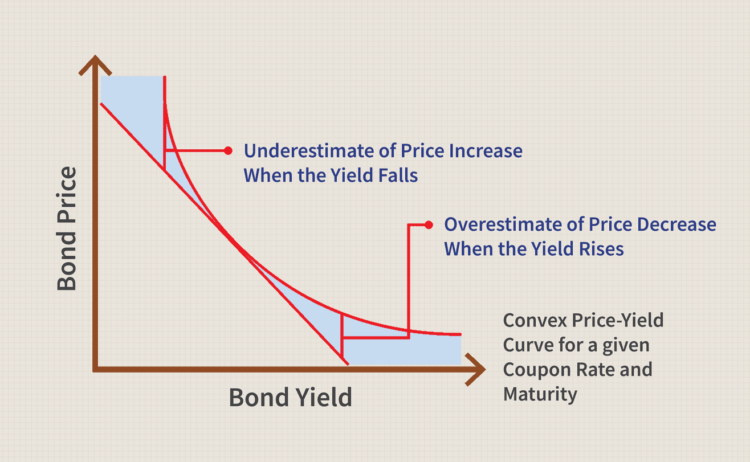
Money market is a segment of the financial market where the securities are traded for shorter term and the risk associated with the money market is comparatively lower than the capital market. On the other hand, capital market is that section of the financial, market where the securities are traded for longer term and the risk is higher than the money market. The securities, which yield interest, are referred as the interest bearing securities. There are two types of interest bearing securities. One is fixed interest-bearing securities and the other is variable interest securities. The key interest rate in the capital market includes interest on public corporation bonds, government bonds, and rates on deposit of long-term debentures. The interest bearing securities in the money market include Treasury bill, commercial paper, certificate of deposits, money market bonds. The interest rate is the yield, which is paid to the owner of the Continue reading
Institutional Framework of Derivatives Market
1. Exchange Exchange provides buyers and sellers of futures and option contract necessary infrastructure to trade. In outcry system, exchange has trading pit where members and their representatives assemble during a fixed trading period and execute transactions. In online trading system, exchange provide access to members and make available real time information online and also allow them to execute their orders. For derivative market to be successful exchange plays a very important role, there may be separate exchange for financial instruments and commodities or common exchange for both commodities and financial assets. 2. Clearing House A clearing house performs clearing of transactions executed in futures and option exchanges. Clearing house may be a separate company or it can be a division of exchange. It guarantees the performance of the contracts and for this purpose clearing house becomes counter party to each contract. Transactions are between members and clearing house. Clearing Continue reading
Approaches of Investment Portfolio Management
Different investors follow different approaches when they deal with portfolio investments. Four basic approaches of investment portfolio management are illustrated below, but there could be numerous variations. The Holy-Cow Approach: These investors typically buy but never sell. He treats his scrips like holy cows, which are never to be sold for slaughter. If you can consistently find and then confine yourself to buying only prized bulls, this holy cow approaches may pay well in the long run. The Pig-Farmer Approach: The pig-farmer on the other hand, knows that pigs are meant for slaughter. Similarly, an investor adopting this approach buys and sells shares as fast as pigs are growth and slaughtered. Pigs become pork and equity become hard cash. The Rice-Miller Approach: The rice miller buys paddy feverishly in the market during the season, then mills, hoards and sells the rice slowly over an extended period depending on price movements. Continue reading
Equity Investment Analysis
Equity Valuation The security analyst when faced with the problem of a buy or sell decision must first evaluate the past performance of the security, and then coupled with his personal experience predict the future performance of the security and the relative market position. The amount of data available to him far exceeds his potential and therefore he has to base his predictions on several basic attributes and modify the results in the light of intuitive beliefs. While the process may be successful, its intuitive segments make the evaluation of errors and improvements of this technique very difficult, if not impossible. Equity valuation is difficult in comparison to valuation of bonds and preference shares. This is because benefits are generally constant and reasonably certain. Equity on the other hand involves uncertainty. It is the size of the return and the degree of fluctuations, which in togetherness determine the values of Continue reading