Open-plan offices can be great for collaboration, but they also create some familiar problems. Noise travels, visual distractions build up and even a reasonably spacious workplace can start to feel chaotic when everyone is working in the same field of view.
That’s where the benefits of using office screens become easier to appreciate. Screens and dividers can help create clearer zones, give people a little more privacy and reduce some of the distractions that come with large shared spaces, all without needing to build permanent walls.
Privacy Without Closing the Office Off
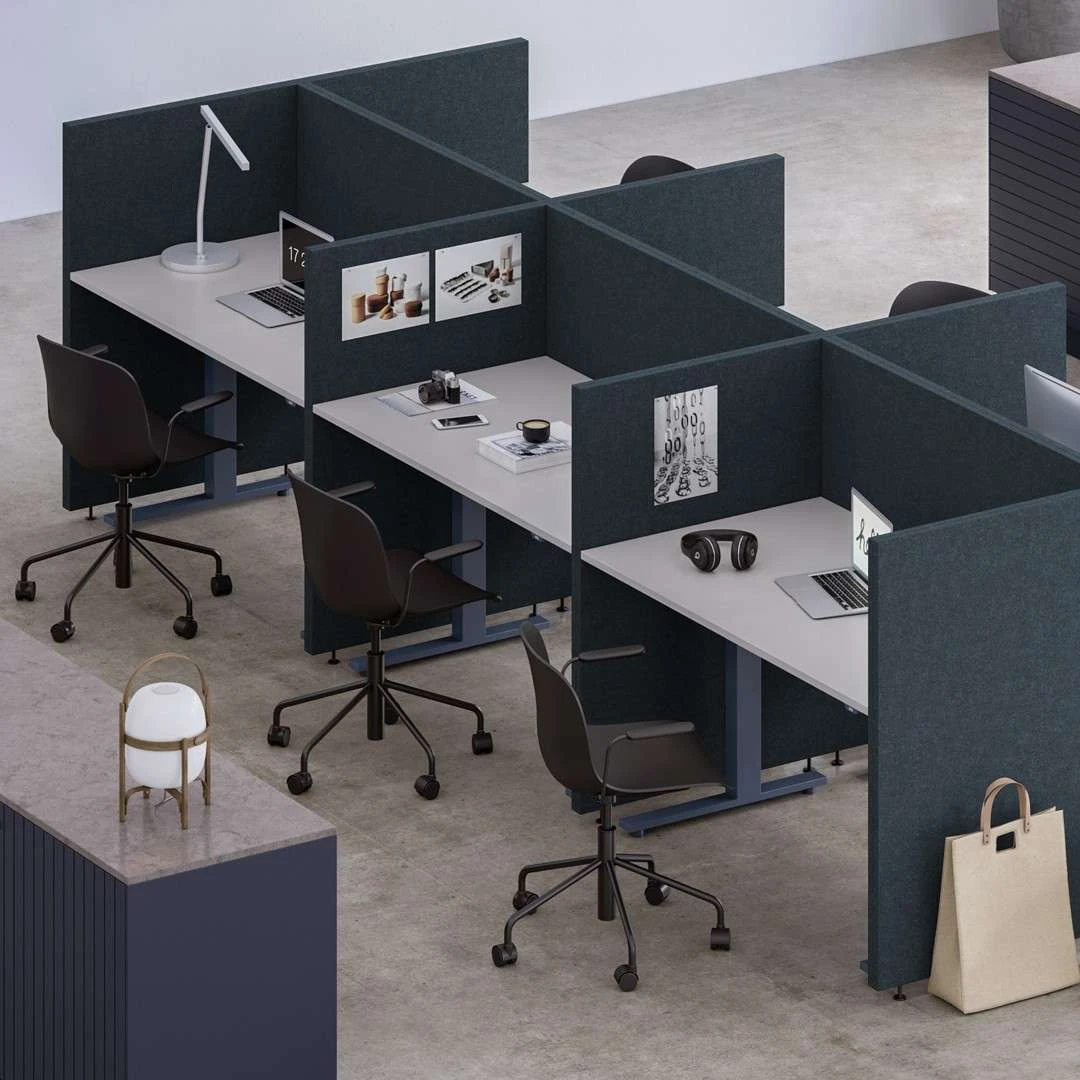
One of the biggest advantages of screens is that they create separation without making the workplace feel boxed in. That balance can be useful in offices where teams still need to communicate easily but don’t necessarily want to be staring directly at each other for eight hours.
Desk-mounted screens can provide a small visual boundary between workstations, while freestanding dividers can separate teams, meeting areas or breakout zones. The result is a workplace that still feels open but gives people more defined personal space.
That can be especially valuable in offices where tasks require periods of concentration. A little visual separation can reduce the constant sense of movement happening around the desk without isolating anyone completely.
They Can Help With Noise Too
Screens won’t turn an open office into a library, but certain materials can help absorb sound and reduce the amount of noise bouncing around the room.
This matters because workplace noise isn’t always loud enough to be obviously disruptive. The problem is often the accumulation of phone calls, conversations, footsteps and general office activity throughout the day. That background noise can make concentration harder, particularly for people doing detailed or mentally demanding work.
Acoustic screens can help soften that environment by reducing reverberation and creating more contained zones. They work best as part of a broader approach that might also include quieter meeting spaces, phone booths and sensible team etiquette.
Layouts Become Easier to Change
Permanent walls lock a workplace into one configuration. Screens are much easier to move.
That flexibility can be useful as teams grow, departments shift or businesses change the way the office is used. A row of desks can be divided differently, a temporary project space can be created, or a larger room can be broken into smaller functional zones without committing to major building work.
For businesses that lease their premises, that flexibility can be particularly useful. It allows the office to evolve without repeatedly making structural changes that may need landlord approval.
Screens Can Help Define Different Types of Space
A good office often needs more than just desks.
There may be collaboration areas, quiet zones, reception spaces, informal meeting points and places where people can work away from their usual workstation. Without clear boundaries, those different uses can bleed into each other and make the office feel disorganised.
Screens can create a sense of structure without requiring every area to become its own room. A divider behind a lounge setting can make it feel like a distinct breakout space, while another around a small meeting table can give conversations a little more privacy.
This makes the floor plan easier to understand and can encourage people to use different parts of the office for the tasks they suit best.
They Can Improve the Look of a Workspace Too
Office screens are practical, but they also contribute to the visual character of the space.
Colour, fabric, height and shape can all affect how a workplace feels. Neutral screens can create a calm, understated environment, while stronger colours can help identify different teams or zones. Some designs can also soften an office dominated by hard surfaces, straight desks and bright lighting.
That doesn’t mean every screen has to become a design feature. Sometimes the best option is one that quietly blends into the background while doing its job.
Think About Height Carefully
Higher isn’t always better.
Tall screens provide more visual separation and can offer greater privacy, but they can also reduce natural light and make smaller offices feel enclosed. Lower screens preserve sightlines and make communication easier, but they provide less privacy.
The right height depends on what the screen is there to achieve. A call-heavy team may appreciate more separation, while a highly collaborative group may prefer lower dividers that provide some structure without blocking communication.
Mixing heights across the office can work well too, especially when different areas have different needs.
A Better Open Office Usually Needs Some Boundaries
Open-plan working doesn’t have to mean everyone sharing one completely undivided room.
Strategic use of screens can make the workplace feel calmer, more organised and easier to adapt, while still preserving the collaboration and flexibility that make open offices appealing in the first place.
The best setups tend to create just enough separation for people to concentrate without making the office feel fragmented. When that balance is right, screens stop feeling like barriers and start functioning as part of the way the workspace supports different kinds of work.