Descriptive Research – Meaning and Methods

Descriptive research is used to obtain information concerning the current status of the phenomena to describe “what exists” with respect to variables or conditions in a situation. The methods involved range from the survey which describes the status quo, the correlation study which investigates the relationship between variables, to developmental studies which seek to determine changes over time. Descriptive Research Methods 1. Case Studies Detailed analysis of a single (or limited number) of people or events.   Case studies are usually interesting because of the unusualness of the case. The major problem with case studies is the problem of objectivity.   The person who is presenting the case usually has some theoretical orientation.   It is acceptable for a theoretical orientation to affect one’s interpretation of events.   In a case study the theoretical orientation can also lead to the selection of the facts to include in the case.   Continue reading

The Growth of Strategic Planning

Many of today’s most successful business organizations continue to survive because many years ago they offered the right product at the right time; the same can be said for nonprofits and government organizations. Many critical decisions of the past were made without the benefit of strategic thinking or planning. Whether these decisions were based on wisdom or luck is not important. They resulted in momentum that has carried these organizations to where they are today. However, present day managers increasingly recognize that wisdom and intuition alone are not sufficient to guide the destinies of large organizations in today’s ever changing environment. These managers are turning to strategic planning. In earlier, less dynamic periods in our society, the planning system utilized by most organizations extrapolated current year sales and environmental trends for 5 and 10 years. Based on these, they made plant, product, and investment decisions. In most instances, the decisions Continue reading

Role of NBFCs in the Indian Financial Sector

The financial institutions are usually classified as banking institutions and non-banking financial institutions (NBFCs). The banks subject to legal reserve requirements can advance credit by creating claims against themselves, while the non-banking financial institutions can lend only out of resources put at their disposal by the ultimate savers. The distinction between the two has been highlighted by savers while characterizing the former as “creators” of credit, and the letter as mere “purveyors” of credit. NBFCs and Monetary Policy The proliferation of NBFCs in India has coincided with a major structural transformation in the Indian financial system, which has an important bearing on the conduct of monetary policy. NBFCs started functioning in the sphere of mobilization of dormant assets and tapping of new users of credit. In the process, they channelized savings in the economy by collecting funds from savings surplus units and allocating them to savings deficit units for investment Continue reading

Forex Market or Foreign Exchange Market – History, Definition, Characteristics and Parties Involved

Foreign exchange refers to money denominated in the currency of another nation or group of nations. Foreign exchange can be cash, bank deposits or other short-term claims. But in the foreign exchange market as the network of major foreign exchange dealers engaged in high-volume trading, foreign exchange almost always take the form of an exchange of bank deposits of different national currency denominations. A Foreign exchange market or Forex market is a market in which currencies are bought and sold. It is to be distinguished from a financial market where currencies are borrowed and lent. Short History of the Foreign Exchange Market Foreign exchange markets mainly established to make easy cross border trade in which there is involvement of different currencies by governments, companies and individual investors. More ever these markets generally existed to supply for the international movement of capital and money, even the initial markets had speculators. Today, Continue reading

Transaction Risk or Operations Risk in E-Banking

The most important category of risk management for e-banking services is transaction risk or operational risk. Operational risk is the risk of direct or indirect loss resulting from inadequate or failed internal processes, people and systems or from external events. The main causes for operational risk can be: Inadequate Information Systems Breaches in internal controls Fraud Processing Errors Unforeseen catastrophes The inadequate information system can result from general risks or from application oriented risks. The general risks can include physical access to the hardware, logical access to the information and communication technology systems, emergency management or from an insufficient backup recovery measures-mitigate the consequences of system failures. A high level of transaction risk may exist with Internet banking products, particularly if those lines of business are not adequately planned, implemented, and monitored. Banks that offer financial products and services through the Internet must be able to meet their customer’s expectations. Continue reading

Types of Economic Systems

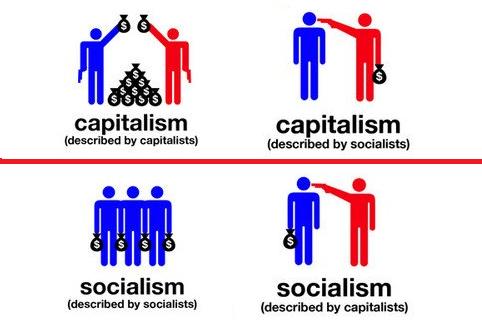
It has been already pointed out that the way in which the three basic economic questions are answered depends on the economic system which functions in a country. To understand how these answers differ among the economic systems, we should understand the different types of economic systems. Major Types of Economic Systems Economic systems may broadly be classified into three categories: Capitalism, Socialism and Mixed economy. A number of other types also emerged but all of them came close to any one of the above three types of economic systems. Let us now discuss the features, strengths and weaknesses of each one of these economic systems. 1. Capitalism Capitalism is an economic system based on the principle of free enterprise. Individual ownership of resources is an important feature. With control and command over resources, individuals can conduct any type of business. The object in such a system is to maximize Continue reading