Major Types of Organizational Structure

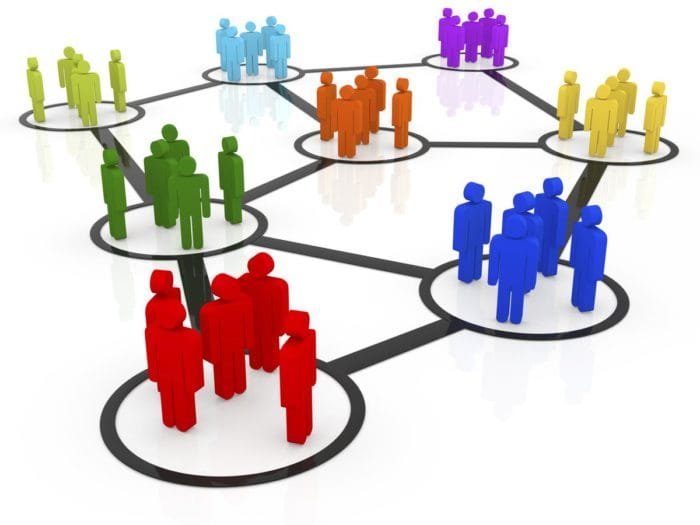
An organizational structure consists of activities such as task allocation, coordination and supervision, which are directed towards the achievement of organizational aims. It can also be considered as the viewing glass or perspective through which individuals see their organization and its environment. An organization can be structured in many different ways, depending on their objectives. Organizational structure allows the expressed allocation of responsibilities for different functions and processes to different entities such as the branch, department, workgroup and individual. Organizational structure affects organizational action in two big ways. First, it provides the foundation on which standard operating procedures and routines rest. Second, it determines which individuals get to participate in which decision-making processes, and thus to what extent their views shape the organization’s actions. On the basis of analysis of various design variables, organizational structure can be broadly categorized into four major forms: Functional Structure: In a functional structure, the Continue reading
Business Report Writing – Meaning and Features

Report writing is an essential skill for professionals in almost every field. Each kind of report has its characteristics. An enquiry report or a survey report is essentially a fact-finding report and should bring out the facts clearly. A Directors’ Report, on the other hand, is the detailing of the developments or the progress relating to the business organization during a particular period. A committee report may not only bring out facts and figures, but also cover the alternative viewpoints expressed by the members and final recommendations. Notwithstanding these features specific to the reports, there are certain essential features of good business report writing: Issue in perspective:  The first essential for any good report is to bring out the issue in its proper perspective emphasizing the pros and cons. Be it a progress report; a survey report, an analytical report or an enquiry report, the subject should be presented in Continue reading

Gender Wage Discrimination

The term wage discrimination can be explained as a difference in the wage levels offered to male workers and female workers for the same level of work they do. It occurs when an individual in a labor market suffers from a decreased wage level for the same job and performance. Gender wage differences seem to exist in many countries to some extent. Studies on wage differences shows that female/male earnings ratios are usually less than one, indicating that women usually earn less than men do. Depending upon the characteristics of their labor markets, factors producing wage differentials in those studies varied from race, gender, education, job status occupation, type of sector (public vs. private) to type of industry, among the others. Two major trends in the world have worked to widen the gender gap: increases in the pay premium associated with higher “skills” (i.e., higher levels of education and labor Continue reading

Organizational Effectiveness Through Adaptive-Coping Cycle

The organization must develop a system through which it can adapt or cope with the environmental requirements; Edgar H  Schein  has suggested that an organization can do this through the adaptive coping cycle, which consists of various activities that enable an organization to cope with the dynamics of environment. Adaptive-Coping Cycle is a continuous process. There are six stages in the adaptive-coping cycle as follows: Sensing of Change: The first stage is the sensing of change in internal or external environment. Most of the organizations have adaptive sub-system such as marketing research, research and development and other similar devices for effective coping with the environment. Importing the Relevant Information: Organizations must be able to take the relevant information from the environment, which constitutes the input. Changing Conversion Process: The organization takes the inputs from environment for further processing, normally known as conversion process. Stabilizing Internal Changes: The fourth stage of Continue reading

Team Based Approaches Used in Business

An organization is a social arrangement for achieving controlled performance in the pursuit of collective goals. This definition stresses on the fact that people in an organization interact with each other in order to achieve some objectives. In the field of organization design, a contemporary organization can be defined as a business that uses up-to-date knowledge, processes, and strategies to implement its plans within a cohesive strategy with keeping in mind the organizations future. Contemporary organizations are primarily leaders in exploring business and management trends, such as strategic alliances, and the virtual office. These trends are often explored without the knowledge of anyone; however the organization is able to integrate them and the discrete elements in the overall cohesive business strategy. Although teams have always formed the backbone of the organization; they are gaining attention as important assents to the organization. Professionals in today’s world rarely work alone; they either Continue reading

Open Innovation vs. Closed Innovation

Innovation is one of the important catalysts to the sustainable organizational growth and performance. The term of innovation is already used over the century ago and innovation meaning is focus more on the changes or improvement made by the organization either to their product/services, processes and paradigm. Innovation is the use of new technological and market knowledge to offer a new product or service that customer want and the new product must new, lower cost and the attributes of the product are improved with the attributes that never existed in the market before. The concept of innovation also defined as the process of making changes of something established by introducing something new that adds value to customers and contributes to the knowledge store of the organization. In simple words, innovation is described as a change that is made to the product and services and also to the process. Innovation has Continue reading