Steps Involved in Designing a Remuneration Plan

Designing a remuneration plan involves the followings: 1. Job Analysis The main purpose of conducting job analysis is to prepare job description and job specification which in turn helps to hire the right quality of workforce into the organization. It helps to understand the qualities needed by employees,defined through behavioral descriptors, to provide optimum work performance. It obtains answers to such questions such as: Why does job exists? What physical and mental activities does the worker undertake? What is the job to be performed? Where is the job to be performed? How does the worker do the job? What qualifications are needed to perform the job? What are the working conditions (such as levels of temperature, noise, offensive fumes, light) What machinery or equipment is used in the job? What constitutes successful performance? There are several ways to conduct a job analysis, including: interviews with incumbents and supervisors, questionnaires (structured, Continue reading
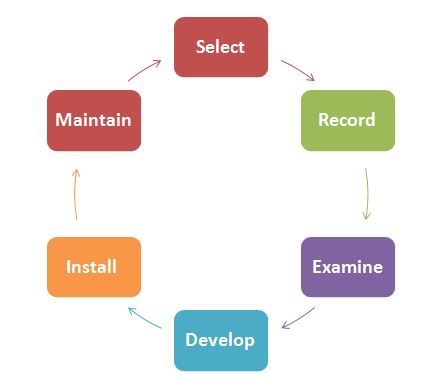
Method Study Procedure

Method study is the systematic recording and critical examination of existing and proposed ways of doing work, as a means of developing and applying easier and more effective methods and reducing costs. So it is the process of analyzing the methods involved in work flow to increase productivity. It deals with doing the work in a better way, with less time and effort. That is why it is also termed as work simplification. Method study procedure  is an organized approach and its investigation rests on the following six basic steps: Select the work to be analyzed. Record all facts relating to the existing method. Examine the recorded facts critically but impartially. Develop the most economical method commensurate with plant requirements Install the new method as standard practice. Maintain the new method. The above basic method study procedure was first developed and articulated by  Russell Currie  at Imperial Chemical Industries (ICI). Continue reading

Evaluation Concept in Management

Definitions of Evaluation in Management Evaluation is the analysis and comparison of actual progress vis-à-vis prior plans. Evaluation is oriented toward improving plans for future implementation to ensure improved performance. Evaluation is part of a continuing management process consisting of planning, implementation, and evaluation. Ideally each of these steps follows the other in a continuous cycle until successful completion of the activity. Evaluation involves comparison of actual performance against benchmarks or standards of performance to establish the extent of fulfillment of goals and identify gaps in performance to suggest remedial courses for ensuring that in the end all ends well, that is fulfillment level is 100%. The goals vary depending on the situation, participants and issues. Evaluation is the systematic and objective assessment of the relevance, efficiency, effectiveness, sustainability, and impact of development interventions or programs. Evaluation is the assessment of how well a project/activity achieved its objectives. Evaluation may Continue reading

Customer Relationship Management (CRM) Model

Customer relationship model may be defined as a practice, technology, and strategy which is used by the many companies to manage and evaluate the customer data and interactions throughout the customer lifecycle in order to improve the business relationships with customers and it will also help in customer retention. The CRM system came into in existence with an effective software which helps and supports in organizing, collecting and managing the customer information and data. There are numerous elements of customer relationship management model which are essential to run the business activities and operations successfully. It also helps to build and develop good relations with customers in the global market. Each and every component is effective and unique and plays a significant role in the process. The customer relationship model helps to generate revenue and profit of the company. The components of CRM model have been discussed below; Human resource management: Continue reading

Problems of Leasing

Leasing has great potential in India. However, leasing in India faces serious handicaps which may mar its growth in future. The following are some of the problems. 1. Unhealthy Competition: The market for leasing has not grown with the same pace as the number of lessors. As a result, there is over supply of lessors leading to competitor. With the leasing business becoming more competitive, the margin of profit for lessors has dropped from four to five percent to the present 2.5 to 3 percent. Bank subsidiaries and financial institutions have the competitive edge over the private sector concerns because of cheap source of finance. 2. Lack of Qualified Personnel: Leasing requires qualified and experienced people at the helm of its affairs. Leasing is a specialized business and persons constituting its top management should have expertise in accounting, finance, legal and decision areas. In India, the concept of leasing business Continue reading

Factors Influencing Dividend Payouts of a Company

Dividend  is a form of payment made to shareholders by an organization; It’s a profit which is paid out to the company shareholders. When a profit is earned by the company, the profits are used again to invest for a better growth of the company for its future, or it can also be paid to the company shareholders in the form of dividends. Dividends are also paid to the shareholders in the form of cash or shares. The company must have sufficient funds in order to pay dividends to its shareholders. Dividends are generally paid out by a company only when the company make good profit and it’s been paid form its earnings. Dividend policy is of great interest n today’s financial industries when the joint stock companies came into existences. Dividends can also be defined as “a distribution of company’s earnings which is decided by the board of directors Continue reading