Synergy Map

The Synergy Map method was developed in 1998 by Martin Eppler. It  can be used to find synergies between various activities or goals.  The synergy map facilitates the visual discussion of the main goals and sub-goals necessary to move the implementation of a strategy forward during a particular time frame. In this method, goals and activities  are defined and prioritized and then introduced into a timing circuit.  The objectives will be distributed on the circle according to their temporal component, ie, short, medium and long term and permanent.  With the connection of the individual targets are shown with arrows indicating the synergies and conflicts.  Each identified goal synergy (i.e., how one goal can help another or how two goals can be used for mutual benefits) and each goal conflict are captured as arrows on the map that connect two goals. The Synergy Map can be used on a personal level Continue reading
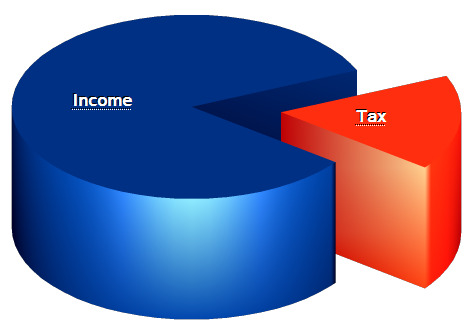
Functions of Taxation

Taxes are a defined as mandatory payments of the contributors to the budget and to the extra-budgetary funds in the amount determined by law and within the stipulated deadlines. The functions of taxes are a manifestation of their essence; they are a means to represent the characteristics of taxes. The functions of taxation illustrate its social purpose of the value-based distribution and redistribution of income. Each of the functions fulfilled by the taxation instrument is a manifestation of an internal feature, an indicator or trait or this economic category. There are five main functions of taxation: fiscal, redistributory, regulating, controlling, and promoting. 1) The main function of taxation is the fiscal one. It is through fiscality that taxes play their role in the formation of the state budget necessary for the realization of national and holistic state programmes. The fiscal function provides for the achievement of the main social goal Continue reading

Digital Technology and Personal Privacy

Privacy includes several contexts for individuals. There are three aspects of individual expectations to define the term “privacy”. The first aspect is the expectation of anonymity, which was defined as “The Right to Be Let Alone”. Individuals would expect an environment where no one can access their personal information in no matter physical or digital world. Another one is the expectation of control over information. Individuals would expect that professionals and companies would only collect the customers’ information for the purpose of providing services and they would not use or disclose the information for other commercial purposes. And the third expectation is about the confidentiality of personal documents, including e-mails and medical records. Individuals would expect that they could feel free to conduct online or offline activities without others disruptions. However, these expectations are being challenged by the digital technologies, which keep collecting personal information in our daily lives. This Continue reading

Importance of Work-Life Balance in Organizations

In today’s world, people have become more focused on their professional life, as they want more finances to manage their things. Most of them want to sustain their professional life as they believe that it grants them freedom for achieving the goals. Most of the people want to achieve the work-life balance as it grants them good amount of peace and satisfaction. The work-life balance helped to bring the goof level of satisfaction among the people leading to the achievement of the goals.  Due to the globalization and digitization, there is increasing pressure on the individuals to be available for the duty 24 hours when required. Such pressure creates misbalance in their professional and personal life making them less productive and energetic to do the chores in the best possible manner. Around 85 percentage of the people working in corporate complain of their inability manage their work and personal life Continue reading

Integrated Logistics Management

Integrated Logistics is defined as “ the process of anticipating customer needs and wants; acquiring the capital, materials, people, technologies and information necessary to meet those needs and wants; optimizing the goods-or-service-producing a network to fulfill customer requests; and utilizing the network to fulfill customer request in a timely way.” Integrated logistics is a service-oriented process. It incorporates actions that help move the product from the raw material source to the final customer. Integrated Logistics Management The movement of raw materials and components to a manufacturing company must be managed. So must the movement of finished goods from the manufacturing plant to further processing, to the retail, or to the final consumer. The management of this movement is called integrated logistics management. Variables affecting the Evaluation and Growth of Integrated Logistic Many variables affected the evaluation and growth of integrated logistic. The first was the growth of the consumer awareness Continue reading

Strategic Intent – Definition and Meaning

Strategic Intent refers to a “high level statement of the means by which an organisation achieves its VISION”. Today Managers in different organisations are working hard to match the competitive advantage of their global rivals but in order to do the same most of them end up only imitating what their competitors have already implemented. Imitation doesn’t really create the Strategic Intent as competitors have already mastered those techniques and have exploited the first mover advantage. Hence mere imitation doesn’t lead to competitive revitalization. Strategic Intent drives organisations, individuals and groups to meet the challenge of change in business today. Strategic Intent as a concept was born in Post-World war II Japan when it dramatically emerged as world leader in economy. Japanese Organizations had set goals for themselves that might have been considered by most of the Western Organizations of that time as highly unrealistic. But with very few resources Continue reading