
General Electric, one of the most successful companies implementing Six Sigma, has estimated benefits on the order of $10 billion during the first five years of implementation. GE first began Six Sigma in 1995 after Motorola and Allied Signal blazed the Six Sigma trail. Since then, thousands of companies around the world have discovered the far reaching benefits of Six Sigma, including Japan’s Taiichi Ohno used as a model for the Toyota Production System (TPS), did not let him down during bad economic times. An Overview of Six Sigma Motorola coined the term “Six Sigma” and created the original formulas in the 1980’s. The result was a culture of quality that permeated throughout Motorola and led to a period of unprecedented growth and sales. The crowning achievement was being recognized with the Malcolm Baldrige National Quality Award. Motorola factory that manufactured television sets in the United States, took over by Continue reading
Modern Management Approaches
Cognitive Mapping – A Mental Representation Technique

In 1947, Edward C. Tolman at the University of California at Berkeley, was doing experiments demonstrating that complex internal cognitive activity occurred even in rats and that these mental processes could be studied without the necessity of observing them directly. He proposed that rats have a cognitive map; that ‘in the course of learning,something like a field map of the environment gets established in the rat’s brain… And it is this tentative map, indicating routes and paths and environmental relationships, which finally determines what responses, if any, the animal will finally release.’ [Tolman, 1948, p 192] Due to the significance of his work, Tolman is considered to be the founder of a school of thought about learning that is today called cognitive-behaviorism. A cognitive map in the trivial sense is whatever mental or neural mechanism enables an animal to navigate. On this usage, it is tautologous that animals capable of Continue reading
Overview of Reverse Innovation Concept
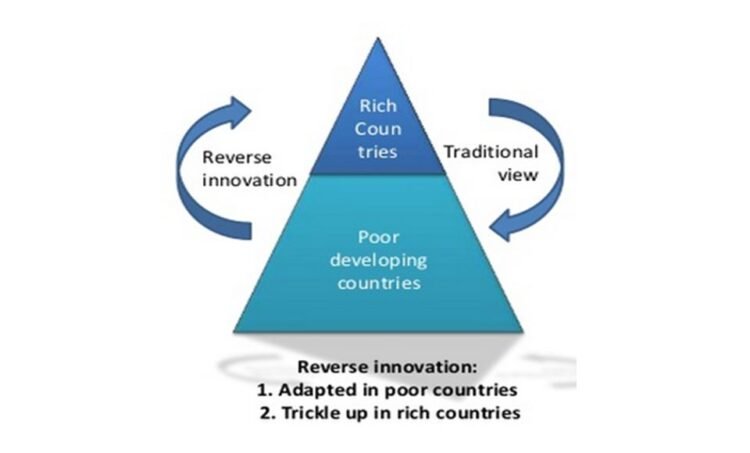
Vijay Govindarajan and Chris Trimble, in their book on Reverse Innovation defined the term “Reverse Innovation”; they define it as any idea, which will be first adopted in developing world. This phenomenon was not very common in the past for a simple reason that the rich and affluent that had the ability to demand were mostly concentrated in developed nations. Demand drove the technology and hence most of innovations happened in the west. United States and Germany have about 300 noble laureates in science and technology, while India and China who are six times in population have less than ten of them in total. Most of the solutions that were innovated in the west were hence imported. Slightly modified versions of the global products, mostly their low-end were “Glocalized” and were seem to be most relevant. This view, over time, is seemed to be no longer accurate. The nature of Continue reading
Business Process Reengineering (BPR)

History of Business Process Reengineering (BPR) Concept In 1990, Michael Hammer, a former professor of computer science at the Massachusetts Institute of Technology (MIT), published an article in the Harvard Business Review, in which he claimed that the major challenge for managers is to obliterate non-value adding work, rather than using technology for automating it. This statement implicitly accused managers of having focused on the wrong issues, namely that technology in general, and more specifically information technology, has been used primarily for automating existing work rather than using it as an enabler for making non-value adding work obsolete. Hammer’s claim was simple: Most of the work being done does not add any value for customers, and this work should be removed, not accelerated through automation. Instead, companies should reconsider their processes in order to maximize customer value, while minimizing the consumption of resources required for delivering their product or service. Continue reading
Business Analytics – Meaning, Use and Scope

Business Analytics deals with the methodologies employed by organizations to enhance their business by making optimized decisions with the use of statistical techniques that might involve data collection and analysis. Business analytics might require many complex techniques that need advanced statistics. Applying Business Analytics, it may be possible to find how a territory or a region reacts to certain product variations or added features. This information can be very useful in devising new product line with features that are likely to maximize sales in a particular region for a set of target audiences. A proper analysis of data might also tell about things like recurring customer support issues and thereby proactive steps can be taken before it grows out of proportion. Business Analytics is often used by marketing folks in predicting and analyzing consumer behavior. This is done by applying statistical analytical techniques on historical data of customer transactions. Without Continue reading
What Is Coworking?

One of the grimmest predictions about the future was described by Robert Putnam in his work on social capital. He envisaged low likelihood of participation in community life, smaller groups of friends, even less happiness, and lower perceived quality of life. Furthermore, the enthusiasts of globalization and internet predicted that since people do not have to be together in order to work together, so simply they will not be. Both of these statements are deemed fallacious when recent innovative developments like coworking spaces are considered. Instead of dividing people and further rupturing community life, they reintroduce collaboration and community building through establishing an innovative office design that is being implemented worldwide. Coworking has been present for centuries, but the first forms of collaboration appeared in the beginning of the 20th century. Artists from around the world gathered in Paris to live and work. One of the establishments, La Ruche, was Continue reading