Relationship Between Organizational Behavior and Management Control System

Organizational Behavior and  Management Control There is a close relationship between organizational behavior and management control system. A management control system seek to evaluate and regulate the performance of responsibility centers. The manager in charge of a responsible center is rewarded for good performance. At the same time when the performance of a responsibility center is dismal, the manager in charge is punished. Thus, a management control system acts as a double-edged sword. That is why manager are afraid of a control system and, may resist it. In order to make a control system successful, it is necessary to understand the factors that motivate, managers to achieve the results. Behavioral sciences have given several concepts that are relevant to management control. Some of these concepts at described below. 1. Perception. Whether a management control system is accepted and implemented successfully does not depend on the system. It depends largely on Continue reading

Motives for Holding Cash – Cash Management Concepts

Cash is the medium of exchange on the common purchasing power and which is the most important component of working capital. It includes coins, currency, cheques held by the firm and the balances in its bank accounts. Sometimes near-cash items also are included.’ Cash is the basic input required to keep the firm running on a continuous basis. At the same time it is the ultimate output expected to be realized by selling goods and services. A firm should hold sufficient cash, neither more, not less. An excessive cash remains idle which simply increases the cost without contributing anything towards the profitability of the firm and in the opposite case, trading and/ or manufacturing operation will be disrupted. Not only that, it largely upholds, under given condition, the quantum of other ingredients of working capital, viz., inventories and debtors, that may be needed for a given scale and type of Continue reading

Management Accounting – Definition, Objectives, Scope and Limitations

DEFINITION OF MANAGEMENT ACCOUNTING Management accounting is not a specific system of accounting. It could be any form of accounting which enables a business to be conducted more effectively and efficiently. It is largely concerned with providing economic information to mangers for achieving organizational goals. It is an extension of the horizon of cost accounting towards newer areas of management. Much management accounting information is financial in nature but has been organized in a manner relating directly to the decision on hand. Management Accounting is comprised of two words ‘Management’ and ‘Accounting’. It means the study of managerial aspect of accounting. The emphasis of management accounting is to redesign accounting in such a way that it is helpful to the management in formation of policy, control of execution and appreciation of effectiveness. Management accounting is of recent origin. This was first used in 1950 by a team of accountants visiting Continue reading

Organizational Architecture

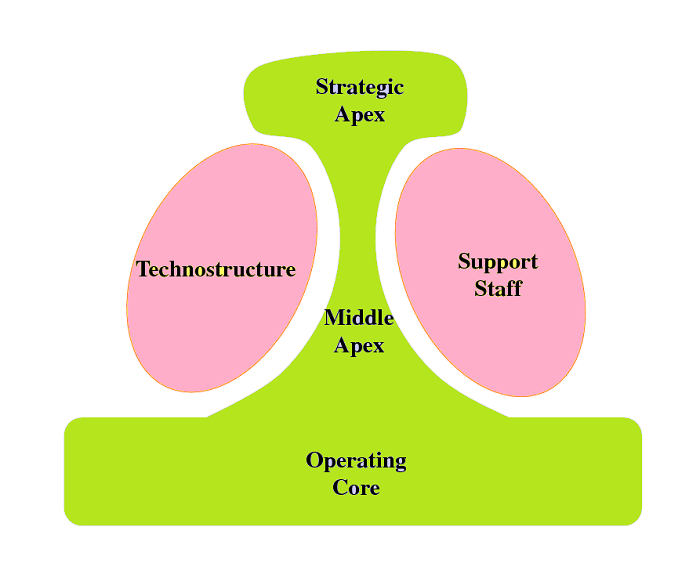
By organizational architecture, we mean the entire organization, including organizational structure, control systems and incentives, processes, organizational culture and people. In this case, there are three conditions to be fulfilled by an organization to make the organization profitable. First, various elements of the organization shall be parallel to each other. Second, organizational strategy should always be consistent with the organizational structure, and finally, strategies and organizational structure must be consistent with the competitive conditions prevailing in the firm’s market that are the strategy, architecture and competitive environment. As noted above, the organizational architecture is the totality of the organization itself which consists of various components. The components are the structure, control systems and incentives, processes, organizational culture and people.   The organizational structure is a formal organizational structure used to manage a firm. Control system is the system used to measure the performance of managers and units while the incentives Continue reading

Bonds and Debentures

Definition of  Debentures A company may not with to possess itself of the use of more share capital or ownership securities, and yet desire more available money. It may invite persons to kind their money as a loan, instead of contributing it as a part of the capital. Money so lent must also be recorded and acknowledged. The document which the lender receives is called a debenture. The holder of this debenture is a creditor of the company, while the shareholder is one of the proprietors of the capital of the company and so responsible for its liabilities. The debenture holder is one of the liabilities for which the shareholder is responsible. Thus a company in order to secure long-term finance for initial needs and more often for extensions and developments to supplement its capital may issue debentures or “creditorship securities”. In fact in every country, debenture issue is one Continue reading

What is Succession Planning? Definition, Need and Process

Succession planning is a process for identifying and developing internal people with the potential to fill key leadership positions in the company. Succession planning increases the availability of experienced and skillful employees that are hopeful to undertake these roles as they become available. This process focuses on seeking the right person, not just the available person. It’s built on the idea of recognizing the potential leaders in organization and developing them so that they are ready to move up when the opportunity arises. It’s one of the best methods to promote recruitment and retention in organization. Although people often mix up replacement planning and succession planning, the latter goes beyond former planning because its focus is larger than one position or department. While often related to planning for senior executive replacements only, it is really broader than that can extend as far down the organization chart as managers want to Continue reading