Benefits of Forward Exchange Contracts

Forward exchange rates, like spot exchange rates are determined by the demand for and the supply of forward exchange. If the supply of forward exchange exceeds the demand for it, the forward rates will be  quoted at a discount over the spot rate i.e., forward exchange rate will be lower than the spot exchange rate. On the other hand, if the demand for forward exchange exceed its supply, the forward rates will be quoted at a premium over the spot rate i.e., forward rate will be quoted at a premium over the spot rate i.e., forward rate will be higher than the spot rate. The demand for forward exchange arise, mainly, from: Imports, Outflow of capital, Arbitrage  operation and Bullish speculation. An importer of foreign goods having to make payment after a certain period of time may contract to purchase foreign exchange in advance to avoid the risk of changes Continue reading
Retail Store Design

Store design is the architectural character or decorative style of a retail store that  conveys to the customer “what the store is all about.” Retail stores vary so much in kind, size,  and geographical location that it is difficult to generalize about design. The architecture of  the store’s exterior creates an initial impression. For example, if a  retailer chooses to  remodel an older Victorian home, the customer will get a different impression from that of  a store in the mall. Because of continued pressure on costs, newer designs reflect  a closer attention to all details including store size. The drive to reduce inventory levels  has forced a move to smaller stores, because a large store with less merchandise looks  as though it is going out of business. The stores showing an increase in store size are  those attempting to diversify and broaden merchandise lines. Higher rents, higher  building costs, and Continue reading

Team Development Life Cycle

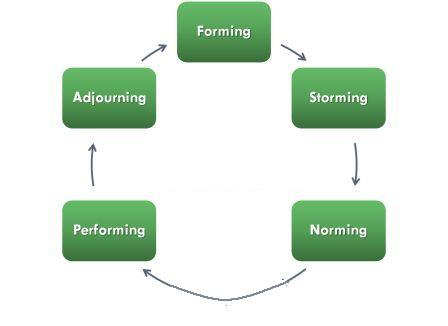
When a number of individuals begin to work at interdependent jobs, they often pass through several stages as they learn to work together as a team.  The stages of team development life cycle  are forming, storming, norming, performing, and adjourning.  This model of team development was first proposed by Bruce Tuckman in 1965, who maintained that these phases are all necessary and inevitable and allow team growth. Though these are not followed rigidly, they do represent a broad pattern that may be observed and predicted in many settings across team’s time together. These stages are the result of a variety of questions and issues that team members face such as “who will be members of the team?” “Who will perform what functions?” “Who will contribute what?” “What rules will be followed?” “How can conflicts among members be resolved?” and so on. These typical stages of team development life cycle  are Continue reading

Difference Between Career Planning and Career Development

Broadly, the term career is referred to an individual’s entire work life. In a narrow sense, it can be defined as the succession of jobs and or ranks held by a person in a particular organisation. An individual’s career begins with placement in a job and ends with departure from the organisation, may be in form of retirement, resignation or death. In between, the career progression consists of changing tasks, tenure in various jobs, temporary or permanent promotions, transfers etc. Career planning and development includes all those events that is happening to or initiated by an individual affecting his/ her progress or promotion. It happens by widening and/or changing employment possibilities and is characterized by different and higher status, better conditions of service and increased satisfaction with the job. It revolves round events and occurrences an individual goes through while moving up the hierarchic ladder. Career development is the process Continue reading

Workers Compensation Act, 1923

The Workers Compensation Act, aims to provide workmen and/or their dependents some relief in case of accidents arising out of and in the course of employment and causing either death or disablement of workmen. It provides for payment by certain classes of employers to their workmen compensation for injury by accident. The latest amendment to the Act was made in 1984. Object and scope of the Act: The passing of the Act in 1923 was the first step towards social security of workmen. The main objective of the Act is to provide for the payment of compensation by certain classes of employers to their workers for injury by accident. The theory of Act is that “The cost of the product should bear the blood of the workmen”. The Act came into force on the first day of July, 1924. The growing complexity of industry with increasing use of machinery and Continue reading

Circumstances Under Which a Contract is Said to be Free

Two or more persons are said to consent when they agree upon the same thing in the same sense. Consent is said to be free when it is not caused by- Coercion, as defined in section 15, or Undue influence, as defined in section 16, or Fraud, as defined in section 17, or Misrepresentation, as defined in section 18, or Mistake, subject to the provisions of sections 20, 21, and 22. Consent is said to be so caused when it would not have been given but for the existence of such coercion, undue influence, fraud, misrepresentation, or mistake. Coercion: “Coercion” is the committing, or threatening to commit, any act forbidden by the Indian Penal Code (45 of 1860) or the unlawful detaining, or threatening to detain, any property, to the prejudice of any person whatever, with the intention of causing any person to enter into an agreement. Explanation: It is Continue reading