Some Attitudinal Training Methods

There are training methods related to the attitude of the participants of training programmes. The specific method should be selected according to the attitude of the participants in an organization. Some important attitudinal training methods are explained below: 1. Jigsaw Method The Jigsaw is a method of attitudinal training followed when there is too much information for one person to read or absorb. It encourages reading or listening salient points included in the training programme.  Jigsaw method is helpful to develop effective practice for communicating critical points to others. Jigsaw provides different perspectives on information. It can be particularly helpful to second language learners. Jigsaw is a group structure that can be used across all content areas. Training starts with a home group. That group is responsible for learning the assigned portion of a task that is prescribed by the instructor. Then the instructor separates trainees into new groups – Continue reading

Six Leadership Styles by Daniel Goleman

Daniel Goleman, in his article  “Leadership That Gets Results”, has identified six different leadership  styles, and he believes that good leaders will adopt one of these six styles to meet the needs of different situations. “What are the six styles of leadership? None will shock workplace veterans. Indeed, each style, by name and brief description alone, will likely resonate with anyone who leads, is led, or as is the case with most of us, does both. Coercive leaders demand immediate compliance. Authoritative leaders mobilize people toward a vision. Affiliative leaders create emotional bonds and harmony. Democratic leaders build consensus through participation. Pacesetting leaders expect excellence and self-direction. And coaching leaders develop people for the future.” –  Daniel Goleman. None of the six leadership styles by Daniel Goleman  are right or wrong — each may be appropriate depending on the specific context. Whilst one of the more empathetic styles is most Continue reading

E-Business Models

The term E-business (electronic business) is similar to terms like e-mail, e-commerce, helping not only in buying, selling but also in servicing customers and collaborating with business partners. Today, major corporations are rethinking their businesses in terms of the internet and its new culture and capabilities. Companies are using web to buy parts and supplies from other companies, to collaborate on sales promotions, and to do joint research. Exploiting the convenience, availability, and world-wide reach of the Internet, many companies, have discovered how to use the Internet in a better way. After the first wave of e-business, ‘bricks and clicks’ businesses — those with both a traditional and e-commerce approach — find that, while they already have sound financial resources, they, too, must find the right e-business model(s) for generating profitable revenue streams from the Internet. In terms of operationalising the e-business strategy a variety of e-business models are now Continue reading

Consumer’s Surplus – Definition, Significance and Criticisms

The concept of consumer’s surplus is one of the most important idea in economic theory especially in demand and welfare economics. This law was first developed by French engineer A.J Dupuit in 1844 to measure the social benefits of public commodities like canals, bridges, national highways, etc. This concept was further refined and popularized by Dr. Alfred Marshall in 1890. The essence of the concept of consumer’s surplus is that people generally get more satisfaction or utility from the consumption of commodities than the actual price they pay for them. It has been found that people are willing to pay more price for the commodity than they actually pay for them. This extra satisfaction which the consumers obtain from buying a commodity has been called consumer’s surplus by Marshall. The amount of money which a person is prepared to pay for a commodity indicates the amount of utility he derives Continue reading

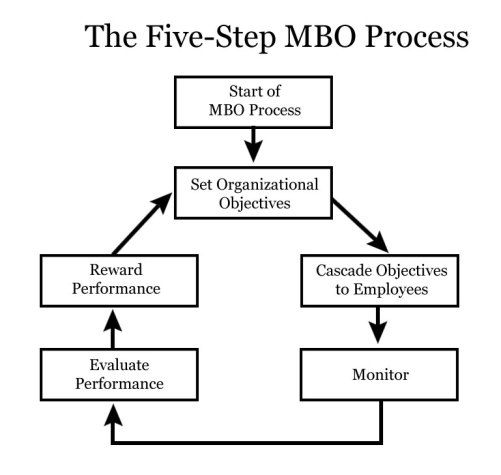
Steps in Management by Objectives (MBO) Process

Management by objectives (MBO) is a systematic and organized approach that allows management to focus on achievable goals and to attain the best possible results from available resources. It aims to increase organizational performance by aligning goals and subordinate objectives throughout the organization. Ideally, employees get strong input to identify their objectives, time lines for completion, etc. MBO includes ongoing tracking and feedback in the process to reach objectives. Management by Objectives (MBO) was first outlined by Peter Drucker in 1954 in his book ‘The Practice of Management’. In the 90s, Peter Drucker himself decreased the significance of this organization management method, when he said: “It’s just another tool. It is not the great cure for management inefficiency.” The main features of MBO are: Management by Objectives is a philosophy or a system, and not merely technique. It emphasizes participative goal setting. It clearly defines each individual responsibility in terms Continue reading

The Relationship Between Creativity and Innovation

Creativity and Innovation are two different terms and they technically have different meanings. Creativity means originality, imagination and inventiveness that are brought out through resourcefulness. Innovation, on the other hand refers to modernization and improvement over an existing idea. In this way, it is true that creativity and innovation are two different terms and cannot be used interchangeably. Yet, they have been used interchangeably in several areas or walks of life, including business and management as well as technology. In this way the main distinction between creativity and innovation, being the originality has been ignored and as the line between creativity and innovation is thin, it becomes even more difficult to distinguish between these terminologies. Innovation is an important aspect of growth and development of individuals, organizations, cultures and societies. Innovation and creativity refer to bringing in new ideas to life. Innovation can be achieved strategically through a process of Continue reading