The Impact of Bureaucratic Structure in Organizations
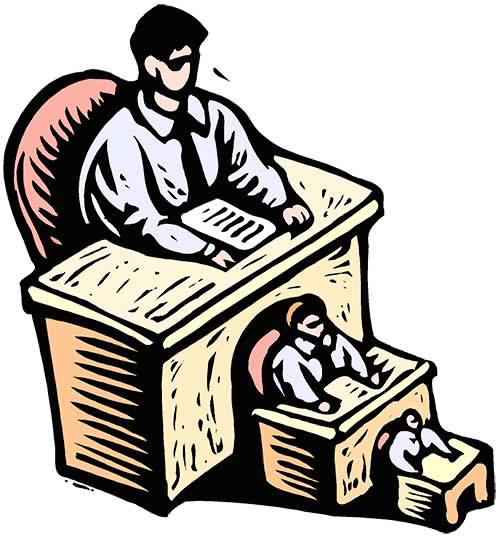
A  bureaucracy  is a form of organisation based on logic, order, and the legitimate use of formal authority. Bureaucracies are meant to be orderly, fair, and highly efficient. Max Weber, a German theorist, was the first person to introduce many of the concepts of bureaucracy. During the 18th and 19th century period many employees worked only for themselves and in a workplace environment that was primarily focused on getting the job done in whichever way possible unconcerned with efficiency. Weber’s idea was to use regulation by rules, policies, supervision, reward systems and other mechanisms to make sure that the behavior and standards of the employees are always met and making the contemporary workplace more organized. The six key principles of bureaucracy that Weber identified were; division of work, hierarchy, promotions, record-keeping, business as a separate legal entity and rules and regulations. Many businesses today have benefited from Weber’s work. Division Continue reading
Producer’s Equilibrium

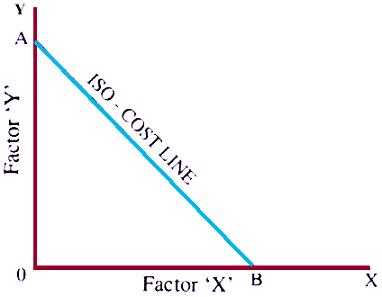
Given the Isoproduct map, the producer would like to ride on the highest possible Isoquant because any point on it would yield maximum possible output. But the producer’s desires are limited by his budgetary constraints. Before he selects a certain combination of inputs he has to take into consideration the size of his investment outlay and the prices of the factors of production. The Isocost Line Let us assume that the investment fund is given and the prices of factors X and Y are also known. On the basis of these assumptions let us suppose that the firm were to spend the entire amount on employing units of only input X. Then it could hireOB units of factor X. On the other hand if the producer wants to allocate his entire investment outlay in employing factor Y then he could hire OA units of Y. We have now obtained the Continue reading

Control in Multinational Enterprises (MNEs)

There are various methods of classification of management control in Multinational Enterprises (MNEs). By levels of control here it is meant whether the parent / corporate level managers or subsidiary/country-level managers are involved. The former might be called higher level and the later lower level control. Depending on the sphere of focus we have two types of control called Strategic control and Operational control. In the MNE’s context, strategic control is the responsibility of parent and operational control is the preserve of the subsidiary. Another way puts ‘management control, tactical control and transactional control’ as the 3 levels of control respectively carried out by the corporate top management, collectively by corporate & subsidiary management and subsidiary management in the case of MNEs. Of course, whether an MNE’s structure is ethno-centric, geo-centric, multi-domestic/poly-centric or region-centric is another factor that influences the exact distribution of responsibility. The forward looking information is provided Continue reading

Difference Between Authority and Power

Authority and Power Authority may be defined as the right to guide and direct the actions of others   and to secure from them responses which are appropriate to the attainment of the goals of the organization. According to Barnard, ”Authority is the character of communication(order) in a formal organization by virtue of which it is accepted by a contributor to, or member of the organization as generating the action he contributes, that is, as governing or determining what he does or is not to do so far as the organization is concerned.” Power refers to the ability or capacity to influence the  behavior  or attitudes of other individuals. A manager’s power may be considered as his ability to cause subordinates to do what the manager wishes them to do.  Power is an important means to enforce obedience to the rules, regulations and decisions of the organization. Power may be Continue reading

Role of Technology in Modern Business

Technology has slowly and steadily seeped into all aspects of our lives, big or small. Business is no exception to this trend. In the age of information technology, computers and the internet have become as necessary to businesses as capital, in some cases even more so. Use of specialized hardware and software has made things quicker and less prone to errors, simple and repetitive tasks have been largely automated or will soon be short, communication has been revolutionized, and the rapidly lowering costs of technology are allowing small companies to compete with and outsmart larger corporations. These benefits have not come free of challenges, however. The rapid pace of improvement in technology, which fuels its disruptive powers also makes the future that much harder for managers and business leaders to predict. Careful thought and planning are required if businesses wish to reap the benefits and mitigate the drawbacks. Ultimately, it Continue reading

Modes of Long-Term Working Capital Financing

Working capital refers to that part of the total capital employed which has been invested for the financing of current assets e.g. inventories, debtors, cash and bank balances, bills receivable, prepaid expenses etc. That is, total of all current assets is working capital. Firms need both a long-term (or permanent) investment in working  capital and a short-term or cyclical one. The permanent working capital  investment provides an ongoing positive net working capital position, that is,  a level of current assets that exceeds current liabilities. This allows the firm to  operate with a comfortable financial margin since short-term assets exceed  short-term obligations and minimizes the risk of being unable to pay its employees, vendors, lenders, or the government (for taxes). To have positive  net working capital, a company must finance part of its working capital on a  long-term basis.  Beyond this permanent working capital investment, firms need seasonal or  cyclical working Continue reading