Case Study: The Decline and Fall of General Motors
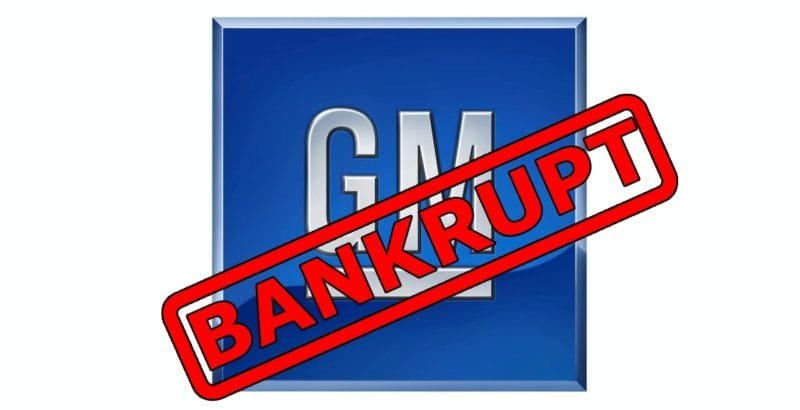
Failure to innovate is the key reason to the downfall of Old General Motors. Innovation is the process whereby the management team of an organization is charged with the responsibility of introducing something new, which might be a new idea or a methodology or rather, a contrivance to facilitate the operational concerns and production. The Old General Motors failed with innovations in the company. These innovations were needed to ensure that the Old GM able remains competitive, and the company was able to manufacture cars that are in line with the client’s demands. This is related to the Old GM’ field of business to ensure that the organization do continue to produce the respective consumer centered product. The manufacturing industry such as the General Motors, innovation ensure that the output they deliver to the consumer do meet their needs, and expectations in a way that is realistic and makes their Continue reading

Transportation and Assignment Models in Operations Research

Transportation and assignment models are special purpose algorithms of the linear programming.   The simplex method of Linear Programming Problems(LPP)   proves to be inefficient is certain situations like determining optimum assignment of jobs to persons, supply of materials from several supply points to several destinations and the like. More effective solution models have been evolved and these are called assignment and transportation models. The transportation model is concerned with selecting the routes between supply and demand points in order to minimize costs of transportation subject to constraints of supply at any supply point and demand at any demand point.   Assume a company has 4 manufacturing plants with different capacity levels, and 5 regional distribution centres.     4 x 5 = 20 routes are possible.   Given the transportation costs per load of each of 20 routes between the manufacturing (supply) plants and the regional distribution (demand) centres, Continue reading

Case Study of Dell: Business Innovation and Success

Dell Inc. is an American multinational information technology corporation which is based in Round Rock, Texas, United States. The corporation being the largest technological corporations in the world develops, sells and supports computers and related products and services which employs more than 96000 people. The company bears the name of its founder, Michael Dell. The company sells personal computers, servers, data storage devices, network switches, software, and computer peripherals. The company is also popular for its HDTVs, cameras, printers, MP3 players and other electronics built by other manufacturers. The company is well known for its innovations in supply chain management and electronic commerce. Dell’s tagline is ‘Yours is Here’. Their Business/Corporate class represent brand where the company advertises emphasizes long life-cycles, reliability, and serviceability. Such brands include Optiplex, Vostro, N Series, Latitude, Precision, Power Edge; Power vault etc. Their Home Office/Consumer class emphasizes value, performance, and expandability. These brands include Continue reading

The Impact of Organizational Culture on Business Strategy

Organizational culture is an essential aspect to a company that can influence the strategy of the organization. Organizational culture can define as one organization share their own traditions, values, policies and attitudes during their daily operation. Organizational culture is a basement of company strategy. Company can achieve their business goal very easily if they put organizational culture into their business vision and mission; make sure the culture can match with company strategy, in this way company culture can push their business keep going. Each of organization has their unique culture which the company can benefit from it. The culture can give a large effect to employees, even the company’s customers. As long as staffs know about the culture of company, they know the core business of the organizational hence the strategies they make will surround the organizational culture and that will not deviate their organizational goal. On the other hand, Continue reading

Negative Impacts of Overcapitalization

Overcapitalization occurs when a company has issued more debt and equity than its assets are worth. The market value of the company is less than the total capitalized value of the company. An overcapitalized company might be paying more in interest and dividend payments than it has the ability to sustain long-term. The heavy debt burden and associated interest payments might be a strain on profits and reduce the amount of retained funds the company has to invest in research and development or other projects. To escape the situation, the company may need to reduce its debt load or buy back shares to reduce the company’s dividend payments. Restructuring the company’s capital is a solution to this problem. The phrase ‘overcapitalization’ has been misunderstood with abundance of capital. In actual practice, overcapitalized concerns have been found short of funds. Truly speaking, overcapitalization is a relative term used to denote that Continue reading

Case Study of Johnson & Johnson: Using a Credo for Business Guidance

Johnson & Johnson, founded by Robert Wood Johnson and his brothers James and Mead in 1886, has grown into the world’s most comprehensive manufacturer of health care products and related services for the consumer, pharmaceutical, and medical devices and diagnostics markets. Today, Johnson & Johnson consists of more than 250 operating companies, employing approximately 121,000 employees, with more than 50,000 of those in the United States. Johnson & Johnson has operations in 57 nations and sells products all around the world. Johnson & Johnson’s product categories include, but are not limited to: allergy, colds, and flu; baby care; cardiology; dental care; diabetes care; first aid; medical devices and diagnostics; oncology; prescription drugs; skin and hair care; and vision care. The company’s sales have increased every year for since 1946, and in 2006, global sales were $53.9 billion and net earnings were $11.1 billion. Moreover, Johnson & Johnson was ranked ninth Continue reading