Introduction to Transportation Problem

Transportation problem is a particular class of linear programming, which is associated with day-to-day activities in our real life and mainly deals with logistics. It helps in solving problems on distribution and transportation of resources from one place to another. The goods are transported from a set of sources (e.g., factory) to a set of destinations (e.g., warehouse) to meet the specific requirements. In other words, transportation problems deal with the transportation of a single product manufactured at different plants (supply origins) to a number of different warehouses (demand destinations). The objective is to satisfy the demand at destinations from the supply constraints at the minimum transportation cost possible. To achieve this objective, we must know the quantity of available supplies and the quantities demanded. In addition, we must also know the location, to find the cost of transporting one unit of commodity from the place of origin to the Continue reading
Retail Investment in India – Retail as an Investment Option

Despite the huge presence of the unorganized sector, the Indian retail industry is attractive for international players (Read: Unorganized Retail in India). It is favored over China’s among the developing countries due to a slew of laws in the communist country at various levels. Though the market hasn’t seen big time players of the developed nations yet, the fact that Indian per capita retail space is among the lowest, is expected to provoke people to look at retail as a potential business arena. The growth of integrated shopping malls, retail chains and multi-brand outlets is evidence of consumer behavior being favorable to the growing organized segment of the business. Space, ambience and convenience are beginning to play an important role in drawing customers. With the Indian per capita income on the rise and the distribution of consumption expenditure expected to remain fairly stable, the current segments of food and apparel Continue reading

10 Steps to Successful Crisis Management

A crisis is an abnormal situation, or even perception, which is beyond the scope of everyday business and which threatens the operation, safety and reputation of an organisation.  Crises do not discriminate based on a company’s size or notoriety, and they can hit when a company least expects them. They come in many forms — strikes, layoffs, product recalls or allegations of misconduct, but while some of these may seem small, every crisis has the potential to damage the reputation of a company. Regardless of the severity of the situation, crises pose a serious threat to companies — not only to their reputation but their fiscal health as well. When Odwalla’s apple juice was thought to be the cause of an outbreak of E. coli bacteria, the company lost a third of its market value. The same allegation against Jack in the Box restaurant in 1993 caused the hamburger chain’s Continue reading

International Payments Using Drafts

Commonly used in international trade, a draft is an unconditional order in writing –  usually signed by the exporter (seller) and addressed to the importer (buyer) or the importer’s  agent – ordering the importer to pay on demand, or at a fixed or determinable future date, the  amount specified on its face. Such an instrument, also known as a bill of exchange, serves three  important functions: To provide written evidence, in clear and simple terms, of financial obligation. To enable both parties to potentially reduce their costs of financing. To provide a negotiable and unconditional instrument (that is, payment must be made  to any holder in due course despite any disputes over the underlying commercial  transaction.) Using a draft also enables an exporter to employ its bank as a collection agent. The bank  forwards the draft or bill of exchange to the foreign buyer (either directly or through a branch Continue reading

Features of Service Tax

Service tax is a tax levied by the government on service providers on certain service transactions, but is actually borne by the customers. It is categorized under Indirect Tax and came into existence under the Finance Act, 1994. The salient features of levy of service tax are: 1.   Scope: It is leviable on taxable services ‘provided’ or ‘to   be provided’ by   a service provider. The services ‘to be provided’ in future are taxed only if payment in its respect is received in advance. Two separate persons required   Payment to employees not covered: For   charge of service  tax, it is necessary that the service provider and service recipient should be two separate persons acting  on ‘principal to principal basis’. Services provided by an employee to his employer are not covered service tax and, therefore, salaries or allowances paid to them cannot be charged to service tax. Continue reading

Working Capital Concepts

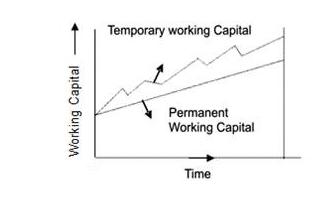
Working Capital, being lifeblood for any enterprise, its management becomes a crucial exercise for the Financial Manager of a firm. The need of working capital is directly linked to the growth of the firm. Working Capital refers to the funds invested in the current assets of a firm such as raw materials, work-in-progress, finished goods, receivables, cash etc.   From the viewpoint of manufacturing process, working capital means that part of capital, which is required to keep the flow of production smooth and continuous. For day-to-day operations, a business needs to carry certain amount of raw material of all sorts so that commencement of production is not delayed, certain amount of work-in-process so that production operations go smoothly, certain amount of finished goods so that supply to market is not hampered by fluctuations in production, certain amount of book debts so that sales take place continuously and certain amount of Continue reading