The main obstacles to effective organizational performance is already covered in this blog and the ways to overcome them are discussed below. 1. Employees Training and Development The hope is that employees who receive training in line with their individual or organizational goals will become more efficient in what they do. Organizations should look at the positive effects of training on employee performance, and consider employee development as a targeted investment into making the front line worker stronger. More importantly, development plans that include “train-the-trainer” (training that trains employees to become trainers of a skill) can provide exponential benefits to the organization. This training can be anything from how employees can do their own jobs better to these employees being groomed to replace their supervisor. In addition, employees who are invested as a trainer might be further inclined to stay with the organization, and possibly reduce employee turnover. 2. Motivation Continue reading
Principles of Management
Functional Organization – Meaning and Features
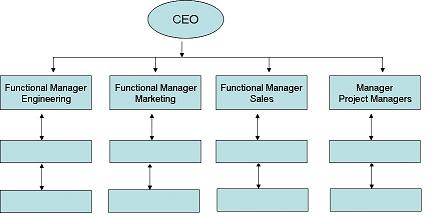
Functional organization is technically called functional foreman-ship because the function itself becomes a supervisor and the employees automatically perform their respective duties. The emphasis of functional organization structure is on operations rather than on management. Functional organization is commonly used in business organizations. The spirit of organization, which involves grouping tasks together and allocating them to genuine employees is observed in functional organization. Functional sets like marketing, finance, production and personal are grouped systematically. Departments and sub departments are developed according to the requirements of the business. Functional organization is the basic building block or module from which other forms of organization are built. Functional organization is characterized by function, sub-goal emphasis, division of work, functional relationship, centralization and decentralization, span of control, divisionalization of product and regionalization. All employees are not equal; they have distinctive and special interests in different activities, while some of Continue reading
Johnson and Scholes Cultural Web Model of an Organization
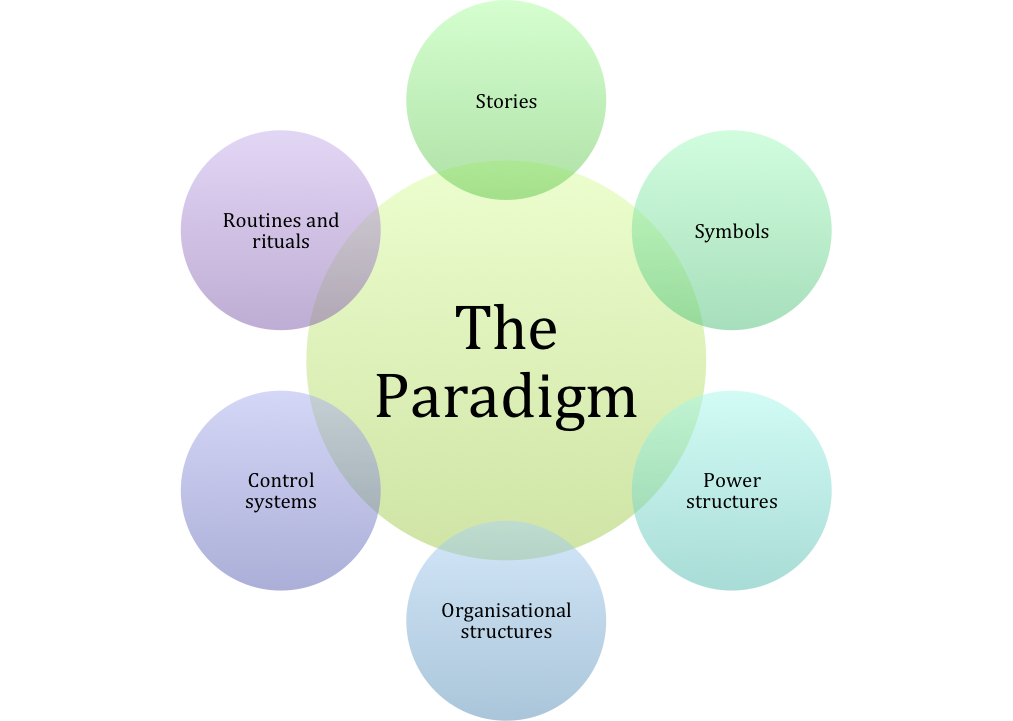
The cultural web provides a way of auditing an organisation’s culture. It can also identify possible barriers within the existing culture to change. The web can also be used to describe the way an organisation should look after a transformation. This particular angle is of importance for this management project, because management felt that there was a clear difference between the current cultural web and the desired one within the organisation. Culture is defined in many different ways. However, in most definitions elements like “basic assumptions and beliefs of an organisation or “the accepted way of working and behaving in an organisation” are included. Johnson and Scholes describe organisational culture as: “the deeper level of basic assumptions and beliefs that are shared by members of an organisation, that operate unconsciously and define, in a basic fashion, an organisation’s view of itself and its environment.” The assumptions and beliefs are in Continue reading
Concept of Reinforcement in Organizational Behavior

Reinforcement is the attempt to develop or strengthen desirable behavior. There are two types of reinforcement in organizational behavior: positive and negative. Positive reinforcement strengthens and enhances behavior by the presentation of positive reinforcers. There are primary reinforcers and secondary reinforcers. Primary reinforcers satisfy basic biological needs and include food and water. However, primary reinforcers don not always reinforce. For instance, food may not be a reinforcer to someone who has just completed a five course meal. Most behaviors in organizations are influenced by secondary reinforcers. These include such benefits as money, status, grades, trophies and praise from others. These include such benefits as money, status, grades, trophies and praise from others. These become positive reinforcers because of their associations with the primary reinforcers and hence are often called conditioned reinforcers. It should be noted that an event that functions as a positive reinforce at one time or in one Continue reading
The Effect of Organizational Structure on Innovation
Organizational structure is the skeleton system based on which an organization functions. Organizational structure deals with the framework which defines the relation between people and positions in the organization. Organization structure is defined as the formal system of task and reporting relationships that controls, coordinates and motivates employees so that they cooperate and work together to achieve an organization’s goals. Several tasks are to be implemented in an organization, for these organizational tasks to be successful, they should be coordinated. Organizational structure supports division of work, categorizing the tasks and supervision in an organization. An effective organizational structure aids the efficient running of an organization. The factors that govern the formulation of an organizational structure are benefits of channelizing the tasks, hurdles due to communication and obstacles due to formatting the authority levels. Organizational structure helps the managers in a firm to describe, distribute and get job done. Organizational structure Continue reading
Organizing Function of Management
According to Haimann, “Organization is the process of defining and grouping the activities of the enterprise and establishing the authority relationship among them.” The mentioned definition makes it clear that on the one hand organization is a process to define and classify the functions to be performed for the attainment of the objectives of the organization, and on the other hand, it is an art to establish sweet relationship among different persons. There are two concept are prevalent about organisation. In the other word, there are two meaning of organization: Organizing as process: According to the first concept of organizing, it has been considered as a process. In the other word, organizing is not function that can be performed at a single stroke, but it is a chain of various functions. It includes getting information about objectives, deciding various activities and grouping them, determining important activities, allowing authority and responsibility, Continue reading