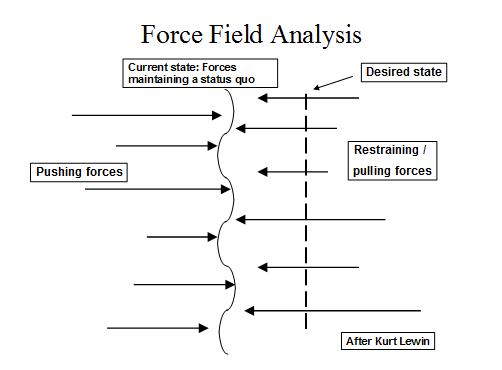
A planned change is a change planned by the organization; it does not happen by itself. It is affected by the organization with the purpose of achieving something that might otherwise by unattainable or attainable with great difficulty. Through planned change, an organization can achieve its goals rapidly. The basic reasons for planned change are: To improve the means for satisfying economic needs of members To increase profitability To promote human work for human beings To contribute to individual satisfaction and social well being The planned organizational change process may comprise, basically the three following steps: Planning for change Assessing change forces Implementing the change 1. Planning for Change The first step in the process of change is to identify the need for change and the area of changes as to whether it is a strategic change, process oriented change or employee oriented change. This need for change can be Continue reading
Management Concepts
Organizational Goals – Meaning and Definition
Organizational goals can be defined as broad statements of what the organization wants to achieve in the long run, or on a permanent basis. Goals are broad objectives. Goals are fairly timeless statements. Goals and objectives are properly defined. If they are vague or ill-defined, it may not be possible to measure the performance of the organization. The clarity of goals and objectives is quite often more evident to the initial employers and promoters of institutions. With expansion of activities and joining of new member, goals and objectives as perceived by participants tend to get diffused. Different key managers may have different perceptions about goals and objectives. It is because of this that organizations insist on proper induction of new entrants to the philosophy of the organization. External pressures, sometimes political in nature, may force an enterprise to alter its goals and objectives, particularly in the case of public institutions, Continue reading
Case Study Analysis Techniques

A case study is a concise description of a situation which exists or a series of events which have taken place in an organization. This description may be drawn from actual events in a particular organization or it may be a fabricated description which draws its inspiration from several parts of the author’s experience. Whatever its source, this description (perhaps with organization charts and tables of data included) is the scenario which you will be asked to analyze. Often these scenarios describe a number of things which have gone wrong or indicate things left undone which should have been done and sometimes illustrate effective and sometimes ineffective practice and management. Usually you will be given questions to answer or a course of action to comment on or you will be invited to make recommendations which have to be supported by argument and analysis. This method of learning from case studies Continue reading
Requirements for an Effective Management Control System
The following are the essential or basic requirements of an effective management control system: Suitable: The control system must be suitable for the kind of activity intended to serve. Apart from differences in the systems of control in different business, they also vary from department to department and from one level in the organization to the other. A system of control useful at a higher level of management will be different in scope and nature from that in use at the operative level. Several techniques are available for control purposes such as budgets, break-even points, financial ratios and so on. The manager must be sure that he is using the technique appropriate for control of the specific activity involved. The tool appropriate are not necessarily the same as between different departments or between two different organizations. For example, the sales department and production department may use different tools of control. Continue reading
Situational Leadership Model – Definition, Pros, and Cons

The situational theory of leadership is becoming increasingly popular in the context of modern organizational leadership. Situational leadership revolves around job-related maturity. Job maturity refers to an individual’s ability in performing a job and this is a key factor determining a leader’s behavior. The situational leadership model puts it that effective leadership is dependent on both the acts of management and leadership and that these enhance an organization’s match to current global trends. The model emerged from the realization and understanding that not all individuals within a group or community being led compare in terms of maturity level and that the need for a leadership style differ with situations. Situational leadership entails first understanding one’s predominant leadership approach and the level of the follower’s development process. Situational leadership theory, in simple terms talks about different leadership styles and how a leader can choose an appropriate style with respect to team Continue reading
Theories of Motivation: Abraham Maslow’s Need Hierarchy Model
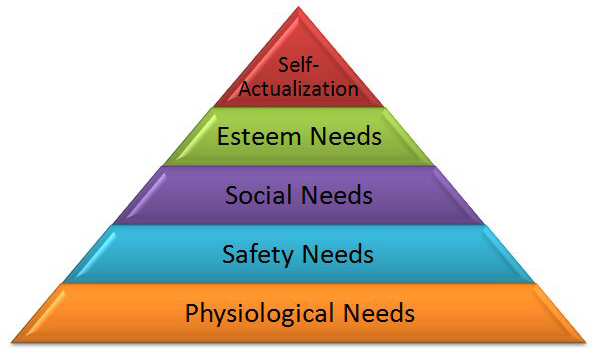
In 1943, Abraham Maslow’s article, “A Theory of Human Motivation ” appeared in the Psychological Review, which were further expanded upon in his book: Toward a psychology of well being, Abraham H. Maslow attempted to formulate a needs-based framework of human motivation and based upon his clinical experiences with people, rather than as did the prior psychology theories of his day from authors such as Freud and B.F. Skinner, which were largely theoretical or based upon animal behavior. The basis of Maslow’s motivation theory is that human beings are motivated by unsatisfied needs, and that certain lower factors need to be satisfied before higher needs can be satisfied. According to Maslow, there are general types of needs (physiological, survival, safety, love, and esteem) that must be satisfied before a person can act unselfishly. He called these needs “deficiency needs.” As long as we are motivated to satisfy these cravings, Continue reading