What is HR Professionalism?
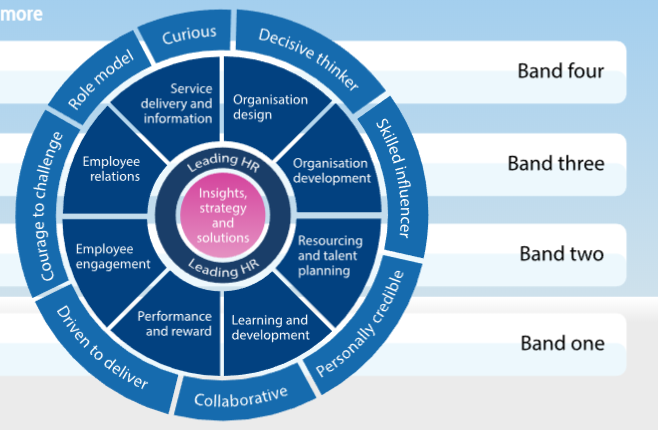
In order to understand what HR professionalism is we first have to break down what it means to be a professional. The term professional could be an individual who is a qualified member of a professional body, someone who continuously updates their knowledge, is competent, and uses their skills in practice. Professionalism could be interpreted as the use of specialist knowledge necessary to perform a particular type of work or role. Professionals are associated with increased training, the development of professional knowledge standards, and a requirement to update this knowledge. One way the CIPD (The Chartered Institute of Personnel and Development) measures professionalism is through their code of conduct which can be broken down into 4 sections as shown below: Professional Competence and Behaviour Ethical Standards and Integrity Representative of the Profession Stewardship. These codes of conduct apply to everyone who is registered with the CIPD regardless of size, sector, Continue reading

Case Study of Bajaj Auto: Establishment of New Brand Identity

The Bajaj Group is amongst the top 10 business houses in India. Its footprint stretches over a wide range of industries, spanning automobiles (two-wheelers and three-wheelers), home appliances, lighting, iron and steel, insurance, travel and finance. The group flagship company, Bajaj Auto, is ranked as the world’s fourth largest two- and three wheeler manufacturer and the Bajaj brand is well-known in over a dozen countries in Europe, Latin America, the US and Asia. Founded in 1926, at the height of India’s movement for independence from the British, the group has an illustrious history. The integrity, dedication, resourcefulness and determination to succeed which are characteristic of the group today, are often traced back to its birth during those days of relentless devotion to a common cause. Jamnalal Bajaj, founder of the group, was a close confidant and disciple of Mahatma Gandhi. In fact, Gandhiji had adopted him as his son. This Continue reading

International Trade Theory of Country Size and Technology Gap

Trade Theory of Country Size Country size has some definite relation to international trade as to what is traded, how much is traded and so on. The classical trade theories do not go into country-by-country differences in size to deal with the lines of specialization. When a small and big country are involved, the small country may be pushed into specialization, but not the big one for all its need for the other product can’t be produced by the other small country, nor that small country take all export surplus of the big nation resulting from specialization. Thus a nexus exists between global trade and country size. Vastness of Country size and Variety of Resources go together: Size of a country is measured by the geographical space here. Big countries have vast space and hence more and diverse resources. With that they could be self reliant. Considering their size, their Continue reading

Different Market Structures and Pricing Strategies

In the world of business and economics, marketing structures are considered to be the structures that assist with connecting buyers, sellers, products and services to one another. Some of the elements that market structures connect and work with are production levels, different forms of competition, different forms of products and services, ease of entry and exit from the marketplace, buyers, sellers, and even the agreement between particular agents. Depending on what type of market structure a company is either choosing to use, or is forced to use, will determine what type of pricing strategy they are going to need to utilize. To look further into the different pricing strategies, there needs to be an understanding of the basic market structures, which are perfect competition, monopolistic competition, oligopoly, and monopoly. Perfect Competition Perfect competition occurs when there are many buyers and sellers, no particular barriers to entry or exit, and also Continue reading

Factors affecting Advertising Media Selection

The advertising medium refers to the means  through which the advertiser can convey his message to audience.  Proper selection of the media  enables the advertiser to achieve the desired results. Hence, advertising media selection  is vital for the success of  an advertising campaign. An advertising medium is any object or device that carries the advertising message. It  should be capable of accomplishing following three objectives: To reach the largest number of people possible. To gain their attention. To be less expensive. The character of the medium is largely determined on the objective and factual basis  such as whether the coverage of the medium should be national, regional or only local. Factors Governing of Advertising Media  Selection Selection of a suitable medium for advertising is really a complex problem to the advertiser. There are  a number of kinds and classes of media in the modern advertising. Hence, the advertising media selection Continue reading

Common Access Card (CAC) Deployment

The Common Access Card or CAC is a smart card designed to be used as an ID card that enables physical access to buildings and controlled space like server rooms and for access to computer systems and networks. Department of Defense (DoD) deployed this system to meet its high security requirements for authentication of personnel entering in the Department’s buildings, controlled areas and computer networks. Common Access Card is a smart card that has public key infrastructure (PKI) features to provide secure system functionalities such as authentication, data integrity, confidentiality and non-repudiation. CAC stores the private key of the client certificates, used with PKI cryptography program, in the card and it is hard to extract this key from the card. Common Access Card relies on public key systems and certificates which are way more secure than the current common username and password based identity management systems. An important consideration with Continue reading